

The Golden Compasses
(1969-1972)–Leon Voet– Auteursrechtelijk beschermd
The History of the House of Plantin-Moretus
[pagina 194]
| ||||||||||||||||||||||||||||||||||||||||||||||||||||||||||||||
Chapter 8
| ||||||||||||||||||||||||||||||||||||||||||||||||||||||||||||||
[pagina 195]
| ||||||||||||||||||||||||||||||||||||||||||||||||||||||||||||||
In the heyday of the Officina Plantiniana there were only two means of illustrating a printed book: woodcuts and copperplate engravings (incised with a burin or etched).Ga naar voetnoot1. At the end of the eighteenth century, lithography introduced a new medium, and somewhat later steelplate engraving began to compete with copperplate. The Moretuses of the nineteenth century only very occasionally made use of these new techniques,Ga naar voetnoot2. and so the woodcut and the copperplate | ||||||||||||||||||||||||||||||||||||||||||||||||||||||||||||||
[pagina 196]
| ||||||||||||||||||||||||||||||||||||||||||||||||||||||||||||||
engraving remained the basis of book illustration in the Plantin press from start to finish. This presupposed specialists to cut the wood-blocks or to engrave or etch the copperplates. Often an artist is proficient in both forms, but the craftsmen working for the Plantin house stuck consistently to one or the other. When judging their work it must always be borne in mind that they themselves would have been masters of workshops: many a wood-block or copperplate, ascribed to a particular master on the grounds of style, a signature, or references in the Plantinian records, was in reality wholly or partially the work of an anonymous journeyman or even apprentice, albeit under his master's supervision.Ga naar voetnoot1. It was possible too that in engravings letters and figures were cut by different craftsmen.Ga naar voetnoot2. Most of these specialists were technicians rather than creative artists.Ga naar voetnoot3. Pieter van der Borcht designed his own etchings; Pieter Huys produced designs and also engraved those of others. Jan Wiericx, Theodoor Galle, Schelte a Bolswert, and Karel de Mallery occasionally did the drawings from which they made their plates. Christoffel Jegher was paid on several occasions for the designs for his woodcuts. These were exceptions, however, most practitioners working to models, whether illustrations appearing in other books or drawings supplied by more creative artists. It was therefore the | ||||||||||||||||||||||||||||||||||||||||||||||||||||||||||||||
[pagina 197]
| ||||||||||||||||||||||||||||||||||||||||||||||||||||||||||||||
calibre and evolution of these draughtsmen that determined the quality and development of Plantinian book illustration. Information about the artists who worked for Plantin in the years 1555-62 is scanty. The copper engravings of La magnifique et sumptueuse Pompe funèbre de Charles Cinquième of 1559 give the famous Antwerp engraver and publisher of prints, Hieronymus Cock, as ‘inventor’ and the brothers Jan and Lucas Duetecum as the engravers. This spectacular album of Charles v's funeral procession carries Christophe Plantin's name as publisher, although it was in fact commissioned and financed by the herald of arms, Pieter Vernois. Plantin was an executor, like Cock and the Duetecums, and it is unlikely that he had any say in the choice of artists. Of the artists he obtained for his own publications only a few can be named with any certainty. Arnold Nicolai's signature on a number of woodcuts in Plantinian books show that this quite gifted woodcutter, to whom repeated reference will be made in this chapter, was already working for Plantin in 1555.Ga naar voetnoot1. The Huys brothers had by this time engraved some copperplates for the Vesalius-Valverda medical treatise, planned by Plantin. These plates were auctioned with the rest of Plantin's property in April 1562, but he was able to buy them back in 1564. Not until 1563 is it possible to glean more information about the illustrators around Plantin. During his enforced stay in Paris, Plantin must have met an artist whose talents for drawings and designing he valued. After his return to Antwerp he placed a number of orders. On 1st April 1564 a first remittance of 8 fl. 19 st. was made to Geoffroy Ballain, enlumineur of Paris, for a drawing of a ‘devant de livres en 16o à termes’ (a border with caryatids for a title-page of a 16mo book); 3 ‘vignettes carrées’ and ‘2 portaux faceon de ruines en 4o’ (borders in the form of ruined Roman porticos for title-pages of a quarto book). Until 1567 Ballain, of whom nothing further is known, continued to send | ||||||||||||||||||||||||||||||||||||||||||||||||||||||||||||||
[pagina 198]
| ||||||||||||||||||||||||||||||||||||||||||||||||||||||||||||||
designs for printer's marks, borders, Biblical subjects and so on with great regularity. Only once was Plantin not wholly satisfied with the finished work: in 1565 he had six of the 57 designs for the Hadrianus Junius Emblemata volume redrawn by Pieter Huys. It should be pointed out that Ballain produced some excellent work, especially, as might be expected from an enlumineur, in the decorative genre. On 5th August 1567 Plantin wrote to Paris about work on a new order.Ga naar voetnoot1. Contact must have been broken off soon after this, possibly because of Ballain's death. In this period Lucas d'Heere of Ghent, in his day a highly praised painter and member of a chamber of rhetoric, received 80 fl. 10 st. from Plantin for the delivery of 168 drawings for the Sambucus Emblemata, but it was the Hungarian humanist himself, in the Netherlands at the time, who obtained his services.Ga naar voetnoot2. The experiment did not prove successful: eighty of the designs had to be redrawn. There is no record of any further work from the Ghent artist. Again it was the famous Antwerp painter Pieter Huys who did the redrawing; he has already been referred to in his capacity as copperplate engraver. In October 1563 he designed an alphabet for Plantin. Besides the redrawing, he produced a further thirteen emblemata for the Junius book and 65 illustrations for the Commentarii in Ptolomaeum et artem navigationis H. Broucci, which actually remained in manuscript. This seems to have been the end of this category of work from Huys. Plantin then and later called on his services as an engraver, but he apparently found other artists who pleased him better as draughtsmen and designers. Huys was a painter of great merit and Plantin's attitude was possibly caused by the personality of the man himself rather than by lack of appreciation of his talents.Ga naar voetnoot3. Plantin had probably made use of his services in 1563-65 because | ||||||||||||||||||||||||||||||||||||||||||||||||||||||||||||||
[pagina 199]
| ||||||||||||||||||||||||||||||||||||||||||||||||||||||||||||||
there were no other suitable artists available. In 1565 Rembert Dodoens, then living in Malines, sent him some drawings of plants intended for a botanical work of his which Plantin was to publish. These drawings brought Pieter van der Borcht, the man responsible for them, to Plantin's notice and led him to offer the artist commissions of his own. In this way began the relationship between the printer and the man who was to be his principal illustrator (and from 1574 also one of his chief engravers).Ga naar voetnoot1. In 1566 Plantin was able to contact another artist who was to serve him faithfully for many years; this was Crispin (or Crispijn) van den Broeck, who lived in Antwerp. These two were responsible for the design of the greater part of the firm's book illustrations between 1565-66 and 1589. There were other artists whom Plantin engaged. In 1566 the Antwerp painter Lambert van Noort designed the elegant title-page for the Vesalius-Valverda anatomical treatise. In 1574-75 the Dane, Melchior Lorck, who happened to be in Antwerp at that time, supplied some illustrations for breviaries and missals that are among the most beautiful of the genre. At the end of his career Plantin approached Maarten de Vos, a celebrated Antwerp painter in his day, who from about 1581 to 1589 provided him with a whole series of drawings. The first of these principal Plantinian designers, Geoffroy Ballain, was a typical representative of the contemporary French school. His illustrations and ornaments gave Plantin's illustrated books of the period 1563-67 a pronounced Parisian character. The draughtsmen who principally served Plantin during the rest of his career - Van der Borcht, Van den Broeck and De Vos - were Italianizing and Mannerist, and therefore characteristic of the Netherlands of their day. Their work exhibits, among other features, elongated figures with relatively small heads. But whereas in contemporary Antwerp prints the Italianate completely dominates, French influences continued to leaven | ||||||||||||||||||||||||||||||||||||||||||||||||||||||||||||||
[pagina 200]
| ||||||||||||||||||||||||||||||||||||||||||||||||||||||||||||||
Plantinian book illustration in some measure. It is a moot point whether Plantin consciously helped to determine the style of the artists working for him or whether, as is more likely, the influence of contemporary French book illustration simply tended to modify the Italianizing proclivities of the Plantinian designers. The new style, in which Italian and French influences were blended with the local Flemish tradition, was not confined to the Officina Plantiniana. Pieter van der Borcht, Crispin van den Broeck, and their ‘romanist’ colleagues worked for other Antwerp publishers. It is not too great a claim, however, to suggest that it was largely due to the sphere of operation and influence of the Plantin house that this new Antwerp style so quickly achieved international currency. Van der Borcht, Van den Broeck, and De Vos were no geniuses, but the fact that they were able to work for the most eminent international publisher of the time gave them an extremely important role in the development of book illustration in the second half of the sixteenth century. When Plantin set himself up as a printer, copper engraving already reigned unchallenged as far as separate prints were concerned, but with a few exceptions it was still woodcuts which enlivened the pages of books. The young Plantin turned to woodcutters to convert into blocks for printing the designs of his draughtsmen, or the models taken from books to be reprinted. In later years he continued to make much use of their services. In Paris in 1565 Jean de Gourmont cut blocks of a number of drawings by Ballain. Nothing else is known about this Gourmont, except that, like Ballain, he was a Parisian. Equally mysterious are Marc Duchesne and Jan Cressone, who in 1568 and 1570 respectively appeared in the Plantinian accounts, only to disappear again without trace. It is known that Cressone was active in Antwerp, but it is possible that Duchesne, like de Gourmont, sent Plantin his work from Paris. A less mysterious figure was Willem van Parijs, son of the Antwerp print publisher Silvester van Parijs, although his period of activity for the Plantin press was equally brief (1564-65). Plantin's orders were mainly executed by four masters. Three of them were active in Antwerp, namely Arnold Nicolai (1555-c. 1568), Cornelis Muller (1564-72) and Antoon van | ||||||||||||||||||||||||||||||||||||||||||||||||||||||||||||||
[pagina 201]
| ||||||||||||||||||||||||||||||||||||||||||||||||||||||||||||||
Leest (1566-84). The fourth, Gerard Janssen van Kampen (1564-83), was a bookseller in Breda. In the beginning of Plantin's career these woodcut craftsmen had to work unceasingly to keep up with the printer's orders, but from about 1576 onwards the tempo began to slacken off. After 1584 orders practically ceased. This was partly due to the fact that the older masters had become sick or had died and no new ones had taken their places. In letters written between 1585 and 1589, Plantin complained bitterly that there was only one woodcutter left in Antwerp, and he was too old to deliver usable work. A few years later Jan i Moretus was obliged to entrust the making of a series of wood-blocks to a Frankfurt craftsman. Not until the seventeenth century were there Antwerp practitioners who could be called on. But there was a reason for this reluctance on the part of young artists to follow in the footsteps of the dwindling woodcutters in the Southern Netherlands of this time: copper engraving was replacing the woodcut in book illustration, too. In fact the man who had largely contributed to this development was Christophe Plantin. Of the two media, the woodcut was the more compatible with the printed book. Wood-blocks and lead type could be integrated in the same formes and printed on the same presses. Typographical unity was thus preserved. The copper engraving required its own press. If this medium was to be used then any page on which text and illustration appeared together had to be printed twice on two different presses. Copper intaglio printing was considerably slower than letterpress printing; the copperplates were dearer; and engraving them required more time. Thus the use of copper engravings in a book destroyed the typographical unity and pushed up the production costs. For these reasons printers in the post-Gutenberg century preferred the woodcut for their illustrated works, leaving the copper engraving to those of their colleagues who sold separate prints. However, copper engraving had certain advantages: it allowed much finer and more precise work than the woodcut, and in a greater range of tones. But this advantage would not have been enough to enable copperplate engraving to prevail, had not fashion tipped the balance in | ||||||||||||||||||||||||||||||||||||||||||||||||||||||||||||||
[pagina 202]
| ||||||||||||||||||||||||||||||||||||||||||||||||||||||||||||||
its favour. The bibliophiles and connoisseurs were coming to prize intaglio prints ever more highly and were beginning to demand them in illustrated books. When courageous publishers risked both the higher prices and the typographical difficulties involved in combining intaglio printing with letterpress - and began to reap success - then their fellow-publishers had to follow them. One of these pioneers was Plantin. La magnifique et sumptueuse Pompe funèbre de Charles Cinquième, 1559, was Plantin's first publication with copperplate engravings. But this was in fact an album in which the printed text at the beginning of the book was subordinate to the illustrations. Plantin must already have been thinking of issuing an actual book illustrated with engravings. He had had some plates for the Vesalius-Valverda medical treatise cut by Frans and Pieter Huys before 1562. The interruption of his activities in 1562-63 and the sale in 1562 of his effects, including these plates, postponed the project for a few years. After his return from Paris, Plantin was able to buy the plates back and he had the remainder of the set engraved. At last in 1566 the Vivae imagines partium corporis humani, illustrated with forty-two copperplate engravings, was published. Plantin did not switch from woodcuts to copperplates all at once. In 1567 he could still state in a letter to Granvelle that he would give advice about woodcut illustrations, but did not regard himself as qualified to discuss copper engravings.Ga naar voetnoot1. He had an impressive number of wood-blocks cut for the missals and breviaries he published between 1570 and 1575 for the Spanish market: Antoon van Leest alone produced at least sixty. But at the same time he ordered a no less impressive number of copperplates for the same class of publications. In fact, he then and later published a number of liturgical editions - breviaries and missals - in different versions. Though they | ||||||||||||||||||||||||||||||||||||||||||||||||||||||||||||||
[pagina 203]
| ||||||||||||||||||||||||||||||||||||||||||||||||||||||||||||||
are identical in their printed texts, they differ as far as their technique of illustration is concerned: they either have only woodcuts or they have only copper engravings. In such cases the difference in cost price must have been the determining factor.Ga naar voetnoot1. Plantin also had the cheaper wood-blocks made for books financed wholly or partly by their authors.Ga naar voetnoot2. Both in this period and later the masters of the Golden Compasses continued to use woodcuts for herbals and other lavishly illustrated scientific and scholarly works.Ga naar voetnoot3. Between 1630 and 1640 Balthasar i Moretus had a number of large wood-blocks cut for service books.Ga naar voetnoot4. Nevertheless it was already clear by the late 1560s that the copper engraving was superseding the woodcut. The Vivae imagines partium corporis humani of 1566 was a turning point in the development of book illustration in the Plantin press - and in the West.Ga naar voetnoot5. It was one of the first publications with copperplate engravings in the Netherlands, though it was not the very first: Hubertus Goltzius, the Bruges engraver and publisher, had issued one in 1563.Ga naar voetnoot6. Plantin was immediately imitated in Antwerp itself.Ga naar voetnoot7. The idea was certainly abroad, but Plantin was one of the few in the Southern Netherlands who had the nerve - and the capital - to apply | ||||||||||||||||||||||||||||||||||||||||||||||||||||||||||||||
[pagina 204]
| ||||||||||||||||||||||||||||||||||||||||||||||||||||||||||||||
it fairly consistently in a number of books with all the risks that this entailed: higher investment of money and higher retail prices in an untried market. It would not be an exaggeration to assert that it was Plantin's example and the success of his publications which spread the new technique of book illustration over Western Europe so rapidly that the woodcut had been reduced to a subsidiary role within a few decades. At all events it is significant that in the years 1570 to 1580 the Paris publishers began to import Antwerp copper engravers;Ga naar voetnoot1. so is the fact that it was mainly by way of the copper engraving that the Plantinian style of book illustration spread through the whole of Western Europe. Of the two brothers who had engraved the copperplates for the Vivae imagines it was Pieter Huys who did most work for Plantin. He has also been referred to in his capacity of draughtsman. He engraved a number of other plates between 1566 and 1574, but relations between the artist and the printer do not seem to have been particularly cordial.Ga naar voetnoot2. Other engravers appeared even more briefly in the records: Pieter van der Heyden (a Meriga) (1569), Cornelis d'Hooghe (1569), Pieter Dufour (1574), Jules Goltzius (1577 and 1586), Frans Hogenberg (1581), Jan Collaert the Elder (1588-89), Crispijn [van] de Passe the Elder (1588-89), Hendrik Goltzius (1589). But Plantin was able to engage the services of some very capable engravers for longer periods: the best of them all in the second half of the sixteenth century, the brothers Jan and Hieronymus Wiericx,Ga naar voetnoot3. who divided their interests between the workshop and the tavern, with the emphasis on the latter, and sorely tried the patience and the purse of the printer;Ga naar voetnoot4. also Abraham de Bruyn (1570-83) and Jan [de] Sadele(e)r (1579? - 1609?). In 1574 the name of Pieter van der Borcht appeared: after producing countless drawings for the Plantinian woodcuts, he | ||||||||||||||||||||||||||||||||||||||||||||||||||||||||||||||
[pagina 205]
| ||||||||||||||||||||||||||||||||||||||||||||||||||||||||||||||
now became one of the firm's foremost engravers, turning out copperplates in large numbers, mostly to his own designs.Ga naar voetnoot1. It is rather surprising that Philip Galle, one of the outstanding engravers in the Antwerp of that day, should have done so little work for his friend Plantin. The explanation was that he did not want to undertake commissions for works for which he himself could not be fully responsible, and he did not wish his apprentices to do such work either.Ga naar voetnoot2. He would not make an exception even in Plantin's case and only a few minor jobs were executed in his studio.Ga naar voetnoot3. Galle's attitude comes to light in letters written between 1585 and 1587 in which Plantin complained of the difficulties he had had in obtaining engravers: two good practitioners had recently died (probably Dufour and De Bruyn); Philip Galle and Jan de Sadeleer would not work for third parties, and the latter had in fact emigrated to Germany in 1586; the Wiericx brothers were utterly unreliable; the printer had made efforts to persuade Hendrik Goltzius to leave Holland and settle in Antwerp, but without success.Ga naar voetnoot4. Plantin may have painted an unnecessarily gloomy picture. He was reporting to certain Jesuits on his vain quest for engravers to illustrate a monumental work instigated by | ||||||||||||||||||||||||||||||||||||||||||||||||||||||||||||||
[pagina 206]
| ||||||||||||||||||||||||||||||||||||||||||||||||||||||||||||||
the Order which would engage all the energies of a number of artists for a considerable time.Ga naar voetnoot1. For his own publications the printer was able to count on Pieter van der Borcht, and was also able to chase the Wiericx brothers out of the taverns when necessary and constrain them to take up the burin again. After Plantin's death, Jan i Moretus continued to call on Van der Borcht for drawings and etchings, and on the Wiericx brothers and Jan de Sadeler - the latter had returned from Germany in the meantime - for engravings. Nevertheless he had to think about eventual replacements. This proved to be a not too difficult matter. Antwerp remained a European art centre. There were enough painters to hand who could find time to draw designs when requested by the masters of the Golden Compasses. In fact, Joos de Momper, Cornelis iiiin Floris, Adam van Noort, and Pieter de Jode did some work for Plantin's son-in-law. The replacement of copperplate engravers was as swift and easy. Theodoor Galle, son of Philip, and since 1598 married to a daughter of Jan Moretus, did not show the same aversion as his father to working for others - or possibly he did not like to refuse his father-in-law. From 1600 Moretus was able to place with him all the orders he wanted. In fact, from 1600 to 1694 the Moretuses commissioned nearly all their engraving work from the Galle studio - under Theodoor until 1633, under his son Jan from 1633 to 1676, and then under Jan's son Norbert from 1676 to 1694.Ga naar voetnoot2. In the first half of the seventeenth century the only engraver outside the Galle clan who received more than a very small quantity of work from the Moretuses was Adriaan Pauwels (1631-35). However, when Jan I Moretus had to obtain wood-blocks for illustrations of plants, with a view to publishing a botanical work by Clusius, he was obliged to turn to a German artist, | ||||||||||||||||||||||||||||||||||||||||||||||||||||||||||||||
[pagina 207]
| ||||||||||||||||||||||||||||||||||||||||||||||||||||||||||||||
Virgilius Solis of Frankfurt.Ga naar voetnoot1. Minor commissions, however, were still carried out at Antwerp.Ga naar voetnoot2. As in many other aspects of the business, Jan i Moretus's management was a transitional period in book illustration. Under Balthasar i Moretus (1610-41) the emergent Baroque began to flower. Through the talents of the Antwerp artists Plantin's grandson was able to engage the Plantin House once again exerted an international influence through its Baroque style of book illustration. Theodoor Galle and the other engravers often produced the designs for their plates themselves;Ga naar voetnoot3. occasional recourse was also had to casual workers (P. de Jode, N. van der Horst). But not long after Balthasar i had taken over, he was able to interest a friend of his youth in designing illustrations for him. This friend was Peter Paul Rubens. In 1612 the great master began his work for the Officina PlantinianaGa naar voetnoot4. with his design for a title-page and a dozen illustrations for a breviary and a missal (published in 1614) and for the title-page and six vignettes of an optical study by Aguilonius (published in 1613). In the following years Rubens drew a number of portraits but it was above all title-pages that Balthasar commissioned from his friend.Ga naar voetnoot5. From 1613 to 1640 Rubens determined their style in the Plantinian books and,Ga naar voetnoot6. as these were distributed all | ||||||||||||||||||||||||||||||||||||||||||||||||||||||||||||||
[pagina 208]
| ||||||||||||||||||||||||||||||||||||||||||||||||||||||||||||||
over the Western world, he decisively influenced this aspect of the Baroque book. Until 1637 Rubens did the drawings,Ga naar voetnoot1. but the rheumatic pains which made his latter years a torment forced him to look for a collaborator. From 1637 to 1640 Rubens continued to produce the inventio, but his pupil Erasmus Quellin was responsible for transferring the design to paper.Ga naar voetnoot2. Rubens's first drawings were engraved by Theodoor Galle. Karel de Mallery and an engraver of the school of Rubens, the talented Lucas Vorsterman, also cut a number of copperplates. But from 1614 onwards it was principally Cornelis Galle, Theodoor's son, who was responsible for executing Rubens's designs. Cornelis was not among the most brilliant engravers of the Antwerp school of that time, but he knew his craft and never let Rubens down. In 1636 he settled in Brussels and thereafter worked only intermittently for the Plantin press. His son, Cornelis ii Galle, who returned to Antwerp, took over his father's task and, among other works, engraved Erasmus Quellin's drawings of Rubens's designs. Men able to cut wood-blocks appeared once more in the vital artistic centre that Antwerp had remained, so that Balthasar i, more fortunate than his father, was able to engage such specialists locally. Woodcuts, indeed, were not completely finished. They remained in use for tailpieces, initials, and other ornaments - where it was practically impossible to replace them by copperplates. Like the illustrations themselves, they had to be adapted to changing public tastes and therefore needed regular renewal and augmentation. But Balthasar i and his successor Balthasar ii did not restrict the use of wood-blocks to minor ornaments. In fact, in a period when the woodcut had all but been superseded for illustrations, as opposed to ornaments, they found it desirable to use this technique, now thought old-fashioned, to illustrate some of their publications. This was not so strange in the case of the two-colour portraits of emperors intended | ||||||||||||||||||||||||||||||||||||||||||||||||||||||||||||||
[pagina *31]
| ||||||||||||||||||||||||||||||||||||||||||||||||||||||||||||||
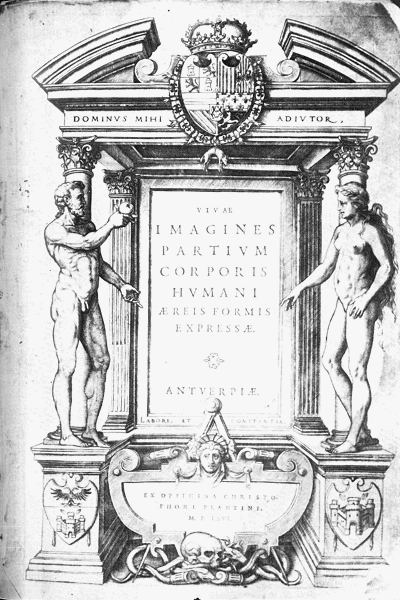 (33) Vesalius & Valverda, Vivae imagines partium corporis humani, 1566: title-page engraved in copper by Pieter Huys to a design of Lambert van Noort. The Vivae imagines, with its title-page and 42 plates, was one of the first books illustrated with copper engravings to be published in the Netherlands. The medallion ana cartouche with engraved title and printer's address were later excised to enable the title and printer's address of the 1568 Dutch edition to be set in letterpress. The mutilated copperplate is in the Plantin-Moretus Museum.
| ||||||||||||||||||||||||||||||||||||||||||||||||||||||||||||||
[pagina *32]
| ||||||||||||||||||||||||||||||||||||||||||||||||||||||||||||||
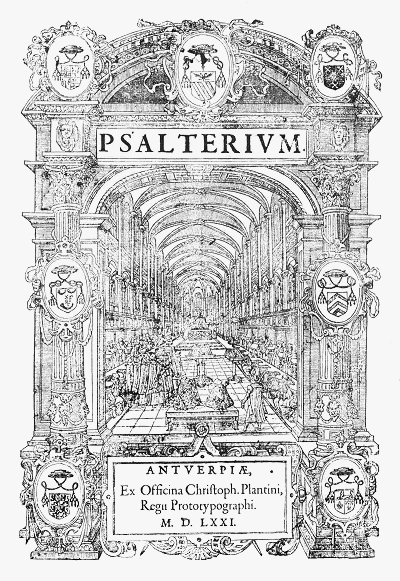 (34) Title-page of the Psalterium, 1571: Woodcut depicting the choir of Malines Cathedral. The coats of arms of the Archbishop of Malines and the six bishops of the archdiocese were cut on separate blocks. For new editions these blocks could if necessary be lifted out and replaced by new designs without damaging the main block. Cut by Antoon van Leest to a design of Pieter van der Borcht.
| ||||||||||||||||||||||||||||||||||||||||||||||||||||||||||||||
[pagina *33]
| ||||||||||||||||||||||||||||||||||||||||||||||||||||||||||||||
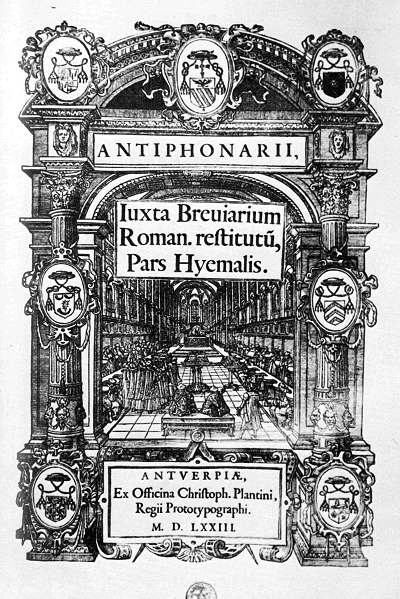 (35) Title-page of the Antiphonarium, 1573. This monumental work in two parts was issued without a title-page at first, drawing protests from customers. Plantin felt himself obliged to print a title-page in great haste. The wood-block from the 1571 Psalterium was used but as the legend was longer a piece had to be cut out of the block, which in its mutilated state is kept in the Plantin-Moretus Museum.
| ||||||||||||||||||||||||||||||||||||||||||||||||||||||||||||||
[pagina *34]
| ||||||||||||||||||||||||||||||||||||||||||||||||||||||||||||||
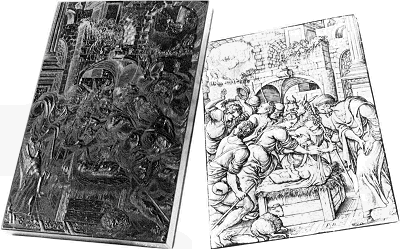 (36) Top: The Adoration of the Shepherds: wood-block for the folio missal of 1575, cut by Gerard Janssen van Kampen to a design by Pieter van der Borcht.
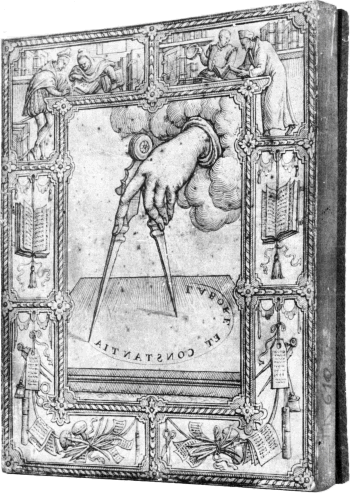 (37) Left: Plantin's printer's mark: pen and ink drawing on a wood-block prepared with a white ground, ready for cutting. For some reason the work was not carried out.
| ||||||||||||||||||||||||||||||||||||||||||||||||||||||||||||||
[pagina *35]
| ||||||||||||||||||||||||||||||||||||||||||||||||||||||||||||||
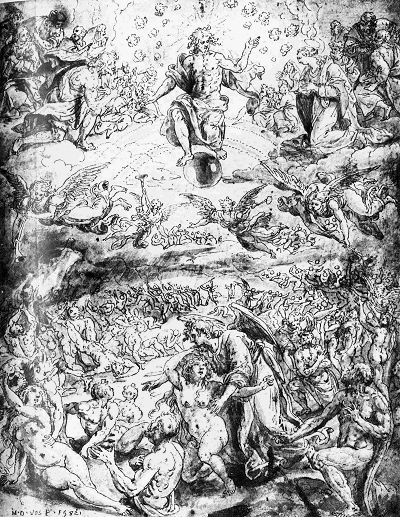 (38) Right: Maarten de Vos: The Last Judgment. Drawing in pen and bistre, signed and dated bottom left ‘M.D. Vos F. 1582’. From a series of eight, drawings to illustrate a folio missal (two dated 1582, a third 1588). The outlines of the drawing were gone over probably by the engraver to make transference to the plate easier. The work may not have been executed. There are no Plantinian service books known with copperplates engraved to these designs.
| ||||||||||||||||||||||||||||||||||||||||||||||||||||||||||||||
[pagina *36]
| ||||||||||||||||||||||||||||||||||||||||||||||||||||||||||||||
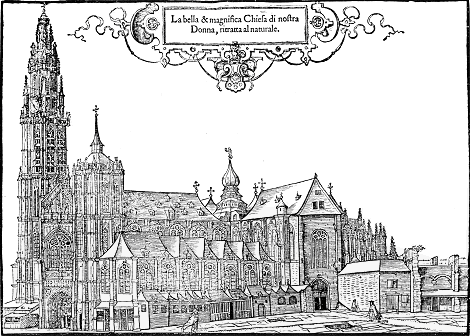 (39) Antwerp Cathedral: illustration in woodcut from L. Guicciardini, Descrittione di tutti i Paesi Bassi, published by Willem Silvius, Antwerp 1567. When preparing his own edition of Guicciardini, Plantin made Silvius an offer, in 1580, for these wood-blocks-not with the idea of utilizing them himself but rather to compensate Silvius to some extent while at the same time preventing him from spoiling the market with a similar edition. Silvius, then at Leiden, seems to have refused, but in 1583 his widow proved more amenable and sold her woodcuts to Plantin. Designer and engraver are unknown.
| ||||||||||||||||||||||||||||||||||||||||||||||||||||||||||||||
[pagina *37]
| ||||||||||||||||||||||||||||||||||||||||||||||||||||||||||||||
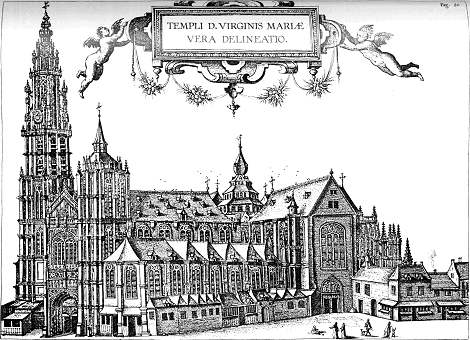 (40) Antwerp Cathedral: copperplate illustration (etching) from Guicciardini, Descrittione di tutti i Paesi Bassi, published by Plantin in 1581, 1582, and 1588. The work contains about 80 maps of principalities and cities, and views of Antwerp specially produced for this edition. The engraver of this picture-probably Van der Borcht-based his work on the illustration in the Silvius edition. Note, however the difference in execution
| ||||||||||||||||||||||||||||||||||||||||||||||||||||||||||||||
[pagina *38]
| ||||||||||||||||||||||||||||||||||||||||||||||||||||||||||||||
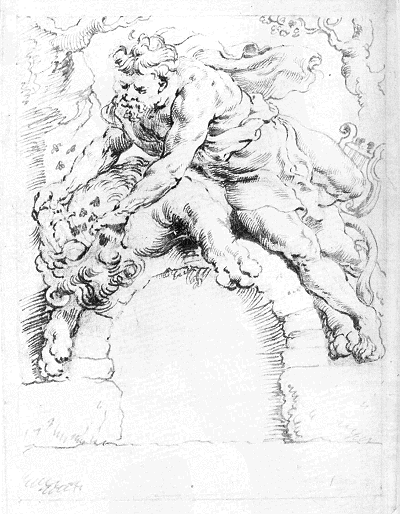 (41) Drawing by Peter Paul Rubens: title-page design from the Poemata of Maphaeus Barberini (Pope Urban viii), 1634. Samson discovers a swarm of bees in the carcase of a lion-an allusion to Urban viii's coat of arms, which shows bees, and to the sweetness of his poems.
| ||||||||||||||||||||||||||||||||||||||||||||||||||||||||||||||
[pagina *39]
| ||||||||||||||||||||||||||||||||||||||||||||||||||||||||||||||
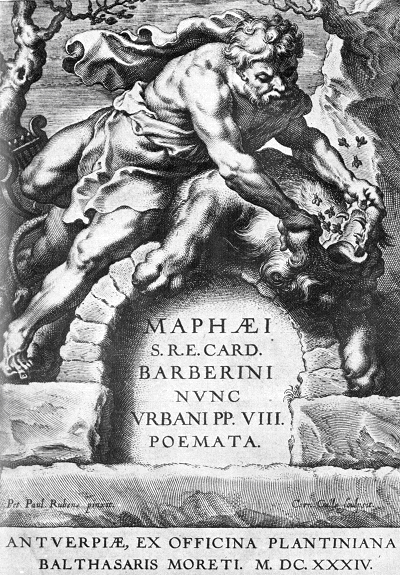 (42) Title-page of Maphaeus Barberini, Poemata, 1634, in quarto; copper engraving by Cornelis Galle to Rubens's design (see also plate 41).
| ||||||||||||||||||||||||||||||||||||||||||||||||||||||||||||||
[pagina *40]
| ||||||||||||||||||||||||||||||||||||||||||||||||||||||||||||||
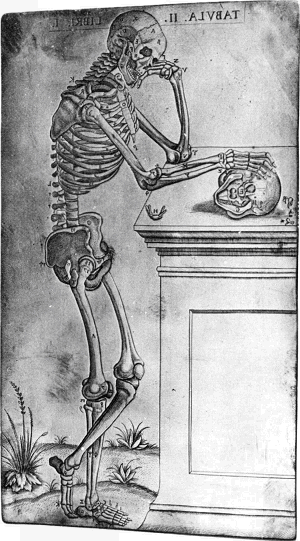 (43) Left: Anatomical illustration: copperplate used in Vesalius & Valverda, Vivae imagines partium corporis humani, 1566. One of the 42 plates engraved by Pieter and Frans Huys (see also plate 33).
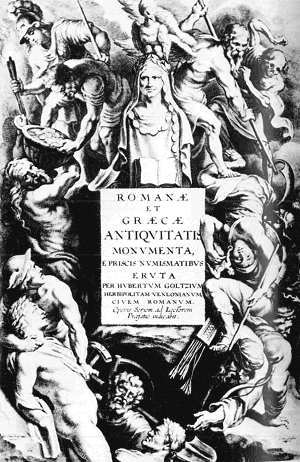 (44) Right: Title-page of Goltzius, Romanae et Graecae antiquitatis monumenta e priscis monumentis eruta, first part of the Opera Huberti Goltzii, 1645. Engraved in copper in 1632 by Theodoor Galle to a design of Rubens. The allegorical and symbolical significance was set out in an ‘explication’ in the preliminary matter of the book (Gaspar Gevaerts, an officer of the City of Antwerp and a humanist scholar, probably wrote it). The composition represents the Renaissance of Antiquity. In the top right is Time, symbolized by an old man with wings and a scythe. Next to him is Death. Both throw into the abyss of time the symbols of the empires of Rome (a goddess with a small figure in her left hand representing victory and a broken lance in her right), Macedonia (Alexander with helmet and cuirass, and lightning in his right hand), Persia (Darius with diadem, shattered by Alexander); and of the Medes (a prince with turban, bow, and quiver). On the other side of the abyss is Mercury with a spade in one hand with which he has uncovered the busts of Romans and Greeks. With his other hand he lifts the statue of a Roman emperor out of the abyss. A little above this, Hercules, wrapped in his lion skin, receives a basket full of antique coins from a slave. Athene, helmeted, illuminates the objects with her torch. In the centre is a bust with the symbol of Antiquity. On its head is the phoenix, representing resurrection and eternity.
| ||||||||||||||||||||||||||||||||||||||||||||||||||||||||||||||
[pagina 209]
| ||||||||||||||||||||||||||||||||||||||||||||||||||||||||||||||
to replace the lost sixteenth-century wood-blocks in a new edition of a work by Hubertus Goltzius,Ga naar voetnoot1. or for the technical and scientific illustrations of a series of books aimed at a rather learned market.Ga naar voetnoot2. But what was remarkable was the fact that Balthasar i not only went on using the wood-blocks inherited from his grandfather in certain editions of his breviaries and missals, but even felt himself justified in modernizing in this direction and replacing the old blocks, made by Van Leest after the designs of Pieter van der Borcht, by Rubens-inspired new ones. He probably decided on this course not for reasons of personal preference or taste, but because of the potential sales of lavishly illustrated but fairly cheap books in the Spanish market that was once again opening for the Plantin press. The experiment did not last long, however. Balthasar i, and to a lesser extent Balthasar ii, thus needed woodcutters. One of them was Cristoffel van Sichem. This outstanding Dutch engraver lived in Antwerp for some time and executed a number of commissions for the officina from 1616 until 1620, when he left the city. A few years later Balthasar i acquired the services of the man considered to be the greatest of seventeenth-century practitioners, Christoffel Jegher (Jegherendorf). He undertook work for the Golden Compasses from 1625 to 1643, and was actually on the pay-roll as a regular employee from 1625 to 1640. After his death his son Jan Christoffel succeeded him and executed woodcuts for the House until 1655. It was Christoffel Jegher who adapted the ornaments and decorations to the new Baroque fashion, who cut the emperor portraits and many of the scientific illustrations and executed the full-page illustrations for the breviaries and missals. It should be said that these last were not particularly brilliant - clumsy efforts that compare unfavourably with his many inspired interpretations of Rubens's works and his masterly emperor portraits.Ga naar voetnoot3. | ||||||||||||||||||||||||||||||||||||||||||||||||||||||||||||||
[pagina 210]
| ||||||||||||||||||||||||||||||||||||||||||||||||||||||||||||||
After the death of Rubens the fame of the Antwerp school of painters and engravers soon passed away. The epigones of Rubens were succeeded by the epigones of the epigones - and their numbers were dwindling. By the end of the seventeenth century Antwerp was of no more than regional importance as an artistic centre. This general decline affected the Officina Plantiniana. In the second half of that century it had specialized in the production of missals and breviaries. Its book illustrations thenceforth were exclusively religious. Many such plates had been engraved in the first half of the seventeenth century and the later Moretuses could, and to a large extent did, continue to draw on the collection assembled by their forebears. However, the plates could not be used indefinitely. They had to be re-cut in due season and the ornaments had regularly to be adapted to changes in public taste. The later Moretuses had to maintain contact with the requisite draughtsmen, woodcutters and copper engravers, something that grew more and more difficult with the passing years, and by the eighteenth century it had become a serious problem. Finding artists who could draw usable models seems to have been the easiest aspect of the matter and the standard of designs remained reasonable until quite late in the eighteenth century. Cornelis Jozef d'Heur, the ‘official’ draughtsman for the house from about 1740 to 1762, was no genius but he knew his trade. His significance in those autumnal years of Antwerp art is shown by what happened after his death in 1762. After unsuccessfully trying out a number of artists, including the Parisian Jean Beugnet, the Moretuses had to give up the unequal struggle. After 1765 there were practically no more original designs.
However, the attempts to find designers were as child's play compared | ||||||||||||||||||||||||||||||||||||||||||||||||||||||||||||||
[pagina 211]
| ||||||||||||||||||||||||||||||||||||||||||||||||||||||||||||||
with the pathetic efforts of the later Moretuses to track down competent craftsmen who could transfer the designs to wood or copper. From about 1733 they had to start looking outside Antwerp. The tribulations of Joannes Jacobus and Franciscus Joannes Moretus with Paris craftsmen - the woodcutters J.M. Papillon, N. Le Sueur, N. Caron (contacted while he was in prison), and the copper engravers P.L. Auvray, Hendelot, R. Brichet - would fill a poignant book. Attempts to find suitable practitioners in their own country - at Bruges, Malines, and Brussels - were totally abortive. Happily they were able to call on the services of the Antwerp engraver Lodewijk Fruytiers from 1757 to 1778. His was a mediocre talent, but at least he was fairly consistently productive and did not have to be set to work via agents and letters. His plates marked virtually the end of the Moretuses' efforts to bring out new illustrations. Their subsequent books were illustrated with plates inherited from a more glorious past, in so far as these had not already been worn out and replaced with feeble copies. In the nineteenth century steel engravingsGa naar voetnoot1. and lithographsGa naar voetnoot2. were commissioned from specialist firms, but not many of these seem to have been delivered.
The archives of the Plantin house that allow the evolution of its book illustration to be traced also yield details of the lives of many of the artists, both important ones and lesser figures, who worked for its masters. In a number of cases it is only these archives that enable flesh and blood to be added to the bare bones of birth and death dates or dates of registration as masters of the Antwerp guild of St. Luke. Of the illustrators of Plantin's time only Van der Borcht and Van den Broeck seem to have been numbered among his personal friends. In October 1565 Plantin was unable to give Van der Borcht's name in his journal and had to describe him as the ‘Malines painter’, but within a few years he was an intimate of the great printer. It was to the Golden Compasses that Van der Borcht brought his wife and children | ||||||||||||||||||||||||||||||||||||||||||||||||||||||||||||||
[pagina 212]
| ||||||||||||||||||||||||||||||||||||||||||||||||||||||||||||||
when the sacking of his home town by Alva's soldiers on 2 October 1572 had reduced him to penury. Plantin enabled him to start life again in Antwerp. Through Plantin, Van der Borcht and Van den Broeck became friendly with Arias Montanus. The letters exchanged between Plantin and Jan i Moretus and the humanist after his return to Spain often contained references to the two artists, with biographical details of some interest.Ga naar voetnoot1. Plantin's woodcutters and copper engravers on the other hand do not seem to have been included in his circle of friends, but he did record particulars that illuminate their private circumstances: the dissolute life of the Wiericx brothers who virtually had to be locked up in their client's house to ensure delivery of their copperplates; the straitened means of certain aged artists (such as Arnold Nicolai) and so on.Ga naar voetnoot2. The letters between the Moretuses and their Parisian agents in the eighteenth century provide an interesting glimpse of the character of one of the foremost French woodcut craftsmen of the time, J.M. Papillon.
However, the technical details of book illustration in the past that can be gleaned from the Plantinian records are of more pertinence to this work. Artists entrusted with illustrating a book have of course always been limited by having to fit their pictures to a text. In the first half of the sixteenth century it was not unusual for illustrations to be rather loosely and, to put it mildly, fancifully related to the text. Publishers illustrated people and events quite arbitrarily, according to the material available. The same wood-block might represent Julius Caesar or the Emperor Charles v. A picture of a battle might be captioned as Samson's defeat of the Philistines or as the Battle of Pavia. This imaginative but imprecise mode still lingered on in Plantin's time, but was increasingly relegated to popular romances and similar cheap literature. Serious printer-publishers, Plantin and his successors | ||||||||||||||||||||||||||||||||||||||||||||||||||||||||||||||
[pagina 213]
| ||||||||||||||||||||||||||||||||||||||||||||||||||||||||||||||
among them, saw to it that their illustrations were not only of some artistic merit but were also historically or scientifically matched to the subject. Joannes Rethius, the Jesuit who supervised the text of Hillessemius's Sacrarum Antiquitatum Monumenta (1577) for the heirs of the deceased author, asked Plantin to send the illustrations for his approval before publication and in any case to warn the artist beforehand against ‘obscene representations’.Ga naar voetnoot1. This is one of the few pieces of evidence of this nature in Plantin's correspondence, but it suggests that the authors, in so far as they were directly involved in a publication, normally wished to see and approve illustrators' work themselves after giving instructions about what should be illustrated and, if necessary, where models or inspiration might be sought. This was particularly the case when scholarly or scientific works were being published. The authors might refer to illustrations in already published books,Ga naar voetnoot2. paintings,Ga naar voetnoot3. the object itself,Ga naar voetnoot4. or they might offer sketches for the artist to work up.Ga naar voetnoot5. For the maps of the towns in the Netherlands in | ||||||||||||||||||||||||||||||||||||||||||||||||||||||||||||||
[pagina 214]
| ||||||||||||||||||||||||||||||||||||||||||||||||||||||||||||||
his editions of Guicciardini's Descrittione di tutti i Paesi Bassi Plantin spared neither effort nor time. At his own expense he had local artists draw plans of some of the towns. In a few instances the town councils were prepared to bear the cost themselves; other towns sent sketches that Plantin's Antwerp draughtsmen could use as models. Nevertheless a number of maps had to be copied from prototypes in existing publications.Ga naar voetnoot1. In March 1604, in the time of Jan i Moretus, the painter Rousandt was sent to Halle to make a drawing ‘ad vivum’ of the Lady Chapel there for Lipsius's Diva Virgo Hallensis, which appeared in that same year.Ga naar voetnoot2. With religious subjects there was another problem. Representation, characteristics, attitudes, and so on had to be in accord with current theological ideas if the illustrations were not to run the risk of being branded heretical.Ga naar voetnoot3. There is relatively little information extant about the kind of instructions Plantin and Jan i Moretus gave their illustrators. This is understandable. Instructions of this nature, and authors' requests, were most easily given by word of mouth or by means of rough sketches, and most of the artists working for Plantin could be contacted personally.Ga naar voetnoot4. For the seventeenth century the correspondence concerning Rubens's work for the Officina Plantiniana provides rather more detail, particularly - and for obvious reasons - where foreign clients were involved. There was, too, a new factor - at least as far | ||||||||||||||||||||||||||||||||||||||||||||||||||||||||||||||
[pagina 215]
| ||||||||||||||||||||||||||||||||||||||||||||||||||||||||||||||
as title-page designs were concerned - that made more detailed instruction and discussion necessary. Whereas in the previous century the function of these designs had been purely decorative and only very generally related to the contents of the book, with the advent of the Baroque they had acquired an allegorical significance. Title-page designs were now expected to bring out the content and purpose of the book through an involved interplay of symbol and allegory. Rubens was a master at this. Each of his title-pages was truly a rebus for the adequate interpretation of which a lengthy exposition was usually necessary. To spare the readers this cerebral game, or at least to make it easier, an explanatory note was often included in the preliminary matter.Ga naar voetnoot1. Such complex title-page designs meant more detailed discussions among publishers, authors, and illustrators and these found their way into their letters more often than in Plantin's time, affording an interesting glimpse of how artists set about illustrating books. Right at the beginning of Rubens's career as a designer for the house, Balthasar i Moretus deemed it necessary to set out in detail what exactly was required of him. For the title-page of the Breviarium Romanum, published in 1614, he sketched the lay-out of the page and described in his fine humanist handwriting, in Latin, the figures that should appear and the attributes they should display.Ga naar voetnoot2. This was not out of any lack of confidence in Rubens's capabilities. There can be no doubt that this was one of the first attempts in the Netherlands, and possibly in Europe, to create a title-page in the new spirit of the Baroque. The credit for this must be given to Balthasar i Moretus | ||||||||||||||||||||||||||||||||||||||||||||||||||||||||||||||
[pagina 216]
| ||||||||||||||||||||||||||||||||||||||||||||||||||||||||||||||
himself, a cultivated humanist and Latin scholar, and pupil of Justus Lipsius. The fact that the design was among the first of its kind explains why he felt he should put his ideas down on paper for his friend. Rubens was more than quick to understand what was wanted. He was himself a representative practitioner of the new style and completely at home in its allegorical modes. After this one pioneering model, Rubens let himself be guided solely by his own inspiration, becoming in the course of time considerably more imaginative and subtle than his client. But this did not prevent a meeting of minds with each new commission. B. de los Rios himself set the general theme for the title-page of his De Hierarchia Mariana (1641), but neither he nor Balthasar i was happy with a certain detail of the final design, so a piece of paper with their amendment was pasted over the offending part. It should be pointed out that Erasmus Quellin did the drawing, working to one of Rubens's designs.Ga naar voetnoot1. The master himself was usually much less accommodating in these matters and rejected every alteration, even when a scandalized monk insisted that Truth should be more comprehensively cladGa naar voetnoot2. or when a theologian pointed to some error of interpretation.Ga naar voetnoot3. Authors sometimes sent portraits from life to make the engraver's, if not the designer's task easier.Ga naar voetnoot4. For the title-page of a book by Boyvin about the siege and relief of Dôle, Rubens chose as the main theme the offering of a crown of honour to the hero, but had to ask who this should be. Philippe Chifflet, acting on behalf of Boyvin, supplied the information required and enclosed in his letter a drawing of the arms and motto of the town of Dôle.Ga naar voetnoot5. As the task of the engravers was executive, not creative, there was no need to give them instructions except about size. Balthasar i's | ||||||||||||||||||||||||||||||||||||||||||||||||||||||||||||||
[pagina 217]
| ||||||||||||||||||||||||||||||||||||||||||||||||||||||||||||||
account-books show that Rubens occasionally retouched the proofs of his illustrations.Ga naar voetnoot1. It is possible that other designers checked and where necessary corrected the engravers' work, but details are lacking. In the sixteenth and seventeenth centuries designers usually did their drawings for woodcuts directly on the wood-blocks. Not only is there evidence for this in the account-books,Ga naar voetnoot2. but a number of such drawings have been preserved because they were never cut. The series of sixteen wood-blocks for J.B. Houwaert's Pegasides Pleyn were laid aside because at the last moment it was decided to replace them with copper engravings.Ga naar voetnoot3. In other instances wood-blocks split at an early stage;Ga naar voetnoot4. drawings proved not to be accurate enough;Ga naar voetnoot5. it was discovered before the engraver set to work that a similar block had already been cut;Ga naar voetnoot6. or quite simply a project might be scrapped.Ga naar voetnoot7. In some cases the engraver must have worked from models that had not been drawn on the block. There is evidence for this for the eighteenth century.Ga naar voetnoot8. However, in the preceding two centuries the normal procedure was for the designer, or in exceptional circumstances the woodcutter,Ga naar voetnoot9. to draw the illustration on the block. This method could not of course be applied to copperplates. The models for these were drawn on loose sheets of paper.Ga naar voetnoot10. It was possible to trace the outlines of the drawing lightly on to the plate | ||||||||||||||||||||||||||||||||||||||||||||||||||||||||||||||
[pagina 218]
| ||||||||||||||||||||||||||||||||||||||||||||||||||||||||||||||
with a needle and many drawings in the Museum show that engravers were glad enough to avail themselves of this method. The picture engraved on a wood-block or copperplate appears reversed so that a plate that literally copied a drawing would print as a mirror image. In woodcuts the designers were responsible for getting this right. Sometimes they forgot: a few wood-blocks with Plantin's printer's mark have the ‘Labore et Constantia’ the wrong way round. With copperplates it was possible for the engraver to make the necessary adjustments. This is what Van der Horst thought of at all events. Underneath his drawing of Maria de' Medici's entry into the palace at BrusselsGa naar voetnoot1. he scribbled a note asking the engraver to cut the plate in reverse.Ga naar voetnoot2. The engraver complied and this is the only instance known to the author of an original drawing and the print being identical. In another instance - the portrait of Balthasar i Moretus, who was paralysed in the right arm - the designer, Erasmus Quellin, retained the initiative. In his grisaille he made the subject's left arm the affected one, thus ensuring correctness in the print. In the eighteenth century publishers succeeded in producing polychrome copperplate engravings. This was technically difficult. Before this time - and quite often afterwards - engravings had been simply coloured by hand. The production of coloured woodcuts was somewhat easier as their lines are simpler and bolder and it was possible to superimpose the various blocks needed with greater precision. As with modern colour reproductions, one block had to be made for each colour. In practice printers confined themselves to two colours, usually black and red. Experiments in the Plantinian house were restricted to this simplest form of colour printing. They were not numerous: the title-page of P. Heyns's alphabet book, 1568; a few alphabets;Ga naar voetnoot3. some decorative borders; and in the seventeenth century | ||||||||||||||||||||||||||||||||||||||||||||||||||||||||||||||
[pagina 219]
| ||||||||||||||||||||||||||||||||||||||||||||||||||||||||||||||
the series of emperor portraits for volume v of H. Goltzius's collected works, published in 1645 but prepared in 1631-34. In this last case, Balthasar i's hand was forced. He had managed to buy up a stock of the first four volumes, in De Bie's reprint of 1617-20 (but printed with the original wood-blocks). The original two-tone plates of volume v had been lost and in order to be able to bring out a new edition of the complete works, the publisher was obliged to have a series of identical replacements cut (plus a few additional ones).Ga naar voetnoot1. Wood-blocks have certain drawbacks. They are difficult to alter or refurnish. Small corrections are possible - but even these leave tell-tale traces.Ga naar voetnoot2. Large alterations can only be made by cutting away portions of the block.Ga naar voetnoot3. Renovation of a much-used block was virtually impossible and nothing could be done about warping or splitting. Copperplates were less of a problem in these respects. Big alterations meant drastic treatment,Ga naar voetnoot4. but small amendments to legend or picture could be done simply with a burin in an expert hand,Ga naar voetnoot5. as could touching up and renovating. The accounts of the | ||||||||||||||||||||||||||||||||||||||||||||||||||||||||||||||
[pagina 220]
| ||||||||||||||||||||||||||||||||||||||||||||||||||||||||||||||
Galle workshop show that these jobs were done quite often and cost the masters of the Golden Compasses a fair amount over the years.Ga naar voetnoot1. Not all copperplates were equally easy to renovate. It depended on whether they had been engraved with a burin or etched with acid. The burin demanded the trained hand of a craftsman; etching a lesser degree of skill. This explains why painters who ventured into the medium were particularly attracted to the latter technique. It was neither by chance nor by a whim that Van der Borcht, when he began to work for Plantin as an engraver, produced only etchings. However, etchings have certain disadvantages compared with burin-engraved plates. The lines are relatively shallow and broad, giving a less sharp picture. For the same reason it is difficult to re-cut the lines to renovate the plate and this reduces the number of copies of the picture than can be printed. For moderate runs the technical inferiority of etchings was not so important: Van der Borcht produced a goodly number for Plantin and in the seventeenth century the Moretuses were still illustrating a few of their works with etchings.Ga naar voetnoot2. But in that same century the officina began to specialize in service books in large runs, which meant heavy use of plates for illustrations. Etching was out and henceforth engravings with the burin held sway. Occasionally, subsequent masters of the Golden Compasses set down their thoughts on the matter in some detail, and these records are important to the study of the question.Ga naar voetnoot3. | ||||||||||||||||||||||||||||||||||||||||||||||||||||||||||||||
[pagina 221]
| ||||||||||||||||||||||||||||||||||||||||||||||||||||||||||||||
No explicit details have been discovered of the production rate of the copperplate engravers who worked for the Plantin press, but there are a few indications of the time in which woodcutters were expected to have their wood-blocks ready.Ga naar voetnoot1. Norms of this kind were probably more theoretical than real. Whenever engravers are mentioned in Plantin's correspondence it is almost always because they had not been able to deliver their work on time.Ga naar voetnoot2. Wood-blocks can be printed in conjunction with the text and on the same presses. Copper engraving is a form of intaglio printing and therefore requires a special press. For a few months, from 5th March 1571 to 21st June 1572, Plantin entered the ‘coperdrucker’ (copper printer) Jacob van der Houven in his livre des ouvriers.Ga naar voetnoot3. Whether the man worked in the press or at home cannot be said with any certainty, but an intaglio press was listed in the inventory of Plantin's estate.Ga naar voetnoot4. This press must, however, have stood idle for the greater part of the time: before and after the dates quoted Plantin | ||||||||||||||||||||||||||||||||||||||||||||||||||||||||||||||
[pagina 222]
| ||||||||||||||||||||||||||||||||||||||||||||||||||||||||||||||
entrusted the printing of the copperplates to those who prepared themGa naar voetnoot1. or specialized in the print trade.Ga naar voetnoot2. Conversely he often set and printed texts for the albums of prints which such firms produced.Ga naar voetnoot3. The Moretuses followed the same policy at first, having their plates printed exclusively by the Galle workshop. But at the end of the seventeenth century this firm closed down. Activity in the graphic arts in Antwerp was then nearing its lowest point and it became as difficult to have copperplates printed there as to have them engraved. Balthasar iv tackled the problem resolutely by having an intaglio press made in Holland in 1714 and smuggled into AntwerpGa naar voetnoot4. - not, as would nowadays be the case, so as to escape import duties but to avoid difficulties with the Antwerp carpenters, who would have immediately protested against ‘unfair’ Dutch competition.Ga naar voetnoot5. Balthasar iv set up a small workshop for intaglio printing in his house and engaged specialist pressmen.Ga naar voetnoot6. The workshop remained in use until the end of the eighteenth century. A few notes from the middle years of that century give some interesting particulars of its equipmentGa naar voetnoot7. and of the amount of material the pressman used a year.Ga naar voetnoot8. | ||||||||||||||||||||||||||||||||||||||||||||||||||||||||||||||
[pagina 223]
| ||||||||||||||||||||||||||||||||||||||||||||||||||||||||||||||
Drawings, wood-blocks, and copperplates, and their printing, had to be paid for. Over the years the prices followed the general trend of decline in the purchasing power of money and at the same time were adjusted to the difficulty and size of the illustration to be drawn, cut, or engraved. The absolute figures are of less importance than the comparisons they make possible - among themselves and with the rest of the production costs of a book. Sample figures are to be found in the table on pp. 224-225. The first fact that emerges is that of the three specialists the designer was virtually always the least well paid. This applied even to someone like Rubens. However, this master realized that the price paid for drawing an illustration formed only a fraction of the total investment in a publication, and had to be kept as low as possible. He also knew to the last stuiver what a day's work in his studio brought him in - and that was much more than he could ask from a publisher or an author. He therefore drew his designs in the solitude of his room on Sundays and feast days when he could not paint in his studio.Ga naar voetnoot1. He was thus able to ask prices that were relatively low, considering his standing. In doing this Rubens implicitly acknowledged that in book illustration the creative work of the artist had to be less well remunerated than its technical execution. A second obvious point is that the woodcut specialist had to be content with much less for his work than the copperplate engraver. The reason did not lie in preference for the engraving, but in a simple fact that also explains why the artist received less for his designs than the craftsman who executed them: payment was directly proportionate to the speed with which the work could be done, and a reasonable daily wage thereby earned. In principle the draughtsman could | ||||||||||||||||||||||||||||||||||||||||||||||||||||||||||||||
[pagina 224]
| ||||||||||||||||||||||||||||||||||||||||||||||||||||||||||||||
| ||||||||||||||||||||||||||||||||||||||||||||||||||||||||||||||
[pagina 225]
| ||||||||||||||||||||||||||||||||||||||||||||||||||||||||||||||
complete his task the quickest and the woodcutter was only a little slower. The engraver had to spend much longer over his copperplate. It is usually hard to determine whether the cost of the wood-block or the copperplate was included in the prices charged. In the years 1563-67, at the beginning of his career, Plantin seems himself to have ordered the softwood blocks (‘bois de buis’) for woodcuts from Antwerp carpenters.Ga naar voetnoot3. They did not cost much each, and even in the quantities he had to buy this was not a large item of expenditure. | ||||||||||||||||||||||||||||||||||||||||||||||||||||||||||||||
[pagina 226]
| ||||||||||||||||||||||||||||||||||||||||||||||||||||||||||||||
The author has not discovered a single piece of evidence for the later years that would show that the publisher continued this practice and it must be assumed that either the artist or the woodcutter provided the blocks and allowed for this in his price. Copperplates were much more expensive. Sometimes the printer bought these too.Ga naar voetnoot1. In other instances the artist supplied the plate but charged for it separately.Ga naar voetnoot2. However, it may be assumed that in the majority of cases the plates were included in the price of the finished work.Ga naar voetnoot3. It has been seen that the wood-blocks were printed in the house, but in the sixteenth and seventeenth centuries specialist firms printed copperplates for the Plantinian press and these too had to be paid. In 1566 P. Huys asked 1 fl. per hundred sheets for printing the copperplates for the Vesalius-Valverda Vivae Imagines. There was a run of 600 copies and 42 plates per copy. This meant 13,500 sheets for which Plantin paid 132 fl.Ga naar voetnoot4. In 1570 Mijnken Liefrinck charged 10 st. per | ||||||||||||||||||||||||||||||||||||||||||||||||||||||||||||||
[pagina 227]
| ||||||||||||||||||||||||||||||||||||||||||||||||||||||||||||||
hundred sheets for printing the C. Perret calligraphic albumGa naar voetnoot1. and in 1574 an average of 8 st. per 100 sheets.Ga naar voetnoot2. In 1571-85 Philip Galle received an average of 15 st. per 100 sheets.Ga naar voetnoot3. Theodoor Galle's accounts for the early years of the seventeenth century show a great variation in price according to the format, but always reckoned per 100 sheets: 10 st., 12 st., 16 st., 18 st., 1 fl., 1 fl. 16 st.Ga naar voetnoot4. In the sixteenth and seventeenth centuries, illustrating a book, even modestly, meant investing quite a lot of money. In the section of this work dealing with costing concrete examples are given which show that the pictures accounted for a considerable part of the capital investment necessary to publish an illustrated book; sometimes it was more than 75 per cent.Ga naar voetnoot5. In this section it is simply the cost of illustrations compared with the total expenditure of the press that will be looked at. The percentage varied from year to year according to the number of illustrated books published and to the percentage of the annual production these represented. Plantin's list of illustrated titles seems impressive but it was relatively small compared with other works. However high the expenditure might run in individual cases, the money paid for pictures was generally rather lost in Plantin's budget for any given year. In 1566, for example, illustrations accounted for 137 fl. 14 st. out of total running costs of 13,041 fl.: less than one per cent.Ga naar voetnoot6. This percentage increased in the time of the Moretuses, when they started turning out liturgical and devotional books in large quantities. Between 1600 and 1610 Jan i Moretus paid his son-in-law, Theodoor Galle, 13,530 fl. Of this 6,179 fl. was for engraving copperplates (this included re-engraving, retouching, and a few drawings) and 7,341 fl. for printing them.Ga naar voetnoot7. This was not the sum total of Jan Moretus's spending on illustrations; there were also payments for designs, for a few engravings made at other studios, and for | ||||||||||||||||||||||||||||||||||||||||||||||||||||||||||||||
[pagina 228]
| ||||||||||||||||||||||||||||||||||||||||||||||||||||||||||||||
wood-blocks. His account-books for 1600-10 record an expenditure of 57,885 fl. for compositors' and pressmen's wages.Ga naar voetnoot1. Expenditure on illustrations was therefore 25 per cent of that on wages in the period, compared with 2.5 per cent half a century before in 1566 (137 fl. 14 st. on illustrations and 4,141 fl. 3½ st. on wages). As so much capital went into illustrating books the materials, at least the wood-blocks and copperplates, were carefully preserved. Drawings were rather indifferently treated. Of this material commissioned and collected through the centuries by the masters of the Golden Compasses, 13,791 wood-blocks and 2,846 copperplates are preserved in the Plantin-Moretus Museum, but only about 500 drawings. This is partly due to the fact that the drawings for woodcuts were actually traced through on to the blocks and the bulk of them consequently destroyed in the process. But even in the case of the drawings for the copper engravings, only a fraction has remained in the house.Ga naar voetnoot2. Probably they were either lost in the engravers' studios or became so dirty or torn that they were thrown away.Ga naar voetnoot3. It was not until about the middle of the eighteenth century that the Moretuses began to take more care of the drawings they commissioned; they mounted some of them, but more as collectors' pieces than out of practical considerations.Ga naar voetnoot4. Whereas inventories were regularly made of the wood-blocks and copperplates, even the later Moretuses neglected to do this for their drawings. | ||||||||||||||||||||||||||||||||||||||||||||||||||||||||||||||
[pagina 229]
| ||||||||||||||||||||||||||||||||||||||||||||||||||||||||||||||
This attitude is understandable. The drawings were only a means to an end and of no further use once the design had been transferred to wood or copper. Wood-blocks and copperplates were a valuable part of a printer's material and were therefore meticulously stored, inventoried, specified when estates were divided up, and could be sold or purchased from other printers. When Plantin began to specialize to some extent in herbals he not only had a goodly number of wood-blocks cut depicting plants, but also bought quantities of existing blocks. In 1580, for example, he bought 250 blocks from the London printer Purfoot, and in April 1581 one thousand from the widow Jan van Loe, who for a long time had been Dodoens's printer and publisher.Ga naar voetnoot1. In other instances he bought up copperplates and wood-blocks of a particular work, not because he intended to use them, but in order to prevent a colleague from bringing out a new edition that might compete with a projected Plantin book. There were, for example, the illustrations used by Willem Silvius for his 1567 edition of Guicciardini's Descrittione di tutti i Paesi Bassi. Plantin wrote to Silvius telling him quite openly what were his intentions,Ga naar voetnoot2. but the transaction did not go through until after Silvius's death.Ga naar voetnoot3. On this occasion Plantin acquired other wood-blocks for which he could have had even less use.Ga naar voetnoot4. The Moretuses embarked on similar transactions. Balthasar i and Jan ii Moretus spent 12,114 fl. in April 1612 on several hundred copperplates included in the estate of J.B. Vrients, a printer and engraver.Ga naar voetnoot5. | ||||||||||||||||||||||||||||||||||||||||||||||||||||||||||||||
[pagina 230]
| ||||||||||||||||||||||||||||||||||||||||||||||||||||||||||||||
At the same time the Moretuses did not hesitate to get rid of items from their own collection when an attractive enough offer seemed likely. In 1659 Balthasar ii started negotiations for the sale of the 3,180 botanical wood-blocks he then possessed to Pieter van Waesberghe, the great Amsterdam printer and publisher.Ga naar voetnoot1. Fortunately the sale did not go through and these bio cks still form a numerically important part of the Museum's collection. Other negotiations were more successful: this is how most of the Ortelius plates must have left the Plan tin house.Ga naar voetnoot2. The 144 emperor portraits that Balthasar i commissioned between 1631 and 1634 for Goltzius's Icones Imperatorum Romanorum (volume v of the complete works, published in 1645) were handed over to the Verdussens for their 1708 edition. By a happy chance, Max Rooses was able to buy back the whole collection for the Museum.Ga naar voetnoot3. | ||||||||||||||||||||||||||||||||||||||||||||||||||||||||||||||
[pagina 231]
| ||||||||||||||||||||||||||||||||||||||||||||||||||||||||||||||
The worst losses from Plantin's original collection were caused by two other events. When the young printer's possessions were auctioned in April 1562, the by no means small stock he had already built up was dispersed.Ga naar voetnoot1. The distribution of his estate had even worse consequences.Ga naar voetnoot2. At his death he had 7,530 wood-blocks and 2,391 copperplates.Ga naar voetnoot3. The wood-blocks were valued at 10 st. each, making a total of 3,716 fl. The old copperplates were valued at averages of 1 fl. 8 st. for the plates at Leiden and 1 fl. 10 st. for those at Antwerp. The new ones, intended for works not yet published, were priced higher, nearer their actual value.Ga naar voetnoot4. The total value of the copperplates was put at 4,384 fl. 14 st. These amounts represent only a fraction of cost, but on the other hand, many of the plates and blocks were of little further use because there was no point in reissuing the relevant works. But even after this low evaluation, these blocks and plates added up to an appreciable percentage of the typographical material Plantin left his heirs.Ga naar voetnoot5. Like the rest of this material it was divided between Jan Moretus at Antwerp and Frans Raphelengius at Leiden. The 461 copperplates, estimated at 637 fl., and the 1,578 wood-blocks valued at 750 fl.Ga naar voetnoot6. which were already at Leiden remained there. To Jan Moretus passed 1,930 copperplates valued at 3,747 fl. 14 st. and 5,952 wood-blocks, valued at 2,976 fl.Ga naar voetnoot7. At the | ||||||||||||||||||||||||||||||||||||||||||||||||||||||||||||||
[pagina 232]
| ||||||||||||||||||||||||||||||||||||||||||||||||||||||||||||||
closing down of the Leiden firm in 1619 the Moretuses succeeded in buying back from their relatives a considerable number of wood-blocks,Ga naar voetnoot1. but the larger part of the copperplates went astray at Leiden.Ga naar voetnoot2. Experts drew up the inventory of Plantin's estate. Philip Galle, Abraham Ortelius, and Pieter van der Borcht dealt with the wood-blocks and copperplates. Their list forms an interesting record of what Plantin possessed in this line, at least in so far as it was preserved at Antwerp.Ga naar voetnoot3. After 1589 the Plantinian collection was never again divided up in this way, but from time to time the Moretuses thought it advisable to compile an inventory of their wood-blocks and copperplates. Their stock-taking enables posterity to trace the development of the collection, what had been acquired and what disappeared.Ga naar voetnoot4. | ||||||||||||||||||||||||||||||||||||||||||||||||||||||||||||||
[pagina *41]
| ||||||||||||||||||||||||||||||||||||||||||||||||||||||||||||||
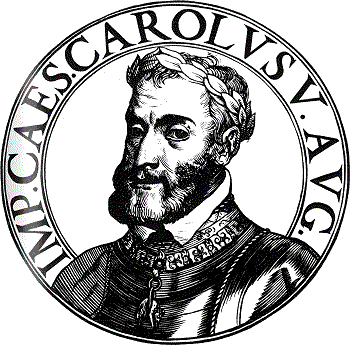 (45) Print from the outline block of the portrait of Charles v. The portrait (shown in complete form in plate 47) was conceived in two colours, black and ochre. This necessitated the use of two different blocks, one for the outlines to be printed in black, shown here, and one for the light effects to be printed in ochre, shown in plate 46 overleaf.
| ||||||||||||||||||||||||||||||||||||||||||||||||||||||||||||||
[pagina *42]
| ||||||||||||||||||||||||||||||||||||||||||||||||||||||||||||||
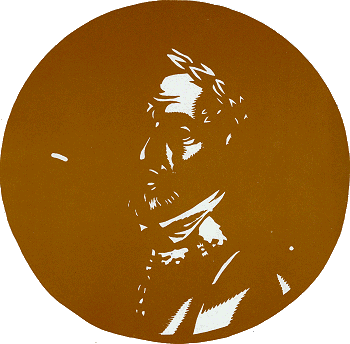 (46) Print from the light-effect block in ochre of the portait of Charles v (cf. plates 45 and 47).
| ||||||||||||||||||||||||||||||||||||||||||||||||||||||||||||||
[pagina *43]
| ||||||||||||||||||||||||||||||||||||||||||||||||||||||||||||||
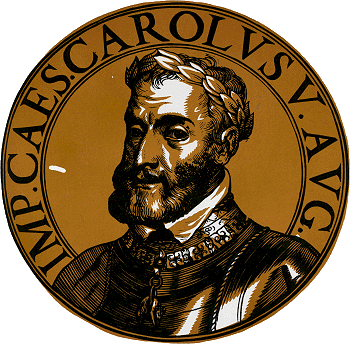 (47) Portrait of Charles v in complete form. This two-colour woodcut appears in Hubert Goltzius's Icones Imperatorum Romanorum..., volume V of Opera Huberti Goltzii, 1645. For this volume Balthasar i Moretus had 144 ‘emperor portraits’ cut by Christoffel Jegher between 1631 and 1634. For most of the portraits Jegher could use those in the 1557 edition as models, but he drew the above portrait himself. The blocks were sold in 1708 to the Antwerp printers Verdussen, but in 1876 they were reacquired by the Plantin-Moretus Museum. The reproductions in plates 45-47 were slightly reduced.
| ||||||||||||||||||||||||||||||||||||||||||||||||||||||||||||||
[pagina *44]
| ||||||||||||||||||||||||||||||||||||||||||||||||||||||||||||||
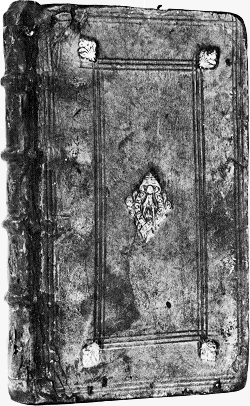 (48) Copy of Valerius, Argonauticon libri VIII, 1566, in 16mo (OB 1.9) bound with four gilt fleurons in the corners and Plantin's printer's mark. The signature on the title-page shows that the book belonged to Abraham Ortelius, the cartographer, and was presumably given to him by Plantin.
| ||||||||||||||||||||||||||||||||||||||||||||||||||||||||||||||
[pagina 233]
| ||||||||||||||||||||||||||||||||||||||||||||||||||||||||||||||
| ||||||||||||||||||||||||||||||||||||||||||||||||||||||||||||||
[pagina 234]
| ||||||||||||||||||||||||||||||||||||||||||||||||||||||||||||||
| ||||||||||||||||||||||||||||||||||||||||||||||||||||||||||||||
[pagina 235]
| ||||||||||||||||||||||||||||||||||||||||||||||||||||||||||||||
| ||||||||||||||||||||||||||||||||||||||||||||||||||||||||||||||
[pagina 236]
| ||||||||||||||||||||||||||||||||||||||||||||||||||||||||||||||
| ||||||||||||||||||||||||||||||||||||||||||||||||||||||||||||||
[pagina 237]
| ||||||||||||||||||||||||||||||||||||||||||||||||||||||||||||||
| ||||||||||||||||||||||||||||||||||||||||||||||||||||||||||||||
[pagina 238]
| ||||||||||||||||||||||||||||||||||||||||||||||||||||||||||||||
| ||||||||||||||||||||||||||||||||||||||||||||||||||||||||||||||
[pagina 239]
| ||||||||||||||||||||||||||||||||||||||||||||||||||||||||||||||
| ||||||||||||||||||||||||||||||||||||||||||||||||||||||||||||||
[pagina 240]
| ||||||||||||||||||||||||||||||||||||||||||||||||||||||||||||||
| ||||||||||||||||||||||||||||||||||||||||||||||||||||||||||||||
[pagina 241]
| ||||||||||||||||||||||||||||||||||||||||||||||||||||||||||||||
| ||||||||||||||||||||||||||||||||||||||||||||||||||||||||||||||
[pagina 242]
| ||||||||||||||||||||||||||||||||||||||||||||||||||||||||||||||
Colouring of illustrationsIllustrations were sometimes coloured by hand. It was mainly maps that were treated in this way, both large wall-maps and smaller ones for atlases. Plantin issued many of these mappae pictae, coloured for him in the workshops of dealers specializing in producing and selling cartographical material: Pieter Draeckx at Malines, Bernard van de Putte and Mijnken Liefrinck at Antwerp. Abraham Ortelius did maps of this sort for his friend Plantin: it was actually as ‘Abraham, peintre de cartes’ that he first appeared in the firm's accounts in 1558.Ga naar voetnoot1. Those who liked their maps coloured had to pay substantial amounts for their predilection. Plantin paid 1 fl. 10 st. (it was 2 fl. at first) for Mercator's map of Europe of 1554; for the colouring of these same maps he paid amounts varying between 1 fl. 5 st. and 1 fl. 10 st., and as much as 3 fl. for a few copies. He paid an average of 1 fl. 10 st. to 1 fl. 15 st. to have Mercator's map of the world of 1569 coloured (the map itself had cost 2 fl. 8 st. at first, later 2 fl.) Between 1566 and 1576 Plantin had no less than 135 Mercator wall-maps coloured and this cost him altogether 177 fl. 10 st.Ga naar voetnoot2. The situation was the same for atlases. In 1572 Ortelius supplied Plantin with copies of his Theatrum Orbis Terrarum, ‘grand papier en blanc’ (i.e., unbound) at 7 fl. 10 st. each and charged 15 fl. 10 st. for one coloured copy.Ga naar voetnoot3. Mijnken Liefrinck's scale of prices was similar. For colouring two copies of the Italian edition of Guicciardini's Descrittione di tutti i Paesi Bassi (with 78 maps and town plans) she charged 12 fl. in 1588. The book itself cost 7 fl.Ga naar voetnoot4. Less interest in colour was shown for other illustrated works, although their pictures too were occasionally coloured. In November | ||||||||||||||||||||||||||||||||||||||||||||||||||||||||||||||
[pagina 243]
| ||||||||||||||||||||||||||||||||||||||||||||||||||||||||||||||
1579 Pierre Porret wrote to Jan Moretus asking him to have an Antwerp publication with illustrations of costumes coloured and varnished for him and, if possible, pasted on linen.Ga naar voetnoot1. On 16th May 1582 Plantin paid Abraham de Bruyn 4 fl. 8 st. for ‘painting’ two copies of the Joyous Entry of Francis, Duke of Anjou into Antwerp (with a title-page design and 21 copper engravings),Ga naar voetnoot2. and on 18th August 1573 the sum of 13 fl. 10 st. was entered to the account of George Kesselaer for colouring the pictures in three copies of the last volume of the Polyglot Bible.Ga naar voetnoot3. Severinus Gobelius, physician to the Duke of Prussia, who was presumably acting on his master's behalf, was prepared to pay a great deal to get a coloured copy of a herbal: the Plantarum seu stirpium icones, published by Plantin in 1581 and actually dedicated to Gobelius. But on 11th October 1581 the printer had to write to Gobelius and say that he had no coloured copy available and that it would take at least three months for the plants depicted in the Icones to be painted from life. However, ‘with great difficulty and at considerable cost’ he had had coloured three copies of Lobelius's herbal, also published in 1581 and lavishly illustrated, but with a Dutch explanatory text. Plantin would send the doctor one of these.Ga naar voetnoot4. This he did, for in the ledger for that year there is the entry against Gobelius's name: ‘Adi pour 1 Herb. Lobelii pictum ad vivum’; the work contained 2,100 illustrations, coloured at 1 st. each which came to 105 fl., with 8 fl. ‘pour le livre blancq’ (unbound).Ga naar voetnoot5. This makes this coloured copy of the herbal one of the most expensive books ever sold by the officina.Ga naar voetnoot6. |
|