

The Golden Compasses
(1969-1972)–Leon Voet– Auteursrechtelijk beschermd
The History of the House of Plantin-Moretus
[pagina 307]
| ||||||||||||||||||||||||||||||||||||||||||||||||||||||||||||||||||||||||||||||||||||||||||||||||||||||||||||||
Working conditions and industrial relations | ||||||||||||||||||||||||||||||||||||||||||||||||||||||||||||||||||||||||||||||||||||||||||||||||||||||||||||||
[pagina 309]
| ||||||||||||||||||||||||||||||||||||||||||||||||||||||||||||||||||||||||||||||||||||||||||||||||||||||||||||||
Chapter 13
| ||||||||||||||||||||||||||||||||||||||||||||||||||||||||||||||||||||||||||||||||||||||||||||||||||||||||||||||
[pagina 310]
| ||||||||||||||||||||||||||||||||||||||||||||||||||||||||||||||||||||||||||||||||||||||||||||||||||||||||||||||
was noted and the wages paid for it entered. In the semaines the weekly wages of the various workmen were entered up each week, without further specification of the work done. The first series runs from 1563 to 1684. The second series was not started until 1583 but it continued until the end of the eighteenth century. This means that there are only livres des ouvriers for the period to 1583; both series for 1583 to 1684; and semaines des ouvriers from 1684 on only. The livres des ouvriers are by far the most important for working conditions in the firm, and these are available for the whole of Plantin's time. The ordinances, which began in 1555 and ended in the eighteenth century, and the documents of the Plantinian workpeople's associationGa naar voetnoot1. are not only of extreme importance to the subject under discussion but are unique for the Renaissance and Baroque periods. Knowledge of industrial conditions in Western Europe in the sixteenth, seventeenth, and eighteenth centuries is mainly based on fragmentary and usually very one-sided information, derived from central or local authorities who intervened to pronounce judgment or arbitrate in disputes. So far as the author knows, the records of the Officina Plantiniana are the only ones that allow the relationships within a large capitalist enterprise to be studied from the inside, and this for a period of two whole centuries. | ||||||||||||||||||||||||||||||||||||||||||||||||||||||||||||||||||||||||||||||||||||||||||||||||||||||||||||||
[pagina 311]
| ||||||||||||||||||||||||||||||||||||||||||||||||||||||||||||||||||||||||||||||||||||||||||||||||||||||||||||||
The compositorsThe compositors' work consisted of setting texts. They arranged the lead type into lines in their composing sticks and assembled these into pages on the galleys. When a number of pages were ready these were assembled in a forme. Paper was printed on both sides (‘work and turn’ or ‘sheetwise forme’ as it is called) so that two formes were needed for each sheet of paper. The number of pages in the formes depended on the format chosen. The sheet was folded in two for a folio volume, the two formes each having two pages of set type. A quarto volume meant folding the sheet in four, four pages to each forme - and so on through the various formats discussed in Chapter 6. Positioning the pages in the formes (the ‘imposition’) was and is an art. Page two of a text cannot be placed beside page one, for when printed and bound, page two has to be over the page from page one. They have therefore to be placed in different formes. But even the pages of work and turn do not follow each other in consecutive order. Their sequence depends on the number of times the sheet is to be folded and | ||||||||||||||||||||||||||||||||||||||||||||||||||||||||||||||||||||||||||||||||||||||||||||||||||||||||||||||
[pagina 312]
| ||||||||||||||||||||||||||||||||||||||||||||||||||||||||||||||||||||||||||||||||||||||||||||||||||||||||||||||
in what way, and this is determined of course by format. Each format therefore has its own mode of imposition.Ga naar voetnoot1. Besides this task of assemblage there was one of taking apart. The set text, after it had been printed, had to be distributed (‘dissed’) by the type-setters, that is to say the type put back in the appropriate compartments of the type-cases. Between setting and distribution there came the work of correcting any errors spotted by the proof-readers. The ordinances give relatively few specific details of the compositors' tasks. One aspect - the prompt delivery of the formes - will be discussed later, as it also involved the pressmen.Ga naar voetnoot2. Exhortations to handle materials carefully and to put them back after use were included in every ordinance,Ga naar voetnoot3. an incessant campaign being waged against negligence. The rules of 1555-56 instructed the compositors to gather up any dropped type before leaving work on Saturdays. By 1563 they were being told to do this twice a day (at twelve noon and again before finishing for the day). Anyone who left more than six pieces lying around was fined. In the 1715 rules it was thought sufficient to order this to be done once a day, before going home for the midday meal. The same 1715 set of rules admonished the compositors to distribute type after printing that might soon be needed for new work ‘for otherwise one piece will become old (worn) while the other remains new’. Rather more interesting is the remark made in the 1563 rules that the compositor who was the last to finish his part of the work must carry ‘both’ proofs to the reader. This must mean that at that time two compositors worked on one text, one making up the forme for the recto side of the sheet, the other being responsible for the verso. The wages accounts of the period generally support this: exceptionsGa naar voetnoot4. | ||||||||||||||||||||||||||||||||||||||||||||||||||||||||||||||||||||||||||||||||||||||||||||||||||||||||||||||
[pagina 313]
| ||||||||||||||||||||||||||||||||||||||||||||||||||||||||||||||||||||||||||||||||||||||||||||||||||||||||||||||
did occur, but the rule was that one type-setter did only one forme per sheet.Ga naar voetnoot1. It was normal in small and medium-sized firms for two compositors to operate in this way on a continuous text. The pressmen printed work and turn immediately after each other and usually on the same day. To make correction possible under this arrangement, the proof-reader had to be able to look through front and back pages together. To feed the press the inner and outer formes had to be handed over virtually at the same time. This presupposes that another tricky matter was attended to first, namely the accurate indication of the pagination on the copy from which the compositors worked.Ga naar voetnoot2. It can be assumed that it was the compositors themselves who marked up a text in this way.Ga naar voetnoot3. One of the reasons why the house rules have nothing to say about pagination is probably that it soon ceased to be a very important or difficult part of the routine. As soon as his business began to expand Plantin was able to rationalize the process. The wages accounts show that from about 1565 onwards each compositor regularly made up the two formes for a sheet and often worked straight through a whole series of sheets. Naturally this reduced the chances of overlapping to a minimum. This kind of solution was a council of perfection for all but large concerns such as the Officina Plantiniana had become, where the number of presses and of staff enabled the work to be shared out in this more rational way. It is clear from Moxon that smaller firms continued in the old way with two compositors to one sheet. Never- | ||||||||||||||||||||||||||||||||||||||||||||||||||||||||||||||||||||||||||||||||||||||||||||||||||||||||||||||
[pagina 314]
| ||||||||||||||||||||||||||||||||||||||||||||||||||||||||||||||||||||||||||||||||||||||||||||||||||||||||||||||
theless even after this simplification, problems of pagination and general arrangement of work still arose in the Plantin press, so that copy had to be carefully looked through and marked up where necessary. At all events in the eighteenth century the compositors received a substantial bonus, which practically doubled the rates paid for setting, for the ‘voorbladers’ - the first sheets of a new edition, which probably meant the composing of specimen pages for the new book and perhaps also the marking up of the copy: either manuscript or an already printed text.Ga naar voetnoot1. There is another technical matter on which the ordinances have nothing to record, namely the ‘black-and-red’ or liturgical editions. It should be pointed out, however, that at first this was more the concern of the pressmen and therefore belongs to the discussion of their tasks.Ga naar voetnoot2. It was not until the end of the seventeenth century that the compositors became involved through the introduction of ‘high’ and ‘low’ type. Plantinian compositors were paid piece rates, based on the number of formes that they completed. The rates presumably allowed for the distributing of type after printing, although the author has found no specific mention of this; probably because it was taken for granted. The compositors' work could vary greatly from forme to forme. Many more hours were required to set the twenty-four pages of the forme for a 24mo book in very small nonpareille than the two pages of the forme for a folio in a large ascendonica. A Greek or Hebrew text demanded much more time and concentration than one of similar length in a roman or italic. Indexes, marginalia, and interlinear matter also took much more time than ordinary continuous text. These factors were taken into account in fixing piece rates, so wages varied considerably; they were also adjusted through the years to the rising cost of living. Extra pay for other reasons was sometimes recorded. The 1563 rules stipulate that there would be extra money for corrections of more than three words and six letters not included in the original copy. In one instance a bonus was paid to the men | ||||||||||||||||||||||||||||||||||||||||||||||||||||||||||||||||||||||||||||||||||||||||||||||||||||||||||||||
[pagina 315]
| ||||||||||||||||||||||||||||||||||||||||||||||||||||||||||||||||||||||||||||||||||||||||||||||||||||||||||||||
who had had to set from a barely legible manuscript.Ga naar voetnoot1. Bonuses were also offered as incentives to the speedy execution of urgent work.Ga naar voetnoot2. The table on pp. 316-317 contains information on this subject. This raises the question of how long it took a compositor to complete a forme. The fact that the payments per forme fluctuated so greatly shows plainly that the hours bestowed on the task varied accordingly. It is therefore impossible to give averages for this category of worker, only an approximation of the rate based on a few actual instances. In 1563 Corneille Muller made up an average of 2½ formes of a 16mo Virgil in a week of six working days. On one occasion he managed three.Ga naar voetnoot3. This means that he required a little over two days for one forme. He was paid 1 fl. 10 st. and 1 fl. 16 st. a week for his work: 5 to 6 stuivers per day. This would have been a rather low rate. In 1569 Jean Strien completed 22 formes of Lipsius's Variae Lectiones in quarto in five weeks (30 working days - 4 formes in the first week, 6 in the second and 12 during the following 3 weeks).Ga naar voetnoot4. At 8 st. per forme he was paid a wage of 8 fl. 16 st., rather less than 6 st. per day. This too was a fairly low rate of pay. In 1571 Hans Han did three formes of the Lexicon Syrochaldaicum in one week: one forme in two days.Ga naar voetnoot5. This was a particularly difficult piece of work, paid at a rate of 1 fl. 6 st. per forme, so for that week the compositor received a wage of 3 fl. 18 st., or 13 st. per day - good money for the time. In February 1565 Plantin concluded an agreement with Laurent Soter: ‘Accordé avec ledit qu'il fera tous les 3 jours une forme en Hebrieu de la Bible in - 4o.’ He was paid 1 fl. 15 st. per forme and from 10th March until 26th August of that year he earned the respectable sum of 3 fl. a week.Ga naar voetnoot6. | ||||||||||||||||||||||||||||||||||||||||||||||||||||||||||||||||||||||||||||||||||||||||||||||||||||||||||||||
[pagina 316]
| ||||||||||||||||||||||||||||||||||||||||||||||||||||||||||||||||||||||||||||||||||||||||||||||||||||||||||||||
| ||||||||||||||||||||||||||||||||||||||||||||||||||||||||||||||||||||||||||||||||||||||||||||||||||||||||||||||
[pagina 317]
| ||||||||||||||||||||||||||||||||||||||||||||||||||||||||||||||||||||||||||||||||||||||||||||||||||||||||||||||
These figures confirm what can be deduced from a comparison of the wages of the compositors and pressmen. It will be seen below that the latter earned an average of 7 st. per day. The figures for annual pay show that the compositors usually received more than | ||||||||||||||||||||||||||||||||||||||||||||||||||||||||||||||||||||||||||||||||||||||||||||||||||||||||||||||
[pagina 318]
| ||||||||||||||||||||||||||||||||||||||||||||||||||||||||||||||||||||||||||||||||||||||||||||||||||||||||||||||
this.Ga naar voetnoot1. As the rate for normal formes was 6 to 8 st. it would seem that with a text of average difficulty a compositor could complete one forme per day. | ||||||||||||||||||||||||||||||||||||||||||||||||||||||||||||||||||||||||||||||||||||||||||||||||||||||||||||||
The pressmenWith the words ‘The forme made up in this way is handed over to the two printers who operate the press’ the writer of the Dialogues françois et flamands turned his attention from setting to printing. A press was normally worked by two men in Plantin's establishment and in all the other printing offices of Europe during the period under discussion. It could happen that one man had to operate a press by himself for some considerable time, in which case it was regarded for accounting purposes as half a press.Ga naar voetnoot2. Usually, however, a journeyman was only left to work a press by himself during the temporary absence of his mate. The two men divided the work between them. One saw to the inking of the formes; this included getting the ink ready in the container, applying the ink to the ink balls and ‘striking’ (as Moxon termed it) the ink balls on the forme. His mate did the actual printing, placing the sheets of paper, sliding in the coffin, working the lever, pulling out the coffin, lifting off the printed sheets, and laying them on the pile. Before the actual printing the paper had to be moistened (preferably the day before), the ink balls had to be prepared (these were stuffed with wool and covered with leather), and the formes had to be locked up. After printing the formes were unlocked and washed in warm lye. When starting on a new book it might be necessary for the frisket to be trimmed to size. | ||||||||||||||||||||||||||||||||||||||||||||||||||||||||||||||||||||||||||||||||||||||||||||||||||||||||||||||
[pagina 319]
| ||||||||||||||||||||||||||||||||||||||||||||||||||||||||||||||||||||||||||||||||||||||||||||||||||||||||||||||
Instructions and advice for these tasks were given in the various ordinances. In 1555 this was still in fairly general terms: the men should not discard any leather from the ink balls that was still in good condition; they should not waste ink; they should cover the ink container on leaving work on Saturday evenings. The 1563 rules said that spaces and quadrats should be pressed down carefully, burring and dirt should be avoided, and in all respects clean work should be the aim. On one point the instructions were more particular. If type was displaced or broken during printing, the journeyman printer was to replace it himself, unless he could get the compositor to do it for him.Ga naar voetnoot1. The regulations of 1715 were the most detailed of all and were probably compiled to remedy specific bad practices.Ga naar voetnoot2. They laid down that formes should be unlocked after printing proofs when corrections had to be made;Ga naar voetnoot3. they recommended that paper should not be made too wet;Ga naar voetnoot4. advice was given about washing formes in the warm lye;Ga naar voetnoot5. the use of ink,Ga naar voetnoot6. the operating of the lever,Ga naar voetnoot7. the covering of the tympan with linen,Ga naar voetnoot8. and making the ink balls;Ga naar voetnoot9. the men were instructed to | ||||||||||||||||||||||||||||||||||||||||||||||||||||||||||||||||||||||||||||||||||||||||||||||||||||||||||||||
[pagina 320]
| ||||||||||||||||||||||||||||||||||||||||||||||||||||||||||||||||||||||||||||||||||||||||||||||||||||||||||||||
clean the presses every Saturday, especially the platen and spindle, and to keep the rest of the equipment clean.Ga naar voetnoot1. According to Moxon it was the rule for the man who did the inking partially to undo the leather on the ink balls and leave it to soak in a bowl of water during his midday break.Ga naar voetnoot2. The section dealing with ink balls in the 1715 rules shows there was a similar practice in the Officina Plantiniana - or at least that the master expected this to be done.Ga naar voetnoot3.
Between making up the formes and printing came the intricate operation of correction which required the co-operation of pressmen and compositors, as well as the efforts of the proof-reader. Nowadays proofs are usually pulled on a special proof press and corrected on the galleys. In the period under discussion here, the general practice was to correct in the forme. This was more difficult, because the forme was locked up for each proof and unlocked for every correction - a tricky and time-consuming task. All the same this was better than the risk of making a hash of laboriously set lead type: composed matter consisting of loose sorts is unpleasantly liable to fall apart at the least provocation. Correcting on the galley presumably did not come in until the nineteenth century, with the advent of mechanical presses.Ga naar voetnoot4. In this period proofs were printed on an ordinary press. The procedure seems to have been for the compositor to hand over the locked-up forme to the pressmen who pulled a proof. The forme was returned and placed on the imposing stone for any corrections. | ||||||||||||||||||||||||||||||||||||||||||||||||||||||||||||||||||||||||||||||||||||||||||||||||||||||||||||||
[pagina *67]
| ||||||||||||||||||||||||||||||||||||||||||||||||||||||||||||||||||||||||||||||||||||||||||||||||||||||||||||||
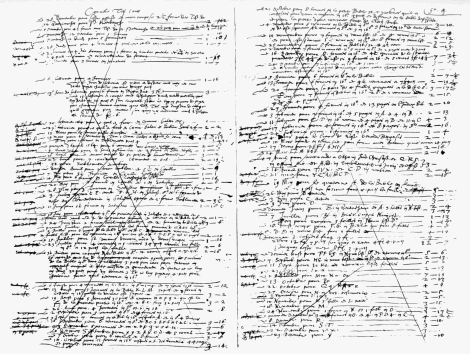 (71) Opposite: Page from the ‘livre des ouvriers’, 1563-67, with the amounts 01 work done by and the wages paid to the compositor Cornelis Tol from the end of 1563 to the end of 1565. The ‘livres des ouvriers’ are not only interesting for revealing the work rates of the Plantinian compositors and pressmen, but also for particulars of how the various books were dealt with. However, the often abbreviated entries make interpretation difficult.
| ||||||||||||||||||||||||||||||||||||||||||||||||||||||||||||||||||||||||||||||||||||||||||||||||||||||||||||||
[pagina *68]
| ||||||||||||||||||||||||||||||||||||||||||||||||||||||||||||||||||||||||||||||||||||||||||||||||||||||||||||||
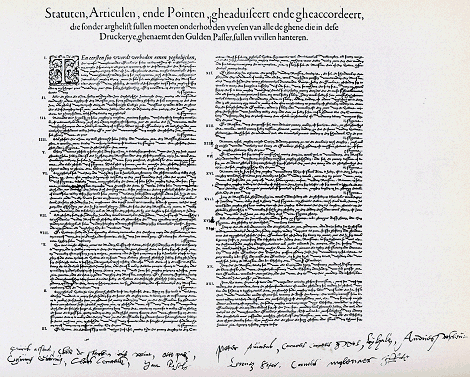 (72) (72) Opposite: One of the ordinances of the Plantin press (Folio Varia 9: R. 63.8) drawn up to ensure orderliness and smooth running. It was printed in civilité type at the end of 1563. This copy was signed by all the compositors and pressmen then working in the Officina.
| ||||||||||||||||||||||||||||||||||||||||||||||||||||||||||||||||||||||||||||||||||||||||||||||||||||||||||||||
[pagina 321]
| ||||||||||||||||||||||||||||||||||||||||||||||||||||||||||||||||||||||||||||||||||||||||||||||||||||||||||||||
After correcting the forme was handed back to the pressman for another proof and so on until the work was deemed ready for the pressman to lock up for the definitive printing. This meant that the press in question was immobilized for a considerable time, which reduced the rate of production. According to Moxon, in many printing shops one press was specially reserved for the pulling of proofs.Ga naar voetnoot1. A similar mode of working may be assumed for the Plantin press. In the various ordinances it was always the journeymen printers who were responsible for proofs.Ga naar voetnoot2. It has been seen that in the 1715 rules they were advised to unlock the formes for this operation.Ga naar voetnoot3. The inventory of 1745Ga naar voetnoot4. mentions correction stones.Ga naar voetnoot5. There was a proof press in the Plantinian printing office at least from 1621, for in that year it was decreed that anyone who borrowed the lye-brush from the proof press should return it immediately after use.Ga naar voetnoot6. Presumably this press was used exclusively for this particular function.Ga naar voetnoot7. A sheet of paper is printed on both sides. This ‘work and turn’ has already been mentioned in connexion with the compositors. The art was to obtain a perfect register when backing up, so that the pages on one side of the sheet corresponded exactly with those on the other. This meant that the tympan and frisket had to be as near true as possible, that the forme for the back had to be placed down in exactly the same place as that for the front and that the sheets of | ||||||||||||||||||||||||||||||||||||||||||||||||||||||||||||||||||||||||||||||||||||||||||||||||||||||||||||||
[pagina 322]
| ||||||||||||||||||||||||||||||||||||||||||||||||||||||||||||||||||||||||||||||||||||||||||||||||||||||||||||||
paper had to be fastened on the same pins. But the shrinking of the paper as it dried introduced another factor which could not be allowed for by mathematical or mechanical means; the pressman had to have an instinct for it. ‘Work and turn’ for an ordinary edition was child's play compared with printing a black-and-red service book. There were various methods which could be employed. According to McKerrowGa naar voetnoot1. the most usual procedure in the sixteenth century, at least in England, was as follows: a frisket was cut so that the sorts that had to print red were left exposed. These were then inked and the whole run printed. After this the red letters were removed and replaced by quads and the sheets laid on the press again to take the black text. In practice the frisket did not always prevent the black text from being smeared with red ink. In 1683-84 Moxon described a somewhat improved method. In this the black was printed first, the red sorts being removed and replaced by quads. The entire run was printed and the red sorts were put back in the forme on pieces of paper or card so that they protruded slightly. The red text was printed and in this method too the frisket was cut so that only the red sorts were exposed.Ga naar voetnoot2. In his commentary on this procedure McKerrow remarks: ‘Substantially the difference in the processes is no more than the underlaying of the red and the printing of black first. Why they should not have underlayed the red at once and printed it first, thus saving themselves the trouble of inserting it a second time, I do not understand but they seem not to have done so.’ They did in fact, at least on the Continent. The Encyclopédie française in 1767 describes the same method as Moxon, except that the red was printed first. While dealing with the use of pieces of paper to raise the red sorts, the author notes in passing, ‘Dans les imprimeries où l'on fait souvent des livres d'église, et autres où cette impression est plus usitée, il y a des caractères plus hauts destinés à cet usage.’ This raises the question of the method or methods used in the | ||||||||||||||||||||||||||||||||||||||||||||||||||||||||||||||||||||||||||||||||||||||||||||||||||||||||||||||
[pagina 323]
| ||||||||||||||||||||||||||||||||||||||||||||||||||||||||||||||||||||||||||||||||||||||||||||||||||||||||||||||
Plantinian printing office. Examination of a number of service books has led the present author to conclude that from the beginning the red parts of text were printed first. The procedure described by Moxon and criticized by McKerrow seems never to have been practised in the Plantin press.Ga naar voetnoot1. Whether the fairly primitive method outlined by McKerrow or the improved process of the Encyclopédie française was followed in the early days cannot be established. The quality of the work and the fact that red smudges or streaks hardly ever appear suggest that the practice of using underlays must have been the rule quite early on, in Plantin's time. Then in about 1680, or possibly a little earlier, a further refinement - that mentioned in passing in the Encylopédie française and described, above in Chapter 4 was introduced: ‘high’ type for the red text and ‘low’ type for the black.Ga naar voetnoot2. In their printing techniques the Low Countries give the impression of having been well ahead of their neighbours in this period. The nineteenth century must have brought another change. A memorandum written in 1828 mentions 26 packets of newly cast ‘high’ sorts ‘but not used for this because of the new manner of printing red’.Ga naar voetnoot3. It has not been possible to discover what this new method was. Later Moretus editions would seem to indicate that the black was now printed first, with far less squabbled type than formerly and a truly remarkable regularity and accuracy. However, whatever method was adopted for printing service books, every sheet went on to the press four times: twice for the front, twice for the back. Special care had to be taken even in ordinary editions to get the two sides of the sheet in register; service books required | ||||||||||||||||||||||||||||||||||||||||||||||||||||||||||||||||||||||||||||||||||||||||||||||||||||||||||||||
[pagina 324]
| ||||||||||||||||||||||||||||||||||||||||||||||||||||||||||||||||||||||||||||||||||||||||||||||||||||||||||||||
twice and three times as much trouble. They were the most difficult kind of printing then known to the trade - and from the second half of the seventeenth century onwards, they were practically the only works issued by the Officina Plantiniana.
It is necessary now to consider the relationship of the two pressmen - the one who inked and the one who operated the press - to each other and to their work. Moxon describes the division of their labours thus:Ga naar voetnoot1. ‘The one they distinguish by the name of First, the other his Second... The first is he that has wrought longest at that Press... Generally the Master Printer reposes the greatest trust upon his care and curiosity for good Work; although both are equally liable to perform it.’ The two journeymen printers had to know how to perform all the operations and to take their turn at them, but one was a little higher in status and responsible for the press. This was also the arrangement in the Plantinian printing office from its foundation, with a ‘premier’ or ‘master’ and a ‘second’ to each press. In the early years the second usually earned only ½ st. less per day than his mate.Ga naar voetnoot2. This implies that the second had to be familiar with all operations and - as Moxon implies - able to carry them out skilfully, but the ordinances stipulated that the ‘master of the press’ was responsible for the press and should also carry out the more delicate tasks.Ga naar voetnoot3. Like the compositors the pressmen did piece work, being paid for according to the number of sheets they printed per day. In contrast with setting, printing was not conditioned by the size or | ||||||||||||||||||||||||||||||||||||||||||||||||||||||||||||||||||||||||||||||||||||||||||||||||||||||||||||||
[pagina 325]
| ||||||||||||||||||||||||||||||||||||||||||||||||||||||||||||||||||||||||||||||||||||||||||||||||||||||||||||||
variety of type. A forme set in a very small type or in Greek or Hebrew could be printed just as quickly as a folio sheet in a large roman type. Only service books with their black and red were a different proposition: it has been seen that every forme had to go under the press twice and needed to be printed with great care. However, the number of sheets printed from each forme varied, depending on the number of copies the printer-publisher wanted to issue of a particular work: the run as it is termed was the main criterion for fixing the wages of the pressmen.Ga naar voetnoot1. Within this delimitation there was little variation, as may be seen in the table on pp. 327-328. It was almost impossible to convert the work done by the compositors into average daily wages. The piece rates paid the pressmen on the contrary could be calculated on the basis of a daily norm, because of the greater regularity and uniformity of their work. That norm was 1,250 feuilles, sans les imperfections, that is to say, usable sheets, excluding wastage.Ga naar voetnoot2. In the text from which this is quoted, Plantin originally wrote ‘2,500’ but crossed this out: a small mistake that he made no doubt through thinking of the number of formes, or the two sides to every sheet. Whereas compositors were paid per forme, the pressmen were paid per sheet, i.e., two formesGa naar voetnoot3. - always remembering of course that there were two men to be paid, not one. If the edition was of fewer than 1,250 copies, less was paid per sheet, but the men | ||||||||||||||||||||||||||||||||||||||||||||||||||||||||||||||||||||||||||||||||||||||||||||||||||||||||||||||
[pagina 326]
| ||||||||||||||||||||||||||||||||||||||||||||||||||||||||||||||||||||||||||||||||||||||||||||||||||||||||||||||
were able to make this up by printing off more than one run per day.Ga naar voetnoot1. As far as possible the piece rates for printing the varying runs of different works were reduced to a highest common factor that ensured average daily earnings on the basis of 1,250 sheets per day.Ga naar voetnoot2. If the daily norm was exceeded, a higher wage was paid on a pro rata basis.Ga naar voetnoot3. The two pressmen at each press were thus expected to produce 1,250 sheets each day, printed on both sides. In twelve working hoursGa naar voetnoot4. this meant an average of three to four sheets a minute. It must be remembered that this daily average had to include all the attendant activities, which could take up quite a lot of time: wetting the paper, preparing ink, getting ink balls ready, locking up and unlocking the formes and washing the formes in lye. To keep their earnings up to the daily average, the pressmen had to work at a feverish pace, straining nerve and sinew in veritably stakhanovite fashion - even if the term had not been thought of then. Good pressmen were even able to exceed the norm and thereby earn welcome extra stuivers.Ga naar voetnoot5. | ||||||||||||||||||||||||||||||||||||||||||||||||||||||||||||||||||||||||||||||||||||||||||||||||||||||||||||||
[pagina 327]
| ||||||||||||||||||||||||||||||||||||||||||||||||||||||||||||||||||||||||||||||||||||||||||||||||||||||||||||||
| ||||||||||||||||||||||||||||||||||||||||||||||||||||||||||||||||||||||||||||||||||||||||||||||||||||||||||||||
[pagina 328]
| ||||||||||||||||||||||||||||||||||||||||||||||||||||||||||||||||||||||||||||||||||||||||||||||||||||||||||||||
These figures do not apply to the black-and-red service books. For these the daily average for work done was lower and the piece rate higher. This did not mean that conditions were vastly different for men working on these editions. In a couple of letters Plantin quotes the figure of 1,000 as the average daily rate for service books.Ga naar voetnoot1. The wages accounts show that this meant 1,000 sides, not sheets.Ga naar voetnoot2. However, as each side had to be printed twice, this was the equivalent of 1,000 sheets in an ordinary edition: 250 sheets a day less than for the latter category, but the lower rate of production was more than offset by the much greater care that had to be taken over the work. Piece rates for service books were, consequently, often expressed in formes rather than sheets. | ||||||||||||||||||||||||||||||||||||||||||||||||||||||||||||||||||||||||||||||||||||||||||||||||||||||||||||||
The collatorsWhen the sheets had been printed and arranged in piles, a new figure took over. He was called an assembleur in French and a vergaerder in Dutch. The collator was only occasionally mentioned in the ordinances, and then only in connexion with his hours of work.Ga naar voetnoot3. He is only once referred to in the rules drawn up by the Plantinian chapel, and from these it appears that he was responsible for sweeping up the | ||||||||||||||||||||||||||||||||||||||||||||||||||||||||||||||||||||||||||||||||||||||||||||||||||||||||||||||
[pagina 329]
| ||||||||||||||||||||||||||||||||||||||||||||||||||||||||||||||||||||||||||||||||||||||||||||||||||||||||||||||
printing shop.Ga naar voetnoot1. He was a lowly member of the staff and had no place in their chapel. His work was less difficult than that of his colleagues, but still required a measure of care and deftness. After the pressmen had finished their work, the sheets from which the book was to be made up were stacked neatly in piles, but these piles consisted of identical sheets. The task of the collator, besides a number of odd jobs he had to perform, was to fold these sheets and arrange them in the right order (gather them) to make up the requisite number of complete copies. The first entry for a collator in the livres des ouvriers was on 17th July 1568, when Henri Parent started work at the Plantin press.Ga naar voetnoot2. Thereafter, this category of workman appears fairly regularly in the wages accounts, although there are periods without any entries for them. This does not mean that there were no ‘regular’ collatorsGa naar voetnoot3. at work in the Plantin press before 1568, or that the firm managed without them for varying intervals after that date, but simply that it was not always thought necessary to enter the amounts paid them in the ordinary accounts. This also happened with the bookshop assistants, possibly for the same reason: their wages were much more regular than those of the compositors and pressmen and were paid directly out of the till.Ga naar voetnoot4.
The collators' task required little training: they were regarded, and paid, as unskilled labour. Henri Parent earned an average of 3 to 3½ st. per day, roughly half the rate for a compositor or pressman. On 12th November 1569 Plantin agreed to take on Henri's son Michel in the same capacity, paying him 3 st. a day, and 3½ st. from the following Christmas until after Lent. Plantin also agreed to accept the lad as an apprentice should there be an opening, in which case | ||||||||||||||||||||||||||||||||||||||||||||||||||||||||||||||||||||||||||||||||||||||||||||||||||||||||||||||
[pagina 330]
| ||||||||||||||||||||||||||||||||||||||||||||||||||||||||||||||||||||||||||||||||||||||||||||||||||||||||||||||
he would receive 4 st. a day ‘according to our custom’.Ga naar voetnoot1. This meant that a collator was paid less than an apprentice printer. The collator's pay was fairly steady and amounted almost to a fixed wage. In 1580-81 Pieter Berten was receiving 3½ st. per day, more or less the same as Henri Parent and his son in 1569.Ga naar voetnoot2. However, it is possible that the collators daily wage could also be regarded as a piece rate that had become standardized in the course of time and that, to earn their money, these workers had to collate a certain number of sheets as well as carry out their various other small tasks.Ga naar voetnoot3. This, in any event, was the case with some workmen hired in 1565 for doing this particular job on a temporary basis - though without receiving the qualification of ‘collator’.Ga naar voetnoot4. In January of that year Louis ElsevierGa naar voetnoot5. and two others were paid ½ st. for every ream they arranged in order. In one week the three managed to collate 52, 53, and 54 reams respectively, earning therefore 1 fl. 6 st., 1 fl. 6½ st., and 1 fl. 7 st. From the end of the month onwards, Plantin merely entered Louis Elsevier's name - the others were not mentioned again - with a daily wage of 4½ st., that is to say 1 fl. 7 st. a week. This money would have been ensured by what must then have been the average rate: 54 reams per week.Ga naar voetnoot6. Henri Parent, Pieter Berten, and others of this category of workman who appeared later, usually received less, so presumably they did not get through so much work, either because they were less experienced or because they were not urged to increase their tempo. Extra hands could always be hired when necessary, who generally earned more by | ||||||||||||||||||||||||||||||||||||||||||||||||||||||||||||||||||||||||||||||||||||||||||||||||||||||||||||||
[pagina 331]
| ||||||||||||||||||||||||||||||||||||||||||||||||||||||||||||||||||||||||||||||||||||||||||||||||||||||||||||||
their exertions than the regulars.Ga naar voetnoot1. From time to time apprentices, or even regular journeymen, were also roped in for this task,Ga naar voetnoot2. whilst the shop assistants were supposed to assist the collators in their spare time.Ga naar voetnoot3. Worthy of note is the fact that in 1583 to 1584 the collator Merten Gilles was assisted by this daughter.Ga naar voetnoot4. This is the only instance the author has come across of a woman in the essentially masculine world of the Plantinian printing shop during the three centuries of its operation. | ||||||||||||||||||||||||||||||||||||||||||||||||||||||||||||||||||||||||||||||||||||||||||||||||||||||||||||||
The ‘gouverneur’In the ordinance of 1715 another category of workman appears, designated as the gouverneur. The duty assigned him was not as impressive as his title might suggest, and consisted of inspecting the compositors' type-cases once a month.Ga naar voetnoot5. This was also specified as one of the tasks in the undated ‘Rule for the type-setter in the type-room of the Plantinian press’.Ga naar voetnoot6. The gouverneur and the ‘type-setter in the type-room’ were one and the same, and identical with the ‘gouverneur des caracterès fondus’ entered in the wages sheets from 1571 onwards. | ||||||||||||||||||||||||||||||||||||||||||||||||||||||||||||||||||||||||||||||||||||||||||||||||||||||||||||||
[pagina 332]
| ||||||||||||||||||||||||||||||||||||||||||||||||||||||||||||||||||||||||||||||||||||||||||||||||||||||||||||||
He was a compositor who according to the 1715 rules was specially charged with taking care of types and wood-blocks. He had to issue materials to the other compositors and if necessary to the printers, and check and store them when returned. If he had any time left, he was to set texts ‘always in the type-room and not in the printing shop’.Ga naar voetnoot1. Part of his responsibility for the founts of type consisted of seeing that the other compositors handled their expensive material with due care, ‘dissed’ the type promptly, kept the type-cases clean, and so on. All this, however, was incidental to his main function, for the gouverneur was not a foreman, nor was he the prote so familiar from the French literature, the master's right-hand man and deputy. In fact he was the chief storeman. The compositor Jan Pasch was the first to be given the title, in 1571, although he had probably been doing the job for some time previously. He had entered Plantin's service as a compositor on 30th January 1564.Ga naar voetnoot2. Until the beginning of October 1567 he was paid piece rates for setting texts.Ga naar voetnoot3. On 18th October of that year he received 2 fl. ‘pour 4 iournées à racoustrer les lectres’. From then on he was paid a fixed wage, beginning at 10 st. per day (3 fl. per six-day week). This was raised on 30th October 1568 to 3 fl. 5 st. per week, and again in July 1569 to 4 fl.Ga naar voetnoot4. When Plantin started a new livre des ouvriers in 1571 the first entry was Jan Pasch, now designated as ‘gouverneur des caracteres fondues’Ga naar voetnoot5. so that the title simply confirmed a situation that had existed since October 1567.Ga naar voetnoot6. His pay remained at 4 fl. a week. Adriaan van de Velde, who succeeded Pasch on 9th May 1572, received the same rate at first, but from 8th November 1572 his wage was reduced to 3 fl. a week.Ga naar voetnoot7. | ||||||||||||||||||||||||||||||||||||||||||||||||||||||||||||||||||||||||||||||||||||||||||||||||||||||||||||||
[pagina 333]
| ||||||||||||||||||||||||||||||||||||||||||||||||||||||||||||||||||||||||||||||||||||||||||||||||||||||||||||||
A good compositor at this time could earn 3 fl. and sometimes even 4 fl. a week. Jan Pasch himself achieved 3 fl. 4 st. in some weeks in 1565 and even reached 4 fl. 6 st. a few times. Such peaks, however, alternated with weeks in which his earnings were very much lower. In the period 1565-67 Pasch was among the highest paid workmen in the firm, but even in his best year, 1565, his total wage was only 159 fl. 11 st., and in 1566 and 1567 the totals were 131 fl. and 137 fl. 7½ st. respectively. His income for 1568 cannot be calculated with any certainty. In 1569 (in the first half he was earning 3 fl. 5 st. per week; 4 fl. weekly in the second half) his total for the year rose to 182 fl. and in 1570 it increased to 200 fl. 5 st. These are the highest figures the author has discovered for the period and they show that the gouverneur with his rates of between 10 st. and 13½ st. per day was the best-paid workman in the press. Although he was not actually in charge of his workmates, his responsibility and his wages were greater; he was in fact first among equals.Ga naar voetnoot1. | ||||||||||||||||||||||||||||||||||||||||||||||||||||||||||||||||||||||||||||||||||||||||||||||||||||||||||||||
The relationship between compositors and pressmenThe activities of the compositors and pressmen in the Officina Plantiniana have been discussed and it is now necessary to consider the relationship of the two categories one to the other, first with regard to their numbers. The total number of men employed obviously depended on how busy the press was - it was naturally bigger in 1574-75, when Plantin had fifteen presses working, than in leaner years. The ratio of pressmen to compositors, however, was determined by the productivity of the latter. The number of formes that they could get ready in a given time varied greatly according to the nature of the work in hand, but it seems reasonable to assume that for fairly straightforward assignments the tempo would have been one forme per day. In normal circumstances (that is to say a run of 1,250 copies of a non-liturgical edition) printing one of these formes would have taken half a day. In theory, two compositors were therefore needed to keep one press supplied with work. As there | ||||||||||||||||||||||||||||||||||||||||||||||||||||||||||||||||||||||||||||||||||||||||||||||||||||||||||||||
[pagina 334]
| ||||||||||||||||||||||||||||||||||||||||||||||||||||||||||||||||||||||||||||||||||||||||||||||||||||||||||||||
were two pressmen to each press the numbers of the two types of workmen were generally equal,Ga naar voetnoot1. but with a slight preponderance of compositors when viewed over the whole period. The ratio was different for liturgical books, the rate of printing being reduced by more than half.Ga naar voetnoot2. This meant that a single compositor could then feed a press operated by two pressmen. Thus the ratio of compositors to pressmen fluctuated according to the extent to which production was concentrated on liturgical or ordinary editions, as shown in the table on p. 335.
The figures confirm that in Plantin's early years, when the firm was producing mostly ordinary works, compositors slightly outnumbered pressmen. But from 1568 onwards, when service books began to preponderate, the relative number of compositors began to fall and by 1576 they represented not much more than half that of the pressmen. After 1576 Plantin returned to non-liturgical editions and the relative number of compositors rose again. From 1585 the importance of black-and-red editions increased once more and in the second half of the seventeenth century specialization in service books caused the ratio of compositors to sink again to that of the late 1560s and 1570s. The compositors' work required deftness and a certain amount of mental effort. The pressmen had to be similarly skilful with their hands, but intense physical effort was the chief requirement of their task. This raises the question of how the two activities were compared with each other when it came to wages. Both groups were paid piece rates, which makes comparison difficult. In both there were good and less good workers, their earnings above or below the norm for their own or the other group. In the case of the pressmen, the ‘premier’ and the ‘second’ were entered separately in the wages accounts until 1580. In that year the latter category disappeared and | ||||||||||||||||||||||||||||||||||||||||||||||||||||||||||||||||||||||||||||||||||||||||||||||||||||||||||||||
[pagina 335]
| ||||||||||||||||||||||||||||||||||||||||||||||||||||||||||||||||||||||||||||||||||||||||||||||||||||||||||||||
the wages entered for the ‘premier’ practically doubled:Ga naar voetnoot2. even if the number-one man at each press did not actually receive the double wage-packet, this is how it was shown in the books. Henceforth in the accounts it is only possible to find out approximately the pressmen's wages by dividing by two, without being able to determine | ||||||||||||||||||||||||||||||||||||||||||||||||||||||||||||||||||||||||||||||||||||||||||||||||||||||||||||||
[pagina 336]
| ||||||||||||||||||||||||||||||||||||||||||||||||||||||||||||||||||||||||||||||||||||||||||||||||||||||||||||||
the slight difference in earnings between ‘premier’ and ‘second’. This mode of accounting was retained by the Moretuses. A comparison of yearly wages earned by compositors and pressmen between 1564 and 1587 is given on pp. 336-338. A few bachelors among the workmen found it more convenient to lodge with their employer: the author has found just four names for Plantin's time. There were two kinds of arrangement. In one, the workmen paid about 50 fl. per year for board and lodging and received a normal wage.Ga naar voetnoot1. In the other case the employer paid for the board and lodging and then gave the employees a wage that can be taken as the difference between his costs and their earnings.Ga naar voetnoot2.
| ||||||||||||||||||||||||||||||||||||||||||||||||||||||||||||||||||||||||||||||||||||||||||||||||||||||||||||||
[pagina 337]
| ||||||||||||||||||||||||||||||||||||||||||||||||||||||||||||||||||||||||||||||||||||||||||||||||||||||||||||||
| ||||||||||||||||||||||||||||||||||||||||||||||||||||||||||||||||||||||||||||||||||||||||||||||||||||||||||||||
[pagina 338]
| ||||||||||||||||||||||||||||||||||||||||||||||||||||||||||||||||||||||||||||||||||||||||||||||||||||||||||||||
| ||||||||||||||||||||||||||||||||||||||||||||||||||||||||||||||||||||||||||||||||||||||||||||||||||||||||||||||
[pagina 339]
| ||||||||||||||||||||||||||||||||||||||||||||||||||||||||||||||||||||||||||||||||||||||||||||||||||||||||||||||
It is difficult to draw useful and relevant conclusions from these divergent figures. They give the impression that until about 1580 the average annual wages of the pressmen were a little higher than those of their rather more mentally developed but physically less extended workmates, but that after 1580 the position was reversed in favour of the compositors. The marked fluctuations in the figures also make it hard to apply the upward spiral of wages in the sixteenth century, observable in Antwerp, to conditions in the Plantinian press with any precision. The stages of the contest between rising prices and adjustments of wages in sixteenth-century Antwerp have been reconstructed along general lines.Ga naar voetnoot1. The great rises in prices of the first half of the century were only made good by increases in wages after relatively long intervals; the most marked took place in 1543, 1547, and 1557-62. The last of these, precipitated by the bad harvest of 1556-57, was the most important of the three and benefited the skilled workers in particular. In 1566-67 wages fell a little as a result of the political and religious troubles and the associated economic regression, but without dropping below the level of before 1557. The inflationary years 1572-74 made new adjustments in wages necessary in 1576-77. In 1577 Antwerp went over to the rebels. The Calvinists, who came to power shortly afterwards, were largely supported by the working class. They forced wage increases which were not aimed simply at compensating for the reduced purchasing power of money but had a more political character. In the years 1580-83 working men in Antwerp achieved the highest standard of living they were to experience in the sixteenth century. The capture of the city by Alexander Farnese in 1585, like the arrival of Alva twenty years earlier, brought a steep decline. Falling wages and rising prices reduced many workers to below subsistence level in 1586. But from 1587 there began to be readjustments which, while they did not catch up with prices, at least went some way towards restoring the balance. | ||||||||||||||||||||||||||||||||||||||||||||||||||||||||||||||||||||||||||||||||||||||||||||||||||||||||||||||
[pagina 340]
| ||||||||||||||||||||||||||||||||||||||||||||||||||||||||||||||||||||||||||||||||||||||||||||||||||||||||||||||
The attempts by the Antwerp authorities to hold down wages were in fact offset by large-scale emigration. This so affected the labour market that the principle of supply and demand very soon caused wages to begin to rise again. The levels reached in about 1600 were maintained with remarkable stability until well into the eighteenth century. In 1558, when the Plantinian wages accounts began, earnings were already at a high level and almost twice those of the first half of the century. The fall in wages in 1566-67 cannot be verified for the officina. The figures for that period and for the following years give, the impression that the fluctuations that occurred within the firm were the result not so much of changes in the general state of the Netherlands economy as of the alternating periods of expansion and contraction that the press underwent in these years. More work meant higher productivity and better wages; less work meant lower wages, even for the men who were kept on. If there were adjustments, these were bound to benefit the pressmen more than anyone else. There is no disputing one fact: in the period 1568-72 there were social tensions within the firm that may have given rise to strikes, and at all events to friction between employer and employees.Ga naar voetnoot1. The years 1576-78, which brought certain improvements for the Antwerp working class as a whole, saw a sharp decline in wages in the Plantinian press. Again it was the difficulties which Plantin himself was having in keeping the press going rather than the general economic situation which determined the wages of his workmen. But from 1579 onwards, with a Calvinist regime in Antwerp, and Plantin's stabilization of his business, wages began to rise. This time it was the compositors who gained most. The siege of Antwerp (1584-85) crippled the officina, but when activities were resumed wages were not only on the high side but appear to have risen in comparison with 1580-83, and in 1587 they started on a new and pronounced upwards trend. Thus the regression of 1585-86 seems not to have been reflected | ||||||||||||||||||||||||||||||||||||||||||||||||||||||||||||||||||||||||||||||||||||||||||||||||||||||||||||||
[pagina 341]
| ||||||||||||||||||||||||||||||||||||||||||||||||||||||||||||||||||||||||||||||||||||||||||||||||||||||||||||||
within the firm. The wage increases of the following years appear to have been carried through earlier and more intensively there than in other Antwerp concerns. Nevertheless, Plantin's financial position was far from ideal in those years, when ‘de nostril imprimerie jadis florissante et ores flaitrissante’ was how he headed many of his letters.Ga naar voetnoot1. But the printer intended to stay in business. For this he needed workers - and skilled men were hard to come by in post-1585 Antwerp.
Ideas about the living standards of the workers in Antwerp after the surrender have to be somewhat revised in the light of Plantin's wage-sheets. The situation was undoubtedly catastrophic for unskilled labourers. Firms, however, that were dependent on craftsmen and wanted to stay in business had to try to counter the massive flight from Antwerp with higher wages. This probably explains why the compositors seem to have been at an advantage at this time. The differing demands made on compositors and pressmen have already been discussed and it is easy to see why it was more convenient as well as quicker to train unskilled workmen to be pressmen than compositors. This meant that the latter were relatively more valuable after the disruption of the labour market following the surrender of Antwerp in 1585. The piece-rate system and the great fluctuations in annual pay make it also difficult to compare wages in the Plantinian firm with general Antwerp standards. However, it can be stated with some certainty that Plantin's better workmen ranked among the aristocrats of the Antwerp labour force. Their wages approached and often even exceeded those of the master masons.Ga naar voetnoot2. It may also be assumed that this remained true in the following centuries. The question now arises of the relations of compositors and pressmen in the workshop itself. It has been seen that the compositors determined the rate of work to some extent. If they did not have formes ready on time the pressmen could not start work nor achieve | ||||||||||||||||||||||||||||||||||||||||||||||||||||||||||||||||||||||||||||||||||||||||||||||||||||||||||||||
[pagina 342]
| ||||||||||||||||||||||||||||||||||||||||||||||||||||||||||||||||||||||||||||||||||||||||||||||||||||||||||||||
their usual norm - and wages. Ultimately production, and the good humour of the pressmen, depended on the compositors. A great deal of attention was paid to this aspect in the ordinances. The compositors were exhorted over and over again to have their formes ready in good time. Hours were set out carefully in the earliest regulations.Ga naar voetnoot1. When production began to rise and the number of men to increase, it was no longer felt so necessary to give exact hours and times. The firm became so complex that it was possible to find a stand-in or a replacement for any worker who left or was absent. All that remained was the general stipulation that the compositors should hand over their formes ‘in time and at the appointed hour’.Ga naar voetnoot2. But often this was easier said than done. Delay on the part of the compositors through pressure of work - or slackness - was one of the main sources | ||||||||||||||||||||||||||||||||||||||||||||||||||||||||||||||||||||||||||||||||||||||||||||||||||||||||||||||
[pagina 343]
| ||||||||||||||||||||||||||||||||||||||||||||||||||||||||||||||||||||||||||||||||||||||||||||||||||||||||||||||
of the disputes which disturbed the peace of the printing shop. The 1715 rules make this clear enough.Ga naar voetnoot1. There was a remedy for slackness: fines were imposed and compensation was paid to the injured party; but this introduces the next topic, general conditions of work in the Officina Plantiniana. | ||||||||||||||||||||||||||||||||||||||||||||||||||||||||||||||||||||||||||||||||||||||||||||||||||||||||||||||
General working conditionsThe ordinance of 1715 gives details of working hours in the firm.Ga naar voetnoot2. Compositors and pressmen had to be at work at six o'clock in the morning, but not earlier ‘so that any devout man may go to Mass’. Twelve noon to 1 o'clock they had off for the midday meal. From 1st April to 30th September they were allowed to work as long as it was light, but not later than 8 o'clock. From 1st October to 31st March they could work by candle-light, but knocking-off time remained at 8 o'clock. Working hours for the copperplate printers and the collators differed slightly from these. The former were free from 12 noon to half past one, while the latter also had the longer midday break and were not supposed to begin their work before 7 o'clock in the morning. This meant a 13-hour day for the compositors and pressmen, 12½ hours for the copperplate printers and 11½ hours for the collators. Work could be broken off to take a drink or have a meal. A regulation of 1642 deals with this in detail.Ga naar voetnoot3. It may be assumed that in general these working hours applied in Plantin's time. The only difference was that work for some at least | ||||||||||||||||||||||||||||||||||||||||||||||||||||||||||||||||||||||||||||||||||||||||||||||||||||||||||||||
[pagina 344]
| ||||||||||||||||||||||||||||||||||||||||||||||||||||||||||||||||||||||||||||||||||||||||||||||||||||||||||||||
of the men began at 5 o'clock in the morning. The 1563 ordinance stipulated that the pressmen had to be in the shop between 5 and 6 o'clock so as to begin work at the latter hour.Ga naar voetnoot1. The addendum of 1570-71 further stated that from 1st May to 1st September the ‘premier’ had to be in the printing shop at 5 o'clock ‘so as to prepare everything with diligence’.Ga naar voetnoot2. A later reference, to be discussed below, asserts that it was ‘the old custom’ to begin work at 5 o'clock. In practice the masters of the Golden Compasses attached no great importance to the actual number of hours a day their men worked. The piece-rate system meant that it was in the workers interest to work as long as they were able and thus increase their norms. If the masters intervened, it was usually to establish a maximum number of working hours, or even to reduce them. The real purpose of the 1715 regulations was to ensure that the men did not start work before 6 o'clock, so that those who wanted to attend Mass were not at a disadvantage compared with their less pious mates, and to insist that the officina had to be emptied by 8 o'clock. When the workpeople expressed themselves on the subject it was not to protest against the long working hours, but to ask if they could do a little more. An undated petition from the journeymen urged that the caretaker should be allowed to let them in at 4.30, so that they could begin work punctually at five ‘for as you well know that those who work in red [i.e., on liturgical books] have to lose half a day if they by chance are quarter of an hour late getting everything ready’.Ga naar voetnoot3. To curb the enthusiasm of some of the men it was laid down that no one should come to work on Mondays when Fairs were held, Shrove Tuesday, or Plough Monday, the penalty being 6 st.Ga naar voetnoot4. | ||||||||||||||||||||||||||||||||||||||||||||||||||||||||||||||||||||||||||||||||||||||||||||||||||||||||||||||
[pagina 345]
| ||||||||||||||||||||||||||||||||||||||||||||||||||||||||||||||||||||||||||||||||||||||||||||||||||||||||||||||
The ordinance issued on 1st March 1703 by Anna Maria de Neuf, widow of Balthasar iii Moretus, is most revealing for the views of employers and employed on the subject.Ga naar voetnoot1. A drastic reduction of working hours was recommended. The midday break of one hour was retained, but work was not to be started before 7 o'clock, nor continued past 7 p.m. The aim was to keep the business going, but at a reduced tempo ‘considering the situation in these times’ - namely the economic crisis caused by the War of Spanish Succession. Anna Maria de Neuf could have sacked some of the pressmen and compositors, but for humanitarian reasons she chose to reduce the hours, and therefore the wages of everyone. She was prudent enough to provide sanctions: the threat of a 6 st. fine for any workman who might start too early or finish too late. In the regulations she was insistent that ‘this was more in the interests of the journeymen than of herself.’ Pressmen depended on compositors; pairs of journeymen had to work at each press together; the master had to supply pressmen and compositors with material. There had to be a general interdependence if the men were to achieve their desired working hours and wages, and the master his profits. It followed that those who through negligence or lack of skill held up the work to the detriment of others should lose all or some of their pay. A system of penalties and compensation was worked out, involving both master and men. For the master, too, had to accept responsibility for any failure or negligence on his part. The 1555-56 ordinance laid just as much emphasis on the duties and obligations of the employerGa naar voetnoot2. as on those of the workers.Ga naar voetnoot3. | ||||||||||||||||||||||||||||||||||||||||||||||||||||||||||||||||||||||||||||||||||||||||||||||||||||||||||||||
[pagina 346]
| ||||||||||||||||||||||||||||||||||||||||||||||||||||||||||||||||||||||||||||||||||||||||||||||||||||||||||||||
The 1563 rules again stressed the principle of managerial responsibility,Ga naar voetnoot1. but the sanctions governing the employees' obligations were more carefully defined.Ga naar voetnoot2. The addendum of 1570-71 took this aspect further.Ga naar voetnoot3. Among other things it laid down that if a pressman caused the loss of a working day, he should be liable to a fine of 1 fl., to be paid to the master, and should pay compensation of 10 st. to his mate. However, he could take one day off per week so long as he gave the master 24 hours' notice. This passage should not be interpreted as granting holidays with pay: the man lost his pay, but in this case he did not have to pay the fine or the compensation. The wages accounts show that these precepts were applied from time to time, but it seems to the author that there was a fair amount of flexibility in practice.Ga naar voetnoot4. | ||||||||||||||||||||||||||||||||||||||||||||||||||||||||||||||||||||||||||||||||||||||||||||||||||||||||||||||
[pagina 347]
| ||||||||||||||||||||||||||||||||||||||||||||||||||||||||||||||||||||||||||||||||||||||||||||||||||||||||||||||
Penalties were imposed for other reasons too. Good order was maintained in the workshop by fines. Such penalties were for the benefit of the employees' community and will therefore be discussed in the section devoted to the Plantinian chapel. The master was also supposed to earn the good will and encourage the zeal of his work-people by paying bonuses. These too were paid not to individuals but to the representative chapel, and will also be considered below. Only one instance has been discovered of bonuses paid in kind. In the years 1583 to 1585 sums of money paid for fish and meat were entered regularly in the memorial pour les semaines des ouvriers.Ga naar voetnoot1. These were probably extra rations bought specially for distribution among the men during the siege of Antwerp.Ga naar voetnoot2. Very occasionally Plantin paid a man who worked particularly hard, or promised to do so, in beer or wine.Ga naar voetnoot3. The nature of the work in the printing office could vary considerably according to the job in hand. For the compositors in particular, each new book brought some change in their routine. In principle therefore, rates were negotiated between employer and employee, not only when a man started work with the firm, but each time work on a new book was begun.Ga naar voetnoot4. Moxon in 1683-84 was still advising compositors | ||||||||||||||||||||||||||||||||||||||||||||||||||||||||||||||||||||||||||||||||||||||||||||||||||||||||||||||
[pagina 348]
| ||||||||||||||||||||||||||||||||||||||||||||||||||||||||||||||||||||||||||||||||||||||||||||||||||||||||||||||
to look carefully at every new assignment they accepted.Ga naar voetnoot1. Bargaining like this was appropriate in small concerns with a few journeymen, but not in larger firms employing several dozens of men and where there was a continuous flow of orders. In 1563 and 1564, when Plantin was slowly getting his reorganized business going again, he continued for some time with the tried but time-consuming methods he had followed from 1555 to 1562. But all the indications are that it was not long before he established rationalized patterns of working and standardized rates of pay. However, where particular problems arose, special discussions were still held. The decisions thus reachedGa naar voetnoot2. often served as precedents for a while.Ga naar voetnoot3. At the same time it was quite common for workmen - in practice it was always compositors - to leave the firm rather than carry out some new task on the conditions laid down by the employer.Ga naar voetnoot4. Inherent in this kind of bargaining was the principle that the master was free to give particular workmen preferential treatment. Plantin himself stated this quite emphatically in ordinance D.Ga naar voetnoot5. However, this | ||||||||||||||||||||||||||||||||||||||||||||||||||||||||||||||||||||||||||||||||||||||||||||||||||||||||||||||
[pagina 349]
| ||||||||||||||||||||||||||||||||||||||||||||||||||||||||||||||||||||||||||||||||||||||||||||||||||||||||||||||
particular regulation must be regarded as a sharp response on the part of the employer to the organized action of his workmen and Plantin was simply reminding them of something he had reserved the right to do. It is possible that he did on occasion exercise this right. The author is of the opinion that Guillaume Riviére, nephew of Plantin's wife and a journeyman printer in the officina from 1573 to 1588, was favoured above his workmates to some extent. Despite this instance it is probable that in practice the employer seldom exercised his prerogative in these matters and that generally the uniformity necessary to the good running of a large business prevailed. All the same, the men remained suspicious and inquisitive. In 1622 it was laid down that anyone caught eavesdropping at the door or window of the office where the master paid out the wages should incur a fine of 3 st.Ga naar voetnoot1. Problems posed by resignation or dismissal were also reflected in the ordinances. In 1563 it was laid down that both had to be preceded by a month's notice on the part of employee or employer respectively.Ga naar voetnoot2. The 1570 rules contain a similar stipulation.Ga naar voetnoot3. Ordinance D, the work of an angry employer, referred to above, was much sharper in tenor. First of all it stated that the master would keep back each week one quarter of the wages of each journeyman until he held a sum of 10 to 12 fl. for each man. This measure was not altogether new. The 1563 regulation laid down that within one month each man had to deposit with the master one day's pay.Ga naar voetnoot4. But the amount of the deposit had now been increased to almost one month's wages. The measure was formulated as if to provide a sum of money to be held as security against the payment of any fines or damages the men might incur. It is clear from the circumstances, however, that it was intended rather to give the employer some guarantee against the too sudden departure of his men and a weapon to use against unruly elements. | ||||||||||||||||||||||||||||||||||||||||||||||||||||||||||||||||||||||||||||||||||||||||||||||||||||||||||||||
[pagina 350]
| ||||||||||||||||||||||||||||||||||||||||||||||||||||||||||||||||||||||||||||||||||||||||||||||||||||||||||||||
Later in the text Plantin reserved for himself the right to sack refractory workers without prior notice (now reduced to two weeks on either side for normal cases) and to recover any loss or damage he might thereby incur from the deposited sum. The wages accounts show that Plantin had some reason to take this measure. Workmen often simply walked out, not only without giving notice or completing their tasks, but also without paying back money that Plantin had advanced them.Ga naar voetnoot1. Plantin at first seems not to have made too much of such breaches of the rules or of the financial losses he incurred. He would probably have gone on putting up with these practices if considerable social tensions had not begun to be felt in the firm about 1570, leading to strikes, or at least protest action.Ga naar voetnoot2. It was then that he devised this measure to make strikes and unheralded departure more difficult, and instant dismissal a real and financially palpable threat to the rebellious. In 1573 and 1574 the printer does seem to have stuck to this rule and retained parts of the wages - though seemingly much less than provided for in ordinance D.Ga naar voetnoot3. Later, with some lowering of the tension, the provision must have lapsed. In the wages accounts | ||||||||||||||||||||||||||||||||||||||||||||||||||||||||||||||||||||||||||||||||||||||||||||||||||||||||||||||
[pagina 351]
| ||||||||||||||||||||||||||||||||||||||||||||||||||||||||||||||||||||||||||||||||||||||||||||||||||||||||||||||
from the earliest period, Plantin regularly commented on the reasons for his workers' departures and the manner of their going. They afford interesting glimpses of the characters and mentalities of workers of that time - at least of the more troublesome among them.Ga naar voetnoot1. The ordinances illumine certain other aspects of work and conditions in the officina. In winter, work was started and concluded by candlelight and there always had to be a fire for heating the lye. Fire was therefore a constant danger. The precautions that had to be taken were set out in a special rule and backed up by the necessary sanctions.Ga naar voetnoot2. But not even the best preventative measures could always ward off calamity. So as to be prepared for all eventualities, a fire-pump was procured. It is not certain if it was ever used, but in 1685 detailed instructions for its operation were given.Ga naar voetnoot3. The cost of heating the printing shop seems to have been borne by the workpeople until well into the seventeenth century, but this expense was met out of the bonuses the master paid to the chapel.Ga naar voetnoot4. | ||||||||||||||||||||||||||||||||||||||||||||||||||||||||||||||||||||||||||||||||||||||||||||||||||||||||||||||
The apprenticesTraining was required before a boy could become a pressman or compositor and to get this he served as an apprentice in an officina. The ordinances give little more than a few generalities about the apprentices and their articles, only achieving precision on the subject of the dues they owed the Plantinian chapel, of which they themselves | ||||||||||||||||||||||||||||||||||||||||||||||||||||||||||||||||||||||||||||||||||||||||||||||||||||||||||||||
[pagina 352]
| ||||||||||||||||||||||||||||||||||||||||||||||||||||||||||||||||||||||||||||||||||||||||||||||||||||||||||||||
were not formally members.Ga naar voetnoot1. The wages accounts give a rather clearer picture of these pressmen and compositors to be. There were not many of them in Plantin's time. The author has discovered twenty-three names altogether,Ga naar voetnoot2. although it is possible that there were some who were not entered in the books. It should be pointed out that a goodly percentage of those recorded disappeared altogether from the accounts within a matter of days, weeks, or months either of their own accord because they found the work too difficult, or because they had been dismissed by a dissatisfied employer.Ga naar voetnoot3. Of those who served their apprenticeship, hardly any stayed on as journeymen.Ga naar voetnoot4. Of the twenty-three recorded apprentices, only five wanted to be trained as compositors, the rest being ‘apprentif a la presse’. The records are not always very detailed or clear. When in the earlier period any information is given about the length of the apprenticeship, this seems always to be restricted to two or three years both for pressmen and compositorsGa naar voetnoot5. - which is short compared with other crafts. Most apprentice pressmen drew a daily wage from the day they signed on. It amounted to slightly over half that paid to a trained workman, and exceeded that of the collator. If the press | ||||||||||||||||||||||||||||||||||||||||||||||||||||||||||||||||||||||||||||||||||||||||||||||||||||||||||||||
[pagina 353]
| ||||||||||||||||||||||||||||||||||||||||||||||||||||||||||||||||||||||||||||||||||||||||||||||||||||||||||||||
they were working at exceeded the daily average output, then their pay increased accordingly.Ga naar voetnoot1. In the case of the apprentice compositor Antoine Avians Plantin entered in the accounts only a few sums of money he had advanced him and the fact that the lad ‘s'en est alé et hors daprentissage et men avoit adverti par avant et estparti à mon contentement fort superbe’.Ga naar voetnoot2. However, under the name of Cornelis Tol Plantin noted that he had entered into an agreement on 30th July 1564 with this workman to pay him 9 st. per forme for a particular book ‘dont ie rabbatray 3 st. par iour pour Antoine apprentif auquel il doibt monstrer et gouverner’.Ga naar voetnoot3. Like the other apprentices, Avians was entitled to a daily amount. This was deducted from Tol's wages but not actually given to Avians, so it must have been kept by Plantin in payment for the boy's board and lodging. This entry implies that the other apprentices did not live in. Four detailed contracts have come down from Plantin's later years. Three concern apprentice compositors who boarded with Plantin. The fourth, a rather unusual one, was drawn up on 22nd May 1579 and concerned an apprentice pressman, Abraham Smesman, son of one of Plantin's workmen.Ga naar voetnoot4. It appears that the young Smesman had already served six years as an apprentice with the firm. Now his father was binding him for a further two years, during which he was to live in. He was to receive more money than the ordinary apprentices: an annual wage of 30 fl. in addition to the cost of his board and lodging in the first year, and 50 fl. in the second year. These exceptional provisions may have been connected with the family circumstances of the Smesmans, or with the young man's behaviour. The stipulation ‘sans qu'il puisse aler hors de la maison sans mon congé’ may point to some sort of disciplinary measure | ||||||||||||||||||||||||||||||||||||||||||||||||||||||||||||||||||||||||||||||||||||||||||||||||||||||||||||||
[pagina 354]
| ||||||||||||||||||||||||||||||||||||||||||||||||||||||||||||||||||||||||||||||||||||||||||||||||||||||||||||||
suggested by the father. It is worthy of note that Smesman senior cannot have been an easy gentleman to get along with: years before he had himself left the firm after a quarrel.Ga naar voetnoot1. The subject of another contract, drawn up on 1st September 1578, was Robert Bruneau, son of Jacques Bruneau, choirmaster of St. Bavo's, Ghent.Ga naar voetnoot2. He was to receive board and lodging, but no wages. His father was to pay for his clothing. The apprenticeship was fixed at five years. If Bruneau broke the contract and left the officina before this term was up, he was to reimburse Plantin for the expenses incurred (presumably for board and lodging) at the rate of 60 fl. for the first two, and 40 fl. for the subsequent years. The two other contracts are roughly similar. Jan Ranchart was bound apprentice pressman for four years, starting from the Feast of St. John, 1579. He was to receive board and lodging, but if he left his master before the end of his apprenticeship he must pay back the money spent on his keep, with an additional 100 fl.Ga naar voetnoot3. Pierre van Craesbeeck entered the Plantin house as a boarding apprentice compositor a little later than the others (probably about 1583). His apprenticeship was fixed at six years. For the first three years he received only his keep. In his fourth year he was given an additional 6 fl., then 9 fl. in his fifth, and 12 fl. in his last year.Ga naar voetnoot4. The contract entered into by Jacques, or Jack Strong, son of the type-founder Thomas Strong, for a six-year apprenticeship in 1615, set out similar arrangements to the preceding ones.Ga naar voetnoot5. It differed only in that, at his parents' request - and, reading between the lines, as a special favour - he was to receive 10 fl. a year in addition to his keep to pay for his clothes. On 9th March 1617 Balthasar i and Jan ii Moretus agreed to Thomas Strong's request that his son's apprenticeship should be extended by one more year and that the clothing | ||||||||||||||||||||||||||||||||||||||||||||||||||||||||||||||||||||||||||||||||||||||||||||||||||||||||||||||
[pagina 355]
| ||||||||||||||||||||||||||||||||||||||||||||||||||||||||||||||||||||||||||||||||||||||||||||||||||||||||||||||
allowance should be increased to 20 fl. However, the contract was cancelled shortly after this: ‘Depuis est fuis de la maison en Hollande, et estant de retour par commun advis de mon frère n'avons volu derechef recevoir.’Ga naar voetnoot1. The contracts from 1578 and 1579 show a rather different tendency from the earlier ones, and this new tendency was to persist in the seventeenth and eighteenth centuries. The pay made to the apprentices for their work decreased somewhat, though not by very much.Ga naar voetnoot2. The biggest change lay in the fact that the period of apprenticeship was increased and the lads were more strictly and formally bound to their masters, who in turn accepted greater responsibility for their welfare and education. There were no more non-resident apprentices: lodging with the master was henceforth an invariable part of the articles of apprenticeship. The older crafts had long had articles of this kind. From the Middle Ages they had sought to limit entry to their trades - and thereby their practice - by all manner of restrictions, calculated among other things to let in no more than a few apprentices. The new printing industry, which for a long time had managed to stay outside the guild system, had not bothered much at first about these kinds of regulations. It has been seen that the apprentices of Plantin's early years were in effect young, unskilled labour. They were immediately involved in the work of the firm and thereby learnt the tricks of the trade - not much attention was given to their training, but on the other hand they earned quite good money for their age. If the Plantinian press can be taken as typical, then it was around 1578 to 1580 that the tendency towards the more traditional guild system with its stricter rules about apprenticeship began to be apparent among Antwerp printers. This may be connected with the fact that | ||||||||||||||||||||||||||||||||||||||||||||||||||||||||||||||||||||||||||||||||||||||||||||||||||||||||||||||
[pagina 356]
| ||||||||||||||||||||||||||||||||||||||||||||||||||||||||||||||||||||||||||||||||||||||||||||||||||||||||||||||
at that time there were too many men looking for jobs and typographic output had fallen. It may also be that the Calvinist party, that took power in 1577 and leaned strongly on the members of the craft and trade guilds, had something to do with it. |
|