

'The Dutch Foot and the Chanted Call'
(1993)–C. Gussenhoven– Auteursrechtelijk beschermd
[pagina 37]
| ||||||||||||||||||||||||||||||||||||||||||||||||||||||||||||||||||||||||||||||||||||||||||||||||||||||||||||||||||||||||||||||||||||||||||||||||||||||||||||||||||||||||||||||||
The Dutch foot and the chanted callCarlos GussenhovenUniversity of Nijmegen
(Received 1 April 1992; revised 13 April 1993) | ||||||||||||||||||||||||||||||||||||||||||||||||||||||||||||||||||||||||||||||||||||||||||||||||||||||||||||||||||||||||||||||||||||||||||||||||||||||||||||||||||||||||||||||||
1. IntroductionAlgorithms for the assignment of main word stress in Dutch have never been systematically tested against foot-based segmental processes. Ga naar voetnoot1 The assumption has apparently been that such processes do not exist. In this article, it is suggested that Dutch has at least four segmental rules that make reference to the foot, and that Dutch has a chanted intonation contour whose realization is governed by foot structure. The evidence provided by all these processes largely confirms the more recent proposals for Dutch foot structure, including Kager (1989) and Trommelen & Zonneveld (1989), except where they fail to conform to (1).
(1) Monosyllabic feet can only occur word-finally
The generalization in (1) rules out the structures in (2), which have been widely assumed in the literature on Dutch; both have a non-final monosyllabic foot, with main stress in (2a), and without main stress in (2b). The structures argued for in this article are given in (3a, b), respectively. In recent treatments, the structure in (2a) is commonly assumed when the final syllable is closed, while the structure of (3a) is assumed when the final syllable is open (for example pínda ‘peanut’). It will be shown that, in final position, this is not a relevant distinction in the phonology of Dutch. Second, it will be shown that the structure in (2b) is confined to the lexicon, and that a postlexical foot-deletion rule creates the structure of (3b), which is the relevant structure for postlexical phonology. I will use the bracketed grid notation of Hayes (1991) throughout.
(2)
| ||||||||||||||||||||||||||||||||||||||||||||||||||||||||||||||||||||||||||||||||||||||||||||||||||||||||||||||||||||||||||||||||||||||||||||||||||||||||||||||||||||||||||||||||
[pagina 38]
| ||||||||||||||||||||||||||||||||||||||||||||||||||||||||||||||||||||||||||||||||||||||||||||||||||||||||||||||||||||||||||||||||||||||||||||||||||||||||||||||||||||||||||||||||
(3)
This article takes the realization of the Dutch vocative chant as its starting point. It is described in section 2, in terms of the analysis of the English chant by Hayes & Lahiri (1992). The plausible assumption is made that the distribution of one of its tones is foot-based and, in section 3, the foot structure of a number of word types is established on the basis of the way they are pronounced when chanted. Then, four segmental rules will be presented, and it will be shown that they confirm the structures arrived at. In section 4, these results are compared with a number of proposals in the literature. There, I also consider and reject the claim by Trommelen & Zonneveld (1989) that rightward stress shift in Dutch is foot-based. Section 5 summarizes the results. | ||||||||||||||||||||||||||||||||||||||||||||||||||||||||||||||||||||||||||||||||||||||||||||||||||||||||||||||||||||||||||||||||||||||||||||||||||||||||||||||||||||||||||||||||
2. The ‘chanted call’One of the best-known intonation contours of English is the tune which has been described as the ‘calling contour’ (see Gibbon, 1976), the ‘vocative chant’ (Liberman, 1975), the ‘stylized fall’ (Ladd, 1978) and, most recently, as the ‘chanted call’ (Hayes & Lahiri, 1992), which term I will adopt here. The tune is most easily evoked by imagining a speaker calling someone's name, although the meaning of this tune is best characterized as ‘routineness’ (Ladd, 1978). In this section, the Dutch vocative chant is described in terms of the analysis given by Hayes & Lahiri (1992) for the Engish vocative chant. That analysis is given in section 2.1, and our analysis of the Dutch tune is given in section 2.2. | ||||||||||||||||||||||||||||||||||||||||||||||||||||||||||||||||||||||||||||||||||||||||||||||||||||||||||||||||||||||||||||||||||||||||||||||||||||||||||||||||||||||||||||||||
2.1 Hayes & Lahiri 19922.1.1 The facts2.1.1.1 Tones. The tonal facts of the English chanted call, as set out by Liberman (1975: 20), are summarized by Hayes & Lahiri as in (4). Illustrative data are given in (5). (As Hayes & Lahiri observe, these utterances become more plausible if one imagines them as names for pets.)
(4) (a) H(igh) begins on the main stress. (b) M(id) begins on the strongest stress after H. (c) If all syllables after the main stress are stressless, then M begins on the final syllable. (d) If the main stress is final, it receives the HM sequence. (e) Pitches extend in time to the next pitch or the phrase end. | ||||||||||||||||||||||||||||||||||||||||||||||||||||||||||||||||||||||||||||||||||||||||||||||||||||||||||||||||||||||||||||||||||||||||||||||||||||||||||||||||||||||||||||||||
[pagina 39]
| ||||||||||||||||||||||||||||||||||||||||||||||||||||||||||||||||||||||||||||||||||||||||||||||||||||||||||||||||||||||||||||||||||||||||||||||||||||||||||||||||||||||||||||||||
(5) 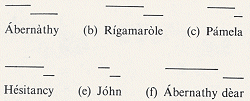 Examples (5a) and (5b) illustrate that the association of M is sensitive to the postnuclear stress, which is on the penult in (5a), but on the last in (5b) (which is quadrisyllabic in American English). Examples (5c, d) illustrate how a stressless final syllable attracts the M if no secondary stress intervenes between it and the main stress. In (5e), the two levels are realized on the same syllable, because main stress is on the final syllable, while (5f) (from Liberman, 1975) illustrates that the M looks for the strongest stress after the main stress. Here, the word-internal secondary stress on -nath- has less stress than unaccented dear.
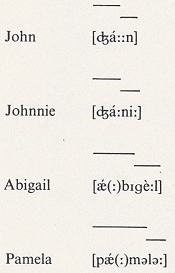
2.1.1.2 Duration. The lengthening of the first syllable of a pitch level is illustrated by Hayes & Lahiri with the help of examples like those in (6), which show that the degree of lengthening depends on the number of syllables that are associated with a pitch level. The most extreme lengthening occurs when both pitch levels are on the same syllable, as in (6a). If a pitch level extends over exactly one syllable, it is less extreme, but obligatory, as illustrated in (6b-d). If it extends over two syllables, the lengthening is optional, as in (6c-e). With three syllables, it is dispreferred, as in (6f, g), while the addition of a fourth syllable makes lengthening impossible (cf. (5f)).
(6)  | ||||||||||||||||||||||||||||||||||||||||||||||||||||||||||||||||||||||||||||||||||||||||||||||||||||||||||||||||||||||||||||||||||||||||||||||||||||||||||||||||||||||||||||||||
[pagina 40]
| ||||||||||||||||||||||||||||||||||||||||||||||||||||||||||||||||||||||||||||||||||||||||||||||||||||||||||||||||||||||||||||||||||||||||||||||||||||||||||||||||||||||||||||||||
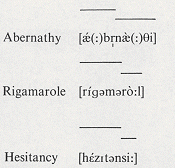 Lastly, Hayes & Lahiri observe that the lengthening neutralizes the vowel-quantity distinction between tense and lax vowels, as shown in (7).
(7)
| ||||||||||||||||||||||||||||||||||||||||||||||||||||||||||||||||||||||||||||||||||||||||||||||||||||||||||||||||||||||||||||||||||||||||||||||||||||||||||||||||||||||||||||||||
2.1.2 Hayes & Lahiri's analysisTo account for the tonal facts, Hayes & Lahiri propose that the tune consists of the tone sequence H M. The emphasis in their analysis is on the durational properties of the tune. They point out that the data in (7) rule out an account in terms of the addition of moras or Xs. Instead, they assume that the tone comes with a grid. The grid is intended to capture both the rhythmic facts (encoded as column height) and the durational facts (encoded as the number of columns associated with a tone). Underlyingly, the representation of the English chanted call is as in (8).
(8) 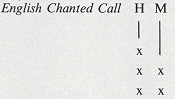 Hayes & Lahiri propose (9) as a constraint on grids, which they offer as their interpretation of the rhythmic nature of speech (cf. ‘Clash Avoidance’ and ‘Lapse Avoidance’ in other work). As a result of (9), representation (8) will be expanded if there are no free syllables after the beats. In such a case, (9) minimally requires one beat to be added, with an option for a second beat. The added beats associate with the preceding strong syllable. This accounts for the durational facts: the more beats a syllable associates with, the longer it will be.
(9) Obligatory Offbeat Condition Any strong beat must be directly followed by a weak beat. | ||||||||||||||||||||||||||||||||||||||||||||||||||||||||||||||||||||||||||||||||||||||||||||||||||||||||||||||||||||||||||||||||||||||||||||||||||||||||||||||||||||||||||||||||
[pagina 41]
| ||||||||||||||||||||||||||||||||||||||||||||||||||||||||||||||||||||||||||||||||||||||||||||||||||||||||||||||||||||||||||||||||||||||||||||||||||||||||||||||||||||||||||||||||
Implementation of (9) will be referred to as BEAT SPLITTING. The pitch levels are accounted for by (10), TONE SHARING.
(10) Tone Sharing When a beat is split, all parts of the beat retain the tone of the original.
Association of the grid follows the description in (4): the strong beat with H associates with the main stress, and the strong beat with M associates with the strongest stress after H, or with the last syllable if there are only stressless syllables. The precise way the beats of the chanted call are mapped onto the stresses in the text is not made explicit by Hayes & Lahiri, but some grid-matching procedure is envisaged. In (11), a derivation is given, with (i) illustrating the result of the grid-matching procedure, and with (ii) and (iii) illustrating Beat Splitting and Tone Sharing, respectively. In (12a, b), two illustrative surface representations are reproduced.
(11) en (12) 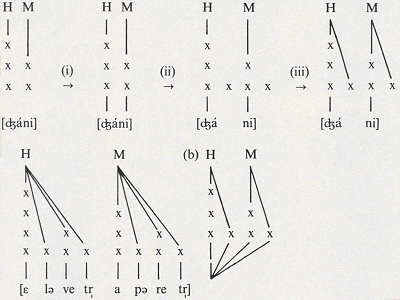 | ||||||||||||||||||||||||||||||||||||||||||||||||||||||||||||||||||||||||||||||||||||||||||||||||||||||||||||||||||||||||||||||||||||||||||||||||||||||||||||||||||||||||||||||||
2.2 The Dutch chanted callTunes of the type exemplified by the English chanted call occur in many languages. Hayes & Lahiri describe the Bengali counterpart, showing how it differs from the English tune in the way the pitch levels are distributed over the syllables in the word. The Dutch chanted call differs from both of these, most strikingly in the fact that, in one very common variant, it may have more than two level pitches. Ga naar voetnoot2 First consider the examples in (13), which | ||||||||||||||||||||||||||||||||||||||||||||||||||||||||||||||||||||||||||||||||||||||||||||||||||||||||||||||||||||||||||||||||||||||||||||||||||||||||||||||||||||||||||||||||
[pagina 42]
| ||||||||||||||||||||||||||||||||||||||||||||||||||||||||||||||||||||||||||||||||||||||||||||||||||||||||||||||||||||||||||||||||||||||||||||||||||||||||||||||||||||||||||||||||
would appear to suggest that the Dutch chanted call follows the same pattern as the English one. Also the neutralization of vowel quantity observed by Hayes & Lahiri for English appears to occur in Dutch, as shown in (14). In these examples, [α] is a lax, short vowel, while [a] is a tense, long vowel, usually given as [a:]. (The vowel system of Dutch consists of a set of five lax vowels, [ι, ν, ε, α, ɔ], which are short, and a set of ten tense vowels, [i, y, u; e:, ø:, o:; εi, œy, αu; a:], which are long, except for the close series [i, y, u]; and diphthongal, except for [i, y, u] and [a:]. It also has a reduced vowel [ə]. In this article, I will from now on use the length mark only to indicate lengthening as created by some rule, not to indicate membership of the tense class.)
(13) 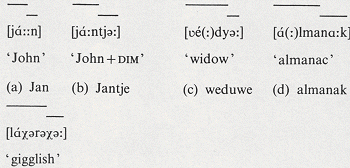 (e) lach]v-erig]Adj-e]Obl
(14)
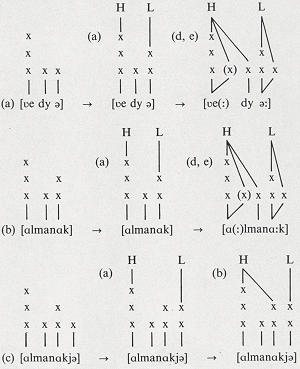
The data in (15) show that unlike English, Dutch allows more than two level pitches. The difference between (15a) and (15b) is that the penult has [ə] in (15a), but a full [α] in (15b), the main stress being on the first syllable in either case. The difference is easily accounted for by the different foot structures: while ‘widow’ is a single foot, ‘almanac’ consists of two feet, [αlma] and [nαk] (for example Van der Hulst, 1984). Every (unaccented) foot after the accented syllable can trigger a new pitch level in this way, as shown by (15c), a compound with the accent on the first constituent (‘fake’). As can be seen, both unaccented feet of ‘almanac’ trigger the formation of a pitch level, as does the final (weak syllable.
(15) 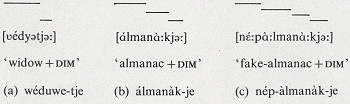 | ||||||||||||||||||||||||||||||||||||||||||||||||||||||||||||||||||||||||||||||||||||||||||||||||||||||||||||||||||||||||||||||||||||||||||||||||||||||||||||||||||||||||||||||||
[pagina 43]
| ||||||||||||||||||||||||||||||||||||||||||||||||||||||||||||||||||||||||||||||||||||||||||||||||||||||||||||||||||||||||||||||||||||||||||||||||||||||||||||||||||||||||||||||||
Let us first give an analysis of the contour in the terms of Hayes & Lahiri's proposal. The important implication of the difference between the data in (15) and the comparable English data in (5a, f) is that in Dutch the last syllable ALWAYS has a separate pitch level. That is, it has a boundary tone, not some other tone landing there by default, as is the case in English. The intermediate pitch levels evidently cannot be accounted for by postulating underlying tones, as their number varies as a function of the text (see Pierrehumbert, 1980: 76). These levels can be obtained by spreading the initial H to every following foot, and by subsequently applying a tone-splitting operation, to ensure that every foot has its own H. The Obligatory Offbeat Condition (9) and Tone Sharing (10) then apply as in English. In order to create the terraced realization of the consecutive H tones, we stipulate that these tones undergo the same Downstep implementation rule as do downstepped accented H*'s (Van den Berg, Gussenhoven & Rietveld, 1992). Since downstepped contours need to appeal to the presence of a morpheme [DOWNSTEP] in order to implement the pitch lowering, there seems to be no reason for not stipulating that Hs in the chanted call trigger downstep. This option is given in (16). Ga naar voetnoot3
(16) 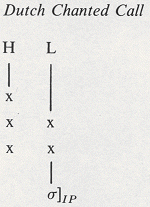 The representation in (16) matches up with the text such that H goes to the accented syllable, and L to the last syllable. If this syllable is not a foot, (16) will provide the appropriate stress level. If it is a foot, (16) applies in the ‘matching’ sense, as envisaged for (4). In order to create the intermediate levels, we need H-SPREADING, as given in (17). | ||||||||||||||||||||||||||||||||||||||||||||||||||||||||||||||||||||||||||||||||||||||||||||||||||||||||||||||||||||||||||||||||||||||||||||||||||||||||||||||||||||||||||||||||
[pagina 44]
| ||||||||||||||||||||||||||||||||||||||||||||||||||||||||||||||||||||||||||||||||||||||||||||||||||||||||||||||||||||||||||||||||||||||||||||||||||||||||||||||||||||||||||||||||
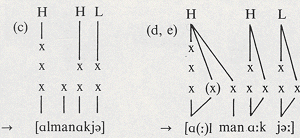
(17) 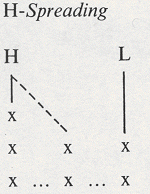 The description is summarized in (18). The examples in (19a-c) are self-explanatory.
(18) (a) Associate H and L (b) H-Spreading (17) (c) H-Splitting (d) Beat Splitting (9) (e) Tone Sharing (10) (f) (Phonetic implementation) Downstep H after H (in the chanted call)
(19)  | ||||||||||||||||||||||||||||||||||||||||||||||||||||||||||||||||||||||||||||||||||||||||||||||||||||||||||||||||||||||||||||||||||||||||||||||||||||||||||||||||||||||||||||||||
[pagina 45]
| ||||||||||||||||||||||||||||||||||||||||||||||||||||||||||||||||||||||||||||||||||||||||||||||||||||||||||||||||||||||||||||||||||||||||||||||||||||||||||||||||||||||||||||||||
 | ||||||||||||||||||||||||||||||||||||||||||||||||||||||||||||||||||||||||||||||||||||||||||||||||||||||||||||||||||||||||||||||||||||||||||||||||||||||||||||||||||||||||||||||||
3. The Dutch footIn this section, the realization of the Dutch chanted call is investigated as a function of the prosodic structure of the word. First, words with the main stress on the penult (‘trochees’) and words with the stress on the antepenult (‘dactyls’) are discussed, so as to ascertain what foot structures occur after the main stress. (I will continue to use scare quotes when using these terms in these senses.) The conclusion will be that a ‘trochee’ is a single foot, regardless of the segmental composition of the final syllable, and that a ‘dactyl’ contains two feet, a binary foot followed by a monosyllabic foot, unless the last syllable contains schwa, in which case the ‘dactyl’ is a ternary foot. In addition to the chanted call, evidence will be presented based on four segmental processes and on the distribution of [h]. Next, the foot structure before the main stress is investigated by considering the behaviour of the chanted call in words with one syllable before the main stress (‘iambs’), and words with two syllables before the main stress (‘anapaests’). In support of the findings here, the durational characteristics of the prestress syllable in ‘iambs’ are discussed. Here, the conclusions will be that this syllable loses its foot postlexically, and that the first two syllables of an ‘anapaest’ form a binary foot. | ||||||||||||||||||||||||||||||||||||||||||||||||||||||||||||||||||||||||||||||||||||||||||||||||||||||||||||||||||||||||||||||||||||||||||||||||||||||||||||||||||||||||||||||||
3.1 ‘Trochees’Words with the main stress on the penult have only a single pitch level, if a syllable is added to attract the boundary L of (10). That is, regardless of its segmental composition, the final syllable of such words fails to undergo H-Spreading. Examples, with VV, VC and VCC stem-final syllables, are given in (20). The final syllable represents the diminutive suffix.
(20) Two levels
| ||||||||||||||||||||||||||||||||||||||||||||||||||||||||||||||||||||||||||||||||||||||||||||||||||||||||||||||||||||||||||||||||||||||||||||||||||||||||||||||||||||||||||||||||
[pagina 46]
| ||||||||||||||||||||||||||||||||||||||||||||||||||||||||||||||||||||||||||||||||||||||||||||||||||||||||||||||||||||||||||||||||||||||||||||||||||||||||||||||||||||||||||||||||
As pointed out to me by René Kager, such words contrast with compounds. A compound like wándàad ‘misdeed’ will have three levels when diminutivized, which is explained by the fact that the syllable daad represents a Pword, and hence a foot. | ||||||||||||||||||||||||||||||||||||||||||||||||||||||||||||||||||||||||||||||||||||||||||||||||||||||||||||||||||||||||||||||||||||||||||||||||||||||||||||||||||||||||||||||||
3.2 ‘Dactyls’We have seen in section 2.2 that words with the main stress on the antepenult appear to behave differently depending on whether their last syllable is reduced or full. The difference becomes apparent if at least one more syllable follows to take the boundary L. ‘Dactyl’-final full-vowelled syllables trigger the formation of a new pitch level, as shown in (21b), but ‘dactyl’-final weak-vowelled ones do not, as shown in (21a). The added syllable is the diminutive suffix.
(21) (a) Two levels
(b) Three levels
| ||||||||||||||||||||||||||||||||||||||||||||||||||||||||||||||||||||||||||||||||||||||||||||||||||||||||||||||||||||||||||||||||||||||||||||||||||||||||||||||||||||||||||||||||
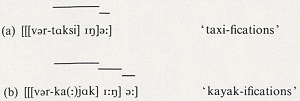
3.2.1 Derived ‘dactyls’As is to be expected, the attachment of suffixes with schwa (as opposed to a full vowel) does not lead to the creation of new pitch level, since such syllables are adjoined to the last foot of the base. Equally unexpectedly, the attachment of a full-vowelled (stress-neutral) suffix to a ‘trochee’ will begin a new foot. For instance, the diminutivized agentive noun [[['υαndəl]v a:r]N tjə] N ‘walk + er + dim’ has three pitch levels. There is, however, one interesting exception. When the deverbal nominalizing suffix -ιη is attached to a ‘trochee’, it triggers a new level, as is to be expected of a syllable with a vowel other than schwa; but when that ‘trochee’ ends in a vowel, it does not. There is therefore a contrast between (22a) and (22b).
(22)  | ||||||||||||||||||||||||||||||||||||||||||||||||||||||||||||||||||||||||||||||||||||||||||||||||||||||||||||||||||||||||||||||||||||||||||||||||||||||||||||||||||||||||||||||||
[pagina 47]
| ||||||||||||||||||||||||||||||||||||||||||||||||||||||||||||||||||||||||||||||||||||||||||||||||||||||||||||||||||||||||||||||||||||||||||||||||||||||||||||||||||||||||||||||||
The explanation of this difference in behaviour is somehow to be found in the relation between the weight of the final syllable and the presence of an onset: Kager & Zonneveld (1986) observe that underived trisyllabic feet, like those in (21a), are characterized by an onsetless final syllable with schwa. (The glide that appears between these two syllables results from a postlexical rule.) Apparently, also [ι] counts as a reduced vowel after an unstressed syllable, but only if its syllable has no onset. I will return to this observation in section 3.2.3.
To summarize, the data for ‘trochees’ and ‘dactyls’ suggests that Dutch words with the main stress on the penult end in disyllabic feet, regardless of the segmental composition of the syllables. (I reserve judgement on some words with super-heavy final syllables, that is, those ending in VVC or (V)VCC, like likdoorn ‘corn in foot’, which may be compounds. See Trommelen & Zonneveld, 1989.) Words with the main stress located on the third syllable from the end have a final monosyllabic foot, provided it is not a reduced, onsetless syllable. These foot structures are given in (23).
(23)
In support of the analysis of ‘trochees’ and ‘dactyls’, we now turn to the lexical rule that lengthens [i, y, u] before [r] (Pre-r-Lengthening), a lexical rule inserting [ə] between noun stems and the diminutive suffix (ə-Insertion), a postlexical rule that devoices [j] after [p, t, k] (j-Devoicing), a postlexical rule breaking up certain consonant clusters (Svarabhakti), and the distributional pattern of [h]. | ||||||||||||||||||||||||||||||||||||||||||||||||||||||||||||||||||||||||||||||||||||||||||||||||||||||||||||||||||||||||||||||||||||||||||||||||||||||||||||||||||||||||||||||||
3.2.2 Pre-r-LengtheningPre-r-Lengthening lengthens tense [i, y, u] before [r]. While [bit] ‘beetroot’ has the same duration as [bιt] ‘bit’, which has a lax vowel, [bi:r] ‘beer’ is durationally the same as [be:r] ‘bear’; similarly, [brysk] ‘brusque’ contrasts with [by:rt] ‘neighbourhood’. The data in (24) make it clear that the rule is not syllable-based: (24a, b) have the [r] in the same syllable, but (24c, d) show that [r] may also follow in the next syllable. The possibility of a word-based rule is excluded by (25). In (25a, b), the tense vowel appears in an initial monosyllable before a foot beginning with [r], while in (25c, d) the tense vowel ends a binary foot before [r]. No lengthening takes place in these contexts. It is concluded that the rule is foot-based, and that lengthening | ||||||||||||||||||||||||||||||||||||||||||||||||||||||||||||||||||||||||||||||||||||||||||||||||||||||||||||||||||||||||||||||||||||||||||||||||||||||||||||||||||||||||||||||||
[pagina 48]
| ||||||||||||||||||||||||||||||||||||||||||||||||||||||||||||||||||||||||||||||||||||||||||||||||||||||||||||||||||||||||||||||||||||||||||||||||||||||||||||||||||||||||||||||||
takes place when [r] follows in the same foot. (The length mark is used to indicate the result of Pre-r Lengthening.)
(24)
(25)
The prediction of our analysis is that [i, y, u] are long when occurring before [r] in the second syllable of a ‘trochee’, regardless of the segmental composition of this syllable. This prediction is borne out in (26). The rule is formalized in (27), which assumes that short [i, y, u] are linked to the first of two consecutive V-slots. (The empty second V-slot accounts for the distributional behaviour of [i, y, u] as long vowels; the representation of [i] contrasts on the one hand with [ι], which is linked to the only V-slot of its syllable, and on the other with [i:], which is linked to two V-slots underlyingly, and which vowel appears in loans like analyse, Hermans, 1992.)
(26)
(27) 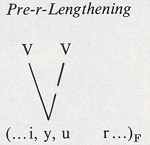 The rule must be lexical. Ablauted past tense verb stems fail to undergo Pre-r-Lengthening. For example, bedierf [bə'dirf] ‘spoiled’ and wierp [υirp] ‘threw’ have short [i]. We will return to this point in section 3.3. | ||||||||||||||||||||||||||||||||||||||||||||||||||||||||||||||||||||||||||||||||||||||||||||||||||||||||||||||||||||||||||||||||||||||||||||||||||||||||||||||||||||||||||||||||
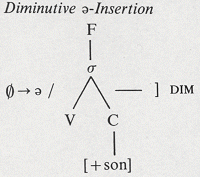
3.2.3 ə-InsertionIn Kooij (1982), it has already been proposed that the rule inserting schwa between the stem and the diminutive suffix in Dutch is foot-based: this schwa is inserted only if the stem ends in a monosyllabic foot (see also Van der Hulst, 1984: 124, who also gives an earlier unpublished reference Van der Hulst, 1981, and Booij, 1984). The proposal suffered a setback in Trommelen (1983: 13, 31), who argued against the idea on the ground that segmental | ||||||||||||||||||||||||||||||||||||||||||||||||||||||||||||||||||||||||||||||||||||||||||||||||||||||||||||||||||||||||||||||||||||||||||||||||||||||||||||||||||||||||||||||||
[pagina 49]
| ||||||||||||||||||||||||||||||||||||||||||||||||||||||||||||||||||||||||||||||||||||||||||||||||||||||||||||||||||||||||||||||||||||||||||||||||||||||||||||||||||||||||||||||||
conditions need to be placed on the rule, and that the specific form of these feet was not independently supported. It is true that the rhyme must consist of a lax vowel and a sonorant consonant. Research on prosody-based rules has shown, however, that simultaneous reference to prosodic constituents and segmental information is commonplace (Kahn, 1976; Nespor & Vogel, 1986). As for the objection that the required foot structure is not independently motivated, we have shown that the feet required for diminutive ə-Insertion are independently required by the chanted call and Pre-r-Lengthening, while below we will see that j-Devoicing also requires these structures. The sensitivity of ə-Insertion to foot-structure is illustrated in (28). Here, the (a)-examples trigger the rule, while the ‘trochees’ in (28b) do not.
(28)
Trommelen (1983: 47) observes that words of the type (28b) are sometimes given with inserted schwa by native speakers. It is noted, however, first, that the forms without schwa are always considered to be well formed; second, that schwa-full forms are only given for words with [ɔ, α] before the final sonorant consonant, like ‘python’, ‘Satan’, which are recent borrowings, and rare; third, that such data have been elicited, not observed. It is possible that native speakers are simply insecure when asked to give the diminutive forms of such words. It should be borne in mind that all other words ending in [-ɔntjə, -αntjə] contain stems ending in [-nt], and that the regularity that words ending in [-αn, ɔn] take schwa (such as [kαn] ‘jug’, [stádiɔn] ‘stadium’) must be very strong. That fact that schwa-less forms for ‘python’, ‘Satan’ are well formed at all therefore constitutes strong evidence in favour of our rule (29).
(29)  | ||||||||||||||||||||||||||||||||||||||||||||||||||||||||||||||||||||||||||||||||||||||||||||||||||||||||||||||||||||||||||||||||||||||||||||||||||||||||||||||||||||||||||||||||
[pagina 50]
| ||||||||||||||||||||||||||||||||||||||||||||||||||||||||||||||||||||||||||||||||||||||||||||||||||||||||||||||||||||||||||||||||||||||||||||||||||||||||||||||||||||||||||||||||
Interesting confirmation of the analysis is provided by the diminutive form of [ɔntsény-ιη] ontzenuwing ‘refutation’, a noun formed by suffixing [-ιη] to the verb [ɔnt-zényυ]. Haverkamp-Lubbers & Kooij (1971) give it as [ɔntsény-ιηkjə], that is without inserted schwa. There is no obvious way in which this word distinguishes itself from the words in (28a). If we assume, however, that ‘refutation’ is a single foot, like ‘taxi-fication’ (see (22a)), the failure of ə-Insertion is precisely what one would expect, given the foot-based nature of the rule. This analysis predicts the absence of a consonant in the onset of the final syllable (see (23)). That is, underlying [υ] of [zényυ] must be deleted when [-ιη] is added, so as to cause the resultant segment string to conform to the pattern of (22), third column. It can in fact be demonstrated that the [w] of ontzenuwing is a postlexically inserted glide. One phonetic difference between an underlying labial glide and an inserted one is that, in the onset, the underlying one can be labio-dental rather than bilabial (see Zwaardemaker & Eijckman, 1928: 154). In ontzenuwing, the labio-dental pronunciation is indeed excluded, showing the [w] is inserted. Consistent with this is the fact that a ‘chanted’ realization of the diminutivized form has two levels, just as does (22a). | ||||||||||||||||||||||||||||||||||||||||||||||||||||||||||||||||||||||||||||||||||||||||||||||||||||||||||||||||||||||||||||||||||||||||||||||||||||||||||||||||||||||||||||||||
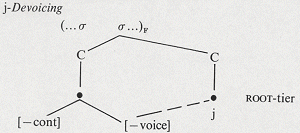
3.2.4 j-DevoicingThe third rule which provides evidence for our analysis of Dutch foot structure is j-Devoicing. Syllable-initial [pj, tj, kj] display strong devoicing of [j] in words like [kɔpj̥e, sχαtj̥e, pαkj̥e] ‘cup + dim’, ‘darling + dim’, ‘packet + dim’. Initially in the word, the devoicing is not obligatory. This is shown in (30). Now notice that in ‘trochees’ like [djɔ́kja] ‘Jokjakarta’ the devoicing is obligatory, as shown in (31), which is evidence that they form single feet. The prediction is also that in ‘dactyls’ like bárbecùe devoicing of [j] is not obligatory, while in an otherwise similar word in which the third syllable has schwa, like mónnikje ‘monk-dim’, the devoicing is obligatory again. This is correct, and shown in (32). These facts are explained if we assume that j-Devoicing is obligatory if the cluster is foot-internal rather than foot-initial, assuming the foot structures in (23). The rule is given in (33).
(30)
(31)
| ||||||||||||||||||||||||||||||||||||||||||||||||||||||||||||||||||||||||||||||||||||||||||||||||||||||||||||||||||||||||||||||||||||||||||||||||||||||||||||||||||||||||||||||||
[pagina 51]
| ||||||||||||||||||||||||||||||||||||||||||||||||||||||||||||||||||||||||||||||||||||||||||||||||||||||||||||||||||||||||||||||||||||||||||||||||||||||||||||||||||||||||||||||||
(32)
(33)  | ||||||||||||||||||||||||||||||||||||||||||||||||||||||||||||||||||||||||||||||||||||||||||||||||||||||||||||||||||||||||||||||||||||||||||||||||||||||||||||||||||||||||||||||||
3.2.5 SvarabhaktiClusters of [r, l] plus a consonant other than [t, s] are variably broken up by [ə] in many varieties of Dutch, as in [αr(ə)m, dεl(ə)ft, εr(ə)kər] ‘arm, Delft, bay-window’. This rule, referred to as Svarabhakti, has generally been characterized as syllable-based (Trommelen, 1983; Booij, 1984; Nespor & Vogel, 1986), the claim being made that the cluster must be tautosyllabic. Trommelen & Zonneveld (1989: 140) accommodate words like [έr(ə)kər] under this analysis by leaving the last schwa of a word unsyllabified, causing the preceding consonant(s) to be included in the coda of the preceding syllable. This analysis is questionable, as it presupposes that the final syllable is syllabified only after the postlexical rule of Svarabhakti has applied. This means that Final Devoicing, a postcyclic lexical rule, is incorrectly predicted to apply in words like vrede [vre:də] ‘peace’. Moreover, in non-standard western varieties, Svarabhakti also applies in ‘trochees’ with a full vowel in the final syllable, as Aditi Lahiri pointed out to me. In Amsterdam Dutch, for instance, it freely applies in the ‘trochees’ in (34a). In (34b), by contrast, where the liquid and the consonant are not inside the same foot, Svarabhakti never applies. The data can be explained by assuming that stressed syllables add the initial consonant of a following weak syllable to their coda; in standard Dutch, but not in the western varieties, the weak syllable must be schwa (René Kager, personal communication; see also Berendsen & Zonneveld, 1985). This solution assumes an ambisyllabic [k] in ['εr(ə)kər] in Dutch generally, and ambisyllabic [m] in ‘Helma’ (34a) in the west. All varieties then have the same syllable-based rule of Svarabhakti. The required resyllabification rule creating ambisyllabic consonants in the western varieties of course confirms the analysis of ‘trochees’ as binary feet. Alternatively, Svarabhakti could be formulated as a foot-based rule. Whatever solution is chosen, Ga naar voetnoot4 reference to the foot will have to be made. | ||||||||||||||||||||||||||||||||||||||||||||||||||||||||||||||||||||||||||||||||||||||||||||||||||||||||||||||||||||||||||||||||||||||||||||||||||||||||||||||||||||||||||||||||
[pagina 52]
| ||||||||||||||||||||||||||||||||||||||||||||||||||||||||||||||||||||||||||||||||||||||||||||||||||||||||||||||||||||||||||||||||||||||||||||||||||||||||||||||||||||||||||||||||
(34)
| ||||||||||||||||||||||||||||||||||||||||||||||||||||||||||||||||||||||||||||||||||||||||||||||||||||||||||||||||||||||||||||||||||||||||||||||||||||||||||||||||||||||||||||||||
3.2.6 The distribution of hLastly, there is a distributional fact that can be shown to confirm the conception of foot structure presented here, of which I was reminded by Harry van der Hulst. The segment [h] never occurs foot-internally in Dutch. Instead of [h], we find the products of HOMORGANIC GLIDE INSERTION wherever the glottal consonant might be expected to appear foot-internally on the basis of the spelling. In (35a), [h] is pronounced: in all cases, it is not foot-internal. By contrast, [h] does not appear in the ‘trochees’ in (35b), regardless of the quality of the final vowel or of whether it is closed or open. (I suspect [P] has the same distributuion as [h]; this question requires experimental investigation.)
(35)
| ||||||||||||||||||||||||||||||||||||||||||||||||||||||||||||||||||||||||||||||||||||||||||||||||||||||||||||||||||||||||||||||||||||||||||||||||||||||||||||||||||||||||||||||||
3.3 ‘Iambs’We continue our investigation by returning to the chanted call, and turn our attention to words with an initial pretonic syllable (‘iambs’). When an ‘iamb’ occurs in second position in a compound, which structure has the main stress on the first constituent, its first syllable does not trigger the formation of a new pitch level. In the nominal compounds in (36a), the initial syllable of the second constituent continues the pitch level that was started on the main stress of the first constituent. By contrast, in (36b), which has ‘trochees’ instead of ‘iambs’ in second position, the initial syllable of the second constituent does trigger a new pitch level. Observe that the durational facts are independent of the word boundary: lengthening is not obligatory for the first pitch level of (36a), since it is followed by the pretonic syllable of the second constituent, which undergoes Tone Sharing. | ||||||||||||||||||||||||||||||||||||||||||||||||||||||||||||||||||||||||||||||||||||||||||||||||||||||||||||||||||||||||||||||||||||||||||||||||||||||||||||||||||||||||||||||||
[pagina 53]
| ||||||||||||||||||||||||||||||||||||||||||||||||||||||||||||||||||||||||||||||||||||||||||||||||||||||||||||||||||||||||||||||||||||||||||||||||||||||||||||||||||||||||||||||||
(36) 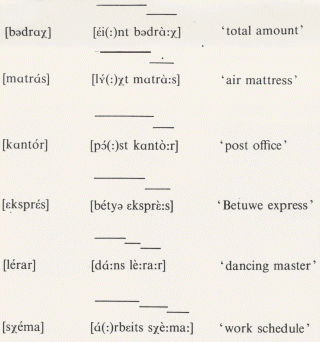 These facts suggest that Dutch initial syllables do not form monosyllabic feet. Regardless of the presence of a full vowel, or of a coda, such syllables fail to trigger H-Spreading (17). The footless status of the initial syllable does not depend on these words being disyllables: the initial syllable in [kαntínə] ‘canteen’ is treated in exactly the same way (cf. [bədrέifs-kαntìnə] ‘factory canteen’). | ||||||||||||||||||||||||||||||||||||||||||||||||||||||||||||||||||||||||||||||||||||||||||||||||||||||||||||||||||||||||||||||||||||||||||||||||||||||||||||||||||||||||||||||||
3.4 AnapaestsWords with two syllables before the word stress, like [tιləfón] ‘telephone’ allow H-Spreading (17) to apply to the initial two syllables. If we use such a word as a second constituent of a compound, the level started on the first constituent may be interrupted, and a new level be formed. It is to be noted that a realization with a continued pitch level is also natural. Both variants are given in (37). I will return to this point in section 4.1.
(37)  In words with three syllables before the main stress, like càrdiolóog ‘cardiologist’, màrihuána, a separate pitch level appears on those syllables in post-tonic position, as in nép-màrihuàna ‘fake marihuana’. This confirms the existence of initial ternary feet. In (38), the foot structures of ‘mattress’, ‘canteen’, ‘telephone’ and ‘marihuana’ are given in (38). | ||||||||||||||||||||||||||||||||||||||||||||||||||||||||||||||||||||||||||||||||||||||||||||||||||||||||||||||||||||||||||||||||||||||||||||||||||||||||||||||||||||||||||||||||
[pagina 54]
| ||||||||||||||||||||||||||||||||||||||||||||||||||||||||||||||||||||||||||||||||||||||||||||||||||||||||||||||||||||||||||||||||||||||||||||||||||||||||||||||||||||||||||||||||
(38)
While after the main stress, the proposed footing is independently supported by a number a phenomena, the proposed footing before the main stress is not as amply supportable by other rules or distribution patterns. However, interesting evidence can be found in durational facts. | ||||||||||||||||||||||||||||||||||||||||||||||||||||||||||||||||||||||||||||||||||||||||||||||||||||||||||||||||||||||||||||||||||||||||||||||||||||||||||||||||||||||||||||||||
3.4.1 Pre-stress foot structure: Foot Deletion and Footless Vowel ShorteningOur analysis will be uncontroversial where words with two or three syllables before the main stress are concerned. In fact, the non-final ternary foot of ‘marihuana’ is independently supported by the distribution of [h]. In (39), we see that the third syllable is not [hu], as it might have been on the basis of the spelling, but [u], showing that syllable is foot-internal. And the initial two syllables of an ‘anapest’ do indeed form a foot, as shown by Pre-r-Lengthening. I repeat (24d) in (40).
(39)
(40)
It is the footless status of initial prestress syllables that may appear problematic. For example, the presence of [h] in initial position in ‘iambs’ suggests that this syllable is a foot, since [h] typically occurs foot-initially (see (35)). Our suggestion is that this syllable is indeed a foot in the lexicon, and that defooting is a postlexical rule. The main argument for this solution is based on the observation that when [r] follows a tense vowel in an initial prestress syllable, there is no durational distinction between [i, y, u] and the other (long) tense vowels. In this context, these vowels are long in careful, dictation-style speech, but are shortened in ordinary speech. This is shown in (41).
(41)
Pre-r-Lengthening applies in the lexicon: recall that ablauted past-tense verb forms also fail to undergo Pre-r-Lengthening, that is, these forms are exceptions to the rule. The fact that the words in (41) can be pronounced with long pre-r vowels in careful, dictation-style speech indeed suggests that Pre- | ||||||||||||||||||||||||||||||||||||||||||||||||||||||||||||||||||||||||||||||||||||||||||||||||||||||||||||||||||||||||||||||||||||||||||||||||||||||||||||||||||||||||||||||||
[pagina 55]
| ||||||||||||||||||||||||||||||||||||||||||||||||||||||||||||||||||||||||||||||||||||||||||||||||||||||||||||||||||||||||||||||||||||||||||||||||||||||||||||||||||||||||||||||||
r-Lengthening applied to them, and that in the lexicon the initial syllable must be a foot. (As already shown by ə-Insertion in diminutives, foot structure is available in the lexicon; see Booij, 1988; Inkelas, 1989.) The shortened forms are accounted for by assuming that postlexical Foot Deletion is reflected in variable durational reduction of the stray syllable. Indeed, all such initial defooted syllables are durationally reduced, regardless of segmental composition. While this shortening of unfooted syllables may be seen as resulting from phonetic implementation rules, there is one context in which a categorical shortening would appear to take place. The relevant data are given in (42). They show that in dictation-style speech, long tense vowels are indeed long in open prestress syllables, as in (42a, b), but that in ordinary speech styles they merge with short tense [i, y, u], as shown in (42c), as well as with short lax vowels, as in (42d).
(42)
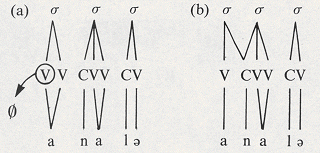
Of course, (42c) is straightforwardly accounted for, because (42c) never met the structural description of Pre-r-Lengthening: [i] and [r] are in different feet in the lexicon, hence [i] is not long, even in careful speech. Durationally, then, this form is equivalent to (42d), which has a lax vowel. What is unexpected is the merger in ordinary speech styles between long and short vowels, since if durational reduction affects both types of syllable in equal measure, as indeed we must assume, then the first syllables of (42a, b) should be shorter than those in (42c, d). However, there seems to be no quantity difference at all. This suggests that open-syllabled appendices lose a V-slot. Since short vowels are lexically provided with a coda consonant, which will be ambisyllabic if only one consonant separates it from the next vowel (Van der Hulst, 1985), the representations of long and short vowels remain distinct after the loss of the V-slot, which accounts for the subtle quality difference that remains between shortened [a] and [α]. I give the rule in (44). Foot Deletion, which precedes (44), is given in (43). The idea here is that with the ‘x’ also the constituent brackets are deleted. The representations of ‘anal’ and ‘annals’ are given in (45a, b), respectively.
(43)
(44) Footless Vowel Shortening V → Ø / ω((… V__) σ …)ω | ||||||||||||||||||||||||||||||||||||||||||||||||||||||||||||||||||||||||||||||||||||||||||||||||||||||||||||||||||||||||||||||||||||||||||||||||||||||||||||||||||||||||||||||||
[pagina 56]
| ||||||||||||||||||||||||||||||||||||||||||||||||||||||||||||||||||||||||||||||||||||||||||||||||||||||||||||||||||||||||||||||||||||||||||||||||||||||||||||||||||||||||||||||||
(45)  | ||||||||||||||||||||||||||||||||||||||||||||||||||||||||||||||||||||||||||||||||||||||||||||||||||||||||||||||||||||||||||||||||||||||||||||||||||||||||||||||||||||||||||||||||
3.5 SummaryThe investigation of Dutch foot structure on the basis of the chanted call and of Pre-r-Lengthening, ə-Insertion, Svarabhakti, j-Devoicing, the distribution of [h] and the durational reduction of initial prestress syllables has led to the following two conclusions:
Together, these conclusions amount - postlexically - to the generalization with which we started this article. In the following section, some attention is paid to previous proposals, and an argument is rejected for the traditional view that words like hárnas contain two monosyllabic feet. | ||||||||||||||||||||||||||||||||||||||||||||||||||||||||||||||||||||||||||||||||||||||||||||||||||||||||||||||||||||||||||||||||||||||||||||||||||||||||||||||||||||||||||||||||
4. Comparison with earlier proposalsStress has been a very productive area in the Netherlands. Since the early 1980s there have been a number of proposals for the derivation of Dutch word stress. In (46), I list representative foot structures as given in or inferred from a number of publications. (The abbreviated references are, respectively, Van der Hulst & Moortgat, 1981; Neijt & Zonneveld, 1982; Van der Hulst, 1984; Kager, 1985; Langeweg, 1988; Lahiri & Koreman, 1987; Kager, 1989; Trommelen & Zonneveld, 1989.) The parentheses indicate foot boundaries, while the square brackets indicate extrametrical elements. Observe that in earlier proposals extrametrical syllables were assumed to be included in the preceding foot in surface structure, but that the later proposals have extrametrical feet in final position. The explanation for the rather large differences between these proposals is that it is only the main stress and the occurrence of schwa that provide easily accessible phonetic evidence for foot structure: the main stress must be a foot head, and schwa is categorically weak. By contrast, full vowels without main | ||||||||||||||||||||||||||||||||||||||||||||||||||||||||||||||||||||||||||||||||||||||||||||||||||||||||||||||||||||||||||||||||||||||||||||||||||||||||||||||||||||||||||||||||
[pagina 57]
| ||||||||||||||||||||||||||||||||||||||||||||||||||||||||||||||||||||||||||||||||||||||||||||||||||||||||||||||||||||||||||||||||||||||||||||||||||||||||||||||||||||||||||||||||
stress might or might not be feet. It is interesting to see that despite the fact that the proposals have virtually exclusively been based on stress facts, and have ignored evidence of the type presented in this article, the historical trend is clearly towards the foot structure as proposed here, and summarized in (47). For instance, except for ‘trochees’ with closed second syllables (harnas and kayak), the representations in (46g) largely correspond with those in (47), with ‘violin’ even having a stray initial syllable.
(46) (a) H & M 81
(b) N & Z 82
(c) H 84
(d) K 85
(e) Lg 88
(f) L & K 87
(g) K 89
(h) T & Z 89
(47)
It is not, in fact, difficult to modify the more recent analyses so as to create the structures of (47). For instance, Trommelen & Zonneveld (1989) assign foot structure with the help of a quantity-sensitive trochee (a heavy plus light, or a light plus light syllable, or else a heavy or light, assuming degenerate feet are allowed; Hayes, 1981) from the right (see also Kager, 1989). The facts of Dutch stress are, briefly, that main stress falls on one of the last three syllables if the penult is open, and on one of the last two if the penult is | ||||||||||||||||||||||||||||||||||||||||||||||||||||||||||||||||||||||||||||||||||||||||||||||||||||||||||||||||||||||||||||||||||||||||||||||||||||||||||||||||||||||||||||||||
[pagina 58]
| ||||||||||||||||||||||||||||||||||||||||||||||||||||||||||||||||||||||||||||||||||||||||||||||||||||||||||||||||||||||||||||||||||||||||||||||||||||||||||||||||||||||||||||||||
closed. Two assumptions produce the desired results. The first is that Dutch treats tense vowels (generally analysed as VV) as light, and VC as heavy. The second is that after the erection of foot structure, the final syllable is marked as extrametrical, so as to prevent the word-level prominence-assignment rule from placing the primary stress on a final monosyllabic foot (‘late extrametricality’). Words like Pánama are provided with a lexical foot on the final syllable, so as to force parsing from the penult. (The pattern *Panáma, which results if the final syllable is not prespecified as a foot, is the more common pattern for VX-VV-VV.) Lexical specifications are given in (48a). In (48b), quantity-sensitive trochees are built, with ‘late extrametricality’ applying in (48c), so that in (48d), the word-level prominence goes to the correct syllable. Ga naar voetnoot6
(48)
| ||||||||||||||||||||||||||||||||||||||||||||||||||||||||||||||||||||||||||||||||||||||||||||||||||||||||||||||||||||||||||||||||||||||||||||||||||||||||||||||||||||||||||||||||
[pagina 59]
| ||||||||||||||||||||||||||||||||||||||||||||||||||||||||||||||||||||||||||||||||||||||||||||||||||||||||||||||||||||||||||||||||||||||||||||||||||||||||||||||||||||||||||||||||
As said in section 3.5, a rule defooting initial monosyllabic feet will create the required appendix. The non-distinctness of ‘trochees’ with open final syllables and ‘trochees’ with closed final syllables could be achieved by post-stress destressing (cf. the Clash Resolution Hypothesis of Hammond (1984), or our generalization in (1), which could be elevated to a constraint), followed by stray adjunction. An analysis in terms of the foot templates of Hayes, 1991, requiring a parse with the help of a moraic trochee (Lahiri & Koreman, 1987) could be brought in line with (47) in the same way. The net effect is that Dutch obeys (1). | ||||||||||||||||||||||||||||||||||||||||||||||||||||||||||||||||||||||||||||||||||||||||||||||||||||||||||||||||||||||||||||||||||||||||||||||||||||||||||||||||||||||||||||||||
4.1 Rightward stress shiftsDutch has both leftward and rightward stress shifts: the prominence patterns of words may be reversed from w-s to s-w in positions before a following main stress, and from s-w to w-s in positions after a main stress (Kager & Visch, 1988). Because rightward shift data have been used to argue for the traditional analysis of Dutch foot structure, I will show how these data fit into the present analysis. The conclusion will be that rightward shifts in ‘trochees’ involve lexically based prosodic restructurings. Trommelen & Zonneveld (1989) claim that their analysis of Dutch foot structure (see (46g)) is supported by the facts of rightward stress shift. Recall that in their analysis ‘trochees’ are binary feet only if the word-final syllable is open: samba is a single foot, but harnas and kayak each consist of two feet. If rightward shift amounts to a foot-based relabelling of relative prominence, rightward shift should apply in ‘trochees’ with closed final syllables, but not in ‘trochees’ with open ones. In (49), from Trommelen & Zonneveld, this is indeed the case. However, in (50), this generalization is shown to have exceptions in both directions. On the one hand, there are many words with final open syllables that do undergo the shift pásta, tóffee, and on the other, there are words with closed final syllables that do not undergo it léraar, óorlog, hárnas.
(49)
(50)
| ||||||||||||||||||||||||||||||||||||||||||||||||||||||||||||||||||||||||||||||||||||||||||||||||||||||||||||||||||||||||||||||||||||||||||||||||||||||||||||||||||||||||||||||||
[pagina 60]
| ||||||||||||||||||||||||||||||||||||||||||||||||||||||||||||||||||||||||||||||||||||||||||||||||||||||||||||||||||||||||||||||||||||||||||||||||||||||||||||||||||||||||||||||||
The existence of a relation between syllable weight and rightward stress shift, first noted in Kager (1989: 296), in itself is not at issue: there are only two cases in which open final syllables are strengthened but rather more in which that syllable is closed (though here, too, such cases are the exception rather than the rule, at least in my own speech). The shifts are clearly lexically determined, and are more likely as the compound is more frequent or older, and the final syllable ‘heavier’. Novel compounds with ‘trochees’ as their second member, which by their nature are not listed, do not have a stress-shifted pronunciation. As may be expected, there is variation between speakers. For instance, borst-harnas is given with shift by Trommelen & Zonneveld (1989), but only occurs without in my own speech. It is dubious if a case for foothood can be based on these facts. Rather, there would appear to be variable restructuring from ‘trochees’ to ‘iambs’ when occurring as the right-hand member of a compound. In (51), I give the representations of ‘hostel’ (not right-shifted) and ‘youth hostel’ (right-shifted). Restructuring to initially defooted ‘iambs’ predicts that the realization of the chanted call will be sensitive to whether the ‘trochee’ has been right-shifted. This is correct. The items that have undergone the restructuring from (51a) to (51b) behave exactly like embedded ‘iambs’. Thus ‘youth hostel’ has two levels, not three (see (36)).
(51)
It is generally assumed that ‘dactyls’ undergo rightward shift when used as the second member of a compound. Trommelen & Zonneveld (1989) adduce this alleged rightward shift in support of their foot-based formulation of such a rule. Their prediction, therefore, is that the ‘dactyls’ in (52b) are neutralized with the ‘anapaests’ in (52a) (p. 250) when used as the second member of a compound.
(52)
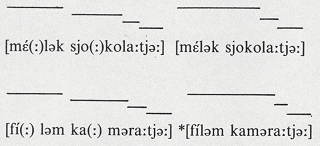
I do not believe that this neutralization in fact takes place. In ‘film camera’, for instance, the final vowel [a] does not appear to be as long as the final vowel in ‘milk chocolate’. The realization of the chanted call, moreover, | ||||||||||||||||||||||||||||||||||||||||||||||||||||||||||||||||||||||||||||||||||||||||||||||||||||||||||||||||||||||||||||||||||||||||||||||||||||||||||||||||||||||||||||||||
[pagina 61]
| ||||||||||||||||||||||||||||||||||||||||||||||||||||||||||||||||||||||||||||||||||||||||||||||||||||||||||||||||||||||||||||||||||||||||||||||||||||||||||||||||||||||||||||||||
speaks against a neutralization. H-Spread (17) treats ‘dactyls’ and ‘anapaests’ differently: when they appear as second members in a compound, the initial (weak) foot of ‘dactyls’ can be skipped, but not the initial (strong) foot of ‘anapaests’. In (53a), with chocolá in second position, the level on choco need not be realized. The foot came of cámera in (53b) is not so skippable, however. These data suggest that rightward shift does not generally occur in ‘dactyls’. Thus, while the foot structure assumed by Trommelen & Zonneveld for ‘dactyls’ is the same as that arrived at in this article, it is not independently confirmed by any stress shift data. Since there is no general rightward stress shift in ‘dactyls’, the case for a foot-based rule is weakened further.
(53)  | ||||||||||||||||||||||||||||||||||||||||||||||||||||||||||||||||||||||||||||||||||||||||||||||||||||||||||||||||||||||||||||||||||||||||||||||||||||||||||||||||||||||||||||||||
5. ConclusionIn Dutch, words with the main stress on the penult end in binary feet, regardless of the segmental composition of the final syllable, and words with the main stress on the antepenult have a final monosyllabic foot, provided the final syllable is not an onsetless syllable with [ə] or, in derived words, [ι]. Evidence for these representations is provided by the realization of the ‘chanted call’, by the lexical rules of Pre-r-Lengthening and ə-Insertion (which inserts [ə] between monosyllabic feet and the diminutive ending), and the postlexical rules j-Devoicing and Svarabhakti, as well as by the distribution of [h]. Regardless of its segmental composition, a single syllable before the main stress is unfooted postlexically, and is included in the Pword as an appendix. Evidence for this aspect of foot structure comes from the realization of the vocative chant and durational reduction effects. Rightward stress shifts within the word, which have been analysd as s-w → w-s relabellings of feet, are shown to be confined to disyllables with the main stress on the penult, and to involve lexically determined restructurings of a binary foot to a combination of appendix plus monosyllabic foot. More recent proposals for Dutch foot structure are in better agreement with the foot structures argued for in this article than are the proposals made in the early 1980s. Since all previous proposals have been based on stress facts (as opposed to segmental and intonational facts) our analysis finds additional support in the circumstance that consecutive proposals have | ||||||||||||||||||||||||||||||||||||||||||||||||||||||||||||||||||||||||||||||||||||||||||||||||||||||||||||||||||||||||||||||||||||||||||||||||||||||||||||||||||||||||||||||||
[pagina 62]
| ||||||||||||||||||||||||||||||||||||||||||||||||||||||||||||||||||||||||||||||||||||||||||||||||||||||||||||||||||||||||||||||||||||||||||||||||||||||||||||||||||||||||||||||||
tended to produce foot structures that are increasingly like the ones proposed here (see also note 5).
Author's address: University of Nijmegen, Vakgroep Engels-Amerikaans, Erasmusplein 1, NL 6525 HT Nijmegen, The Netherlands.
| ||||||||||||||||||||||||||||||||||||||||||||||||||||||||||||||||||||||||||||||||||||||||||||||||||||||||||||||||||||||||||||||||||||||||||||||||||||||||||||||||||||||||||||||||
References
| ||||||||||||||||||||||||||||||||||||||||||||||||||||||||||||||||||||||||||||||||||||||||||||||||||||||||||||||||||||||||||||||||||||||||||||||||||||||||||||||||||||||||||||||||
[pagina 63]
| ||||||||||||||||||||||||||||||||||||||||||||||||||||||||||||||||||||||||||||||||||||||||||||||||||||||||||||||||||||||||||||||||||||||||||||||||||||||||||||||||||||||||||||||||
|
|