

The Golden Compasses
(1969-1972)–Leon Voet– Auteursrechtelijk beschermd
The History of the House of Plantin-Moretus
[pagina 51]
| |||||||||||||||||||||||||||||||||||||||||||||||||||||||||||||||||||||||||||||||||||||||||||||||||||||||||||||||||||||||||||||||||||||||||||||||||||||||||||||||||||||
Chapter 4
| |||||||||||||||||||||||||||||||||||||||||||||||||||||||||||||||||||||||||||||||||||||||||||||||||||||||||||||||||||||||||||||||||||||||||||||||||||||||||||||||||||||
[pagina 52]
| |||||||||||||||||||||||||||||||||||||||||||||||||||||||||||||||||||||||||||||||||||||||||||||||||||||||||||||||||||||||||||||||||||||||||||||||||||||||||||||||||||||
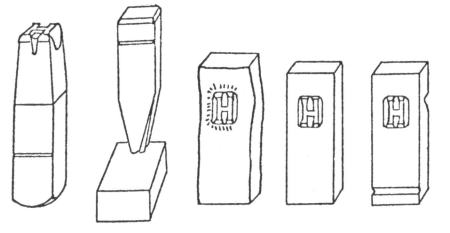
From punch to matrix. Left to right: punch; matrix being struck; one unjustified matrix; two justified matrices.
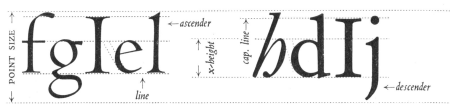
Nomenclature of type forms. Left: ‘Venetian style’ (c. 1470); right: ‘old style’ (after c. 1495).
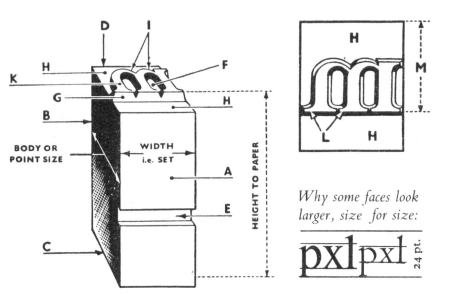
N.B. Most authors writing before 1925 used beard for that part of the type that descends from the face (printing surface) to the shoulder. Modern custom uses the word beard to mean front shoulder, or that part which is allowed for descenders.
Parts of metal type and their names. A Front (of body) B Back (of body) C Foot D Head E Nick F Counter G Beard or bevel showing depth of ‘drive’ H Shoulder I Hair line K Main stroke L Serif M Type line 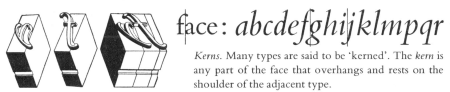
Kerns. Many types are said to be ‘kerned’. The kern is any part of the face that overhangs and rests on the shoulder of the adjacent type.
| |||||||||||||||||||||||||||||||||||||||||||||||||||||||||||||||||||||||||||||||||||||||||||||||||||||||||||||||||||||||||||||||||||||||||||||||||||||||||||||||||||||
[pagina 53]
| |||||||||||||||||||||||||||||||||||||||||||||||||||||||||||||||||||||||||||||||||||||||||||||||||||||||||||||||||||||||||||||||||||||||||||||||||||||||||||||||||||||
Typefaces and fountsGa naar voetnoot1.The roman and italic are today the two basic letter forms used in printing - a state of affairs which had already been reached by Plantin's time. North of the Alps, however, the angular Gothic or black letter script of the later Middle Ages was still used for handwritten books, and because of this it continued in use in all its angularity as a printed type. For everyday purposes a quicker, cursive, handwriting was employed. In 1557 the Frenchman Robert Granjon adapted this cursive Gothic for printing. Plantin was among the first to use this new style of type. He referred to it as the ‘lectre françoise’ or ‘lectre d'escriture’. In technical literature it is termed ‘civilité’ type. Roman, italic, Gothic, and civilité, augmented by decorative fleurons or printer's flowers, were sufficient for the ordinary run of publications. For some of his scholarly works Plantin also had to have Greek and Hebrew alphabets available. He had a Syriac alphabet cut for the Polyglot Bible. His son-in-law Frans Raphelengius at Leiden had founts of Arabic, Ethiopic, and Samaritan type prepared. In addition to these exotica, music editions required special type. To be properly equipped a printing press had to possess a whole range of type sizes. It was not enough to have one set of a particular alphabet. A huge folio antiphonary required much larger type than a 24 mo edition of a classical author, and type size also had to be varied within a work in order to attract the reader's attention at particular places - to chapter headings, for example. For each design of type which he used, the printer of Plantin's day, like his modern successors, had to have several complete alphabets in various sizes. These supplies of type of various kinds are referred to as ‘founts’, and their sizes are expressed in points - according to the Didot system | |||||||||||||||||||||||||||||||||||||||||||||||||||||||||||||||||||||||||||||||||||||||||||||||||||||||||||||||||||||||||||||||||||||||||||||||||||||||||||||||||||||
[pagina 54]
| |||||||||||||||||||||||||||||||||||||||||||||||||||||||||||||||||||||||||||||||||||||||||||||||||||||||||||||||||||||||||||||||||||||||||||||||||||||||||||||||||||||
on the Continent and the pica point system in the English-speaking world. But in the sixteenth century each fount had its own name. It might take its name from the type-cutter who had helped to create it (‘Garamonde’, for example) or from the works customarily set in it: this is how ‘Bible’ and ‘St. Augustine’ type came to be so called. Sometimes the aesthetic qualities of a type decided its name, examples being ‘jolie’ and ‘nonpareille’. By way of illustration, here are some lines from the chapter devoted to the printing press (and probably written by Plantin himself) in Dialogues françois et flamands, 1567:Ga naar voetnoot1.
G: ...But how do you come to have so many kinds of types? E: That is on account of the diversity of works that have to be printed, either in large or smaller letter. According to them the types have received different names. G: Is it your opinion that, through being accustomed to make a book in a certain kind of type, they have called such type after it? E: I understand it so, as in the composition of missals they called some missal types canon and petit canon de messel, glose de messel; lettre de Cicéro, lettre de S. Augustin, because they had been used to printing such authors with these types. G: Where did the others get their names? E: Some have taken them from nations which have used them commonly. Of this sort are some we call romain and gros romain or texte, ordinary romain, petit romain, and the italics, lettre françoise, and Greek type. G: Have others been named for different reasons? E: Oh yes. Because of their great beauty some are called mignonne, nonpareille and paragon. Others have taken their names elsewhere, such as gros and petit canon, texte, two line tourné letters, gros trait, grand and petit bourgeois, lettre bâtarde, lettre de somme or modern, and lettre de parchemin.Ga naar voetnoot2. | |||||||||||||||||||||||||||||||||||||||||||||||||||||||||||||||||||||||||||||||||||||||||||||||||||||||||||||||||||||||||||||||||||||||||||||||||||||||||||||||||||||
[pagina 55]
| |||||||||||||||||||||||||||||||||||||||||||||||||||||||||||||||||||||||||||||||||||||||||||||||||||||||||||||||||||||||||||||||||||||||||||||||||||||||||||||||||||||
The names given to types varied to some extent at least from one region to another. When Albert Moretus was ordered by the French authorities in 1810 to provide them with inventories of his stocks of cast type, he was careful to stress the fact that the terms he used were different from those current in France.Ga naar voetnoot1. It is even quite possible that the names varied from one printing office to another, although the type-cutters and the foundries must have tended to exert a standardizing influence over considerable areas as the terms they used became current among their customers. The uncertainty of usage noticeable in Plantin's earlier years shows that the practice of naming the various sizes of type must then have been of recent date. Different names were sometimes given to the same fountGa naar voetnoot2. and two different founts might be referred to by the same term.Ga naar voetnoot3. There were also founts that had not yet been named. In an inventory of 1566 Plantin had to describe a fount as ‘Petit texte de Hautin entre la nonpareille et la Garamonde bréviaire ou bible’. Later he was to term this type the grosse nonpareille and the body on which it was cast as the coronel.Ga naar voetnoot4. The fact that the name of the French type-cutter Claude Garamond, who had died in 1561, was given to one of the founts is another indication that the nomenclature was a recent innovation, at least as far as Plantin and his colleagues were concerned. The terminology which the great printer adopted in his early years remained in use in the firm until the nineteenth century. The names of founts used in the Officina Plantiniana are given in the table on p. 56.Ga naar voetnoot5. | |||||||||||||||||||||||||||||||||||||||||||||||||||||||||||||||||||||||||||||||||||||||||||||||||||||||||||||||||||||||||||||||||||||||||||||||||||||||||||||||||||||
[pagina 56]
| |||||||||||||||||||||||||||||||||||||||||||||||||||||||||||||||||||||||||||||||||||||||||||||||||||||||||||||||||||||||||||||||||||||||||||||||||||||||||||||||||||||
The equivalents to Didot and Pica points are approximated averages. The value ‘20 lines in mm’ is to be understood as measured from the first to the twenty-first line, on corresponding points of the printed image.
The size or body of a fount is not obtained by measuring the size of the printed image of any of its letters, but is taken from the depth of the shank of the cast letter. This measurement is always slightly greater than the depth of the largest printed image. For example, | |||||||||||||||||||||||||||||||||||||||||||||||||||||||||||||||||||||||||||||||||||||||||||||||||||||||||||||||||||||||||||||||||||||||||||||||||||||||||||||||||||||
[pagina *9]
| |||||||||||||||||||||||||||||||||||||||||||||||||||||||||||||||||||||||||||||||||||||||||||||||||||||||||||||||||||||||||||||||||||||||||||||||||||||||||||||||||||||
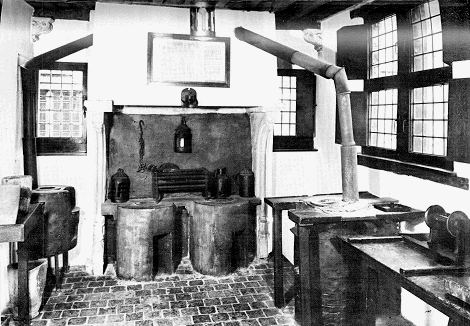 (7) Opposite: The furnaces of the type foundry in the Plantin house, on the second floor above the gallery. They probably date from 1620-22 when Balthasar I Moretus had this wing added to his premises.
| |||||||||||||||||||||||||||||||||||||||||||||||||||||||||||||||||||||||||||||||||||||||||||||||||||||||||||||||||||||||||||||||||||||||||||||||||||||||||||||||||||||
[pagina *10]
| |||||||||||||||||||||||||||||||||||||||||||||||||||||||||||||||||||||||||||||||||||||||||||||||||||||||||||||||||||||||||||||||||||||||||||||||||||||||||||||||||||||
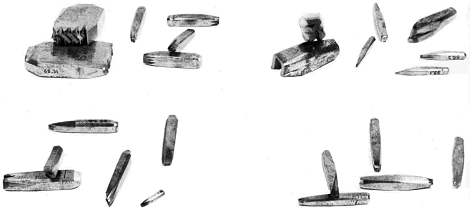 (8) Top: Punches from the Plantin-Moretus Museum collection, the work of some of the greatest sixteenth-century punch-cutters: above left Van den Keere; above right Le Bé; below left Granjon; below right Garamond. Each of these craftsmen had his own way of finishing off his punches, seen in the length of the shanks, in square-cut, pointed, or rounded ends, so that the sets are quite easily distinguishable. Note among Granjon's punches one with the shank partly cut through (above left) and a small punch (below right). The latter is an accent which could be fastened to the larger punch and struck together in a matrix.
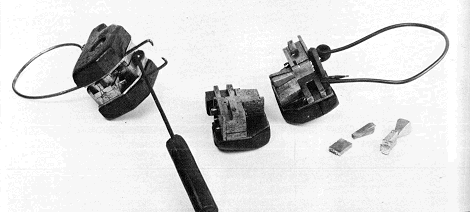 (9) Bottom: Moulds. Left a closed mould seen from above, with spoon. Right an opened mould with a cast letter (extreme right, partly visible, top turned to the left) and, barely visible, a matrix. Below right two cast letters, one still with the jet, the other with it broken off. Clearly visible on both moulds is the clamp which held the matrix in place underneath while the molten lead was poured in. The mould on the left also has hooks which served to prise loose any cast letter that had stuck.
| |||||||||||||||||||||||||||||||||||||||||||||||||||||||||||||||||||||||||||||||||||||||||||||||||||||||||||||||||||||||||||||||||||||||||||||||||||||||||||||||||||||
[pagina *11]
| |||||||||||||||||||||||||||||||||||||||||||||||||||||||||||||||||||||||||||||||||||||||||||||||||||||||||||||||||||||||||||||||||||||||||||||||||||||||||||||||||||||
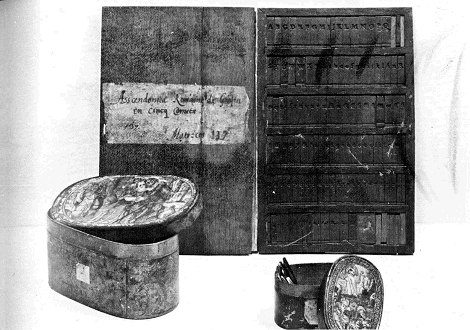 (10) Opposite, top: A set of matrices (Ascendonica roman by Robert Granjon, ma 7) in a wooden box: possibly one of the 39 boxes supplied by Hendrik van den Keere in 1576. In the front are two punch boxes with painted lids in German style, possibly bought at the Frankfurt Fair.
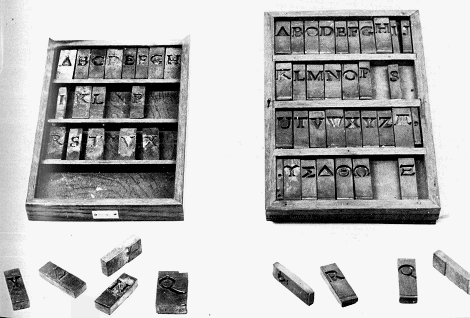 (11) Opposite, bottom: Matrices. Left in lead-(ma 9); right in copper (ma 78) of the same body size (‘Grosses Capitales Extraordinaires’ by Garamond, later completed by the addition of Greek capitals by Van den Keere). The lead matrices, which lack the Greek capitals, are more roughly finished: they may have been a cheap set, meant for sale at Frankfurt.
| |||||||||||||||||||||||||||||||||||||||||||||||||||||||||||||||||||||||||||||||||||||||||||||||||||||||||||||||||||||||||||||||||||||||||||||||||||||||||||||||||||||
[pagina *12]
| |||||||||||||||||||||||||||||||||||||||||||||||||||||||||||||||||||||||||||||||||||||||||||||||||||||||||||||||||||||||||||||||||||||||||||||||||||||||||||||||||||||
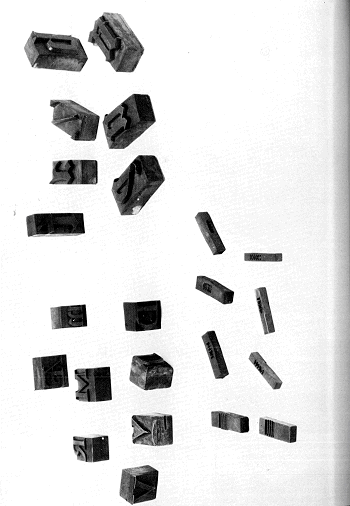 (12) Opposite: Two series of initial letters cut in wood and to be cast in sand, (st 1: ‘La plus grande romaine’, 73 pieces; st 78 ‘Gros Flamand’, 58 pieces; both by Hendrik van den Keere). Two examples of type cast in sand are the letters D and V, centre left. The part cast in sand (with the type face) is relatively thin, as can be seen in the V, but it was applied to a lead block to achieve the correct height-to-paper. In the foreground matrices of two similar sets of music notes, the top row unjustified (and thus out of shape), the lower row justified.
| |||||||||||||||||||||||||||||||||||||||||||||||||||||||||||||||||||||||||||||||||||||||||||||||||||||||||||||||||||||||||||||||||||||||||||||||||||||||||||||||||||||
[pagina 57]
| |||||||||||||||||||||||||||||||||||||||||||||||||||||||||||||||||||||||||||||||||||||||||||||||||||||||||||||||||||||||||||||||||||||||||||||||||||||||||||||||||||||
in the ascendonica as used by the Plantin press the depth of the lowercase x is about 3 mm (⅛ inch), of the lower-case p and h about 5.5 mm (7/32 inch), while the depth of the shank of the cast type is 7 mm (c.9/32 inch). It is this measurement, which also determines the minimum distance between the lines in a text, that is indicated by the term ascendonica (or nowadays by the number of points in either the Didot or the Pica points system). Generally speaking a particular size of printed image corresponds to a particular size of body. Quite often, however, a smaller type was cast on a given body sizeGa naar voetnoot1. - this might be done to introduce more white space between the lines for the sake of better legibility - or the relative size of the printed image to the body might be increased - by casting a slightly larger type on a given body size - to produce a more compact effect.Ga naar voetnoot2. In the latter eventuality the ascenders or descenders (or both) of the lowercase letters usually had to be reduced in length.Ga naar voetnoot3. The Latin alphabet has twenty-six letters. For each of these characters the printer needs lower-case letters and upper-case or capitals; he usually requires an additional set of slightly smaller capitals, known as small caps. Some of the letters in the sixteenth century had more than one form. The lower-case s, for example, nearly always occurred in the short (s) and the long (f) variety. On the other hand, certain letters might be missing. The w and capital J did not figure in Roman type, which was mainly used for printing texts in Latin, were w does not occur and J was rendered by I. In addition to these basic sorts there are also several punctuation marks, figures, letters with diacritical marks, and the many ligatures (tied letters) so beloved in the Renaissance period. A complete roman and italic alphabet con- | |||||||||||||||||||||||||||||||||||||||||||||||||||||||||||||||||||||||||||||||||||||||||||||||||||||||||||||||||||||||||||||||||||||||||||||||||||||||||||||||||||||
[pagina 58]
| |||||||||||||||||||||||||||||||||||||||||||||||||||||||||||||||||||||||||||||||||||||||||||||||||||||||||||||||||||||||||||||||||||||||||||||||||||||||||||||||||||||
sisted of an average of 120 to 150 signs, the number being occasionally much greater than this.Ga naar voetnoot1. The heavy black letter alphabets or ‘flamandes’ were less richly provided with ligatures and diacritical marks, and had only one size of capital letter (no small caps), so that the total number of signs was considerably less than in the roman and the italic. Civilité type came halfway between the black letter and roman in this respect. A good fount might contain about 120 different items. Far and away the greatest number of signs was found in Greek alphabets. Because of their extensive, if not excessive use of ligatures, hardly any founts of Greek letters had less than 250 characters while some approached 500.Ga naar voetnoot2. The illustrations (pp. 59-62) show typical numbers of signs. | |||||||||||||||||||||||||||||||||||||||||||||||||||||||||||||||||||||||||||||||||||||||||||||||||||||||||||||||||||||||||||||||||||||||||||||||||||||||||||||||||||||
Punches and matricesGa naar voetnoot3.The metal type needed for printing was cast one letter at a time in matrices. These matrices obviously had to be shaped so as to produce the desired letter and this meant that a number of processes had to be carried out, and a number of implements prepared before the actual casting of type could begin. These processes, which lie at the basis of the whole craft of printing, and on which its aesthetic results depend, are described in the chapter of the Dialogues françois et flamands already quoted above. | |||||||||||||||||||||||||||||||||||||||||||||||||||||||||||||||||||||||||||||||||||||||||||||||||||||||||||||||||||||||||||||||||||||||||||||||||||||||||||||||||||||
[pagina 59]
| |||||||||||||||||||||||||||||||||||||||||||||||||||||||||||||||||||||||||||||||||||||||||||||||||||||||||||||||||||||||||||||||||||||||||||||||||||||||||||||||||||||
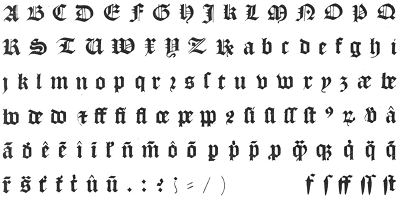
Ma 96. ‘Texte flamand’ (16.6 Pica points): Hendrik van den Keere, 1570; 113 matrices.
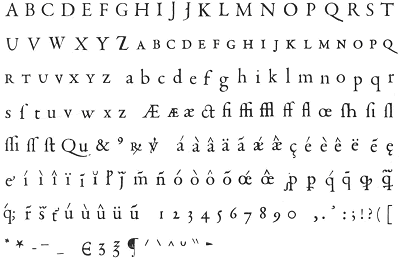
Ma 20 a and b. Texte (16.6 Pica points): Claude Garamond. Mentioned for the first time in Plantin's 1563 inventory; 176 matrices:
| |||||||||||||||||||||||||||||||||||||||||||||||||||||||||||||||||||||||||||||||||||||||||||||||||||||||||||||||||||||||||||||||||||||||||||||||||||||||||||||||||||||
[pagina 60]
| |||||||||||||||||||||||||||||||||||||||||||||||||||||||||||||||||||||||||||||||||||||||||||||||||||||||||||||||||||||||||||||||||||||||||||||||||||||||||||||||||||||
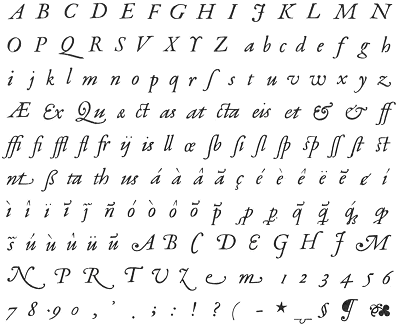
Ma 15. Parangonne (18.7 Pica points): Robert Granjon. Mentioned for the first time in Plantin's 1563 inventory; 162 matrices.
G: Let us proceed then and begin with the types, since you have put them foremost. How are they made? E: First the punch is made. This is a long piece of steel, on the end of which is engraved the desired character. G: What becomes of that? E: When it is made it is struck into copper and a matrix is made, which is nothing but the impression of the character struck, exactly as when a seal is impressed in wax. G: What is the purpose of the character thus struck into copper? E: Into this matrix the type-metal, such as lead or tin, with which they wish to make the type, is poured, in a mould. | |||||||||||||||||||||||||||||||||||||||||||||||||||||||||||||||||||||||||||||||||||||||||||||||||||||||||||||||||||||||||||||||||||||||||||||||||||||||||||||||||||||
[pagina 61]
| |||||||||||||||||||||||||||||||||||||||||||||||||||||||||||||||||||||||||||||||||||||||||||||||||||||||||||||||||||||||||||||||||||||||||||||||||||||||||||||||||||||
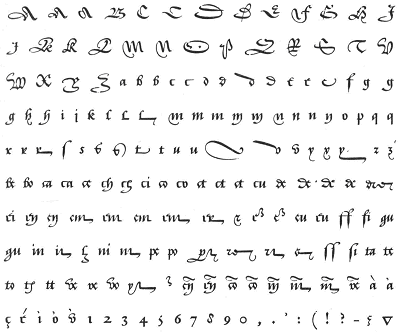
Ma 108. ‘Gros texte’ (16.6 Pica points): Robert Granjon, 1567; 180 matrices.
This exposition is brief in the extreme and does no more than indicate what the first stages in the manufacture of type were, and states that a punch and a matrix were the result. The first step was to cut the letter in relief on the end of a steel shank. This was the punch. Sometimes the punch-cutter had to use additional small punches to deal with details as the counters of the letters a, e or g. There are fifteen of these counterpunches in the Plantin-Moretus Museum, the only sixteenth-century examples known.Ga naar voetnoot1. | |||||||||||||||||||||||||||||||||||||||||||||||||||||||||||||||||||||||||||||||||||||||||||||||||||||||||||||||||||||||||||||||||||||||||||||||||||||||||||||||||||||
[pagina 62]
| |||||||||||||||||||||||||||||||||||||||||||||||||||||||||||||||||||||||||||||||||||||||||||||||||||||||||||||||||||||||||||||||||||||||||||||||||||||||||||||||||||||
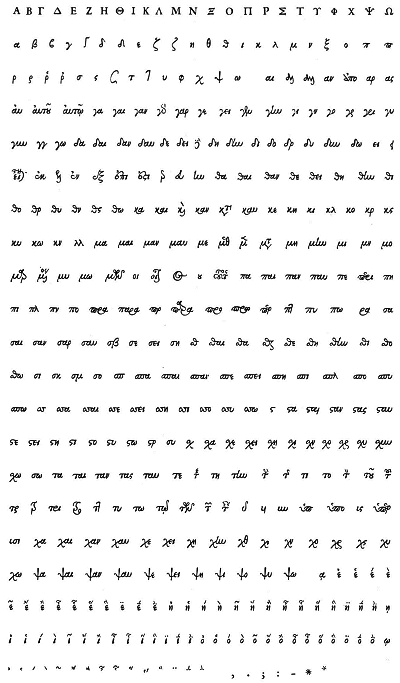
Ma 142 and 143. Mediane (11.3 Pica points): Pierre Haultin. Mentioned for the first time in Plantin's 1561 inventory; 407 matrices.
| |||||||||||||||||||||||||||||||||||||||||||||||||||||||||||||||||||||||||||||||||||||||||||||||||||||||||||||||||||||||||||||||||||||||||||||||||||||||||||||||||||||
[pagina 63]
| |||||||||||||||||||||||||||||||||||||||||||||||||||||||||||||||||||||||||||||||||||||||||||||||||||||||||||||||||||||||||||||||||||||||||||||||||||||||||||||||||||||
The punch was then struck in a copper block by means of a hammer. This rough treatment knocked the copper out of shape and the ‘strike’ as it was termed (the officina's French texts called it ‘une frappe [creue]’, the Flemish texts ‘een [rauwe] afslagh’) had to be further worked upon. The block itself had to be filed until it once more formed a regular parallelopiped and the impression of the character struck had been perfected. This ‘justified’ matrix was then ready for use. Very occasionally punches were struck in lead, thus producing lead matrices. The twenty-three lead matrices of the ‘Grosses Capitales Romaines Extra-ordinaires’ preserved in the Museum are the only known instance of this happening in the Plantinian firm.Ga naar voetnoot1. These were capitals of very large dimensions that could be more easily impressed and justified in lead than in copper. Moreover, only a small number had to be cast from these matrices and this obviated some of the risks entailed in casting lead in lead. A set of copper matrices was also struck with the same punches.Ga naar voetnoot2. It should not be concluded from this that the lead matrices proved unsatisfactory in use and had to be replaced with the copper set - from the records it would seem that the lead matrices were actually prepared after the copper ones.Ga naar voetnoot3. It is very likely that the lead set constituted a relatively cheap strike for sale at the Frankfurt Fair. However, for one reason or another there were no customers and the set returned to Plantin's personal collection. Equally exceptional were the punches cut in wood instead of in steel. They were not used to produce matrices but were impressed in sand, in which the type was subsequently cast. The ‘lectres en bois de Grosse Romaine extraordinaire [pour jecter en sablon]’ were made by Hendrik van den Keere in 1575. When he delivered them he also provided some sample characters he had cast in sand.Ga naar voetnoot4. A similar | |||||||||||||||||||||||||||||||||||||||||||||||||||||||||||||||||||||||||||||||||||||||||||||||||||||||||||||||||||||||||||||||||||||||||||||||||||||||||||||||||||||
[pagina 64]
| |||||||||||||||||||||||||||||||||||||||||||||||||||||||||||||||||||||||||||||||||||||||||||||||||||||||||||||||||||||||||||||||||||||||||||||||||||||||||||||||||||||
series, this time a black letter, was sent in 1580.Ga naar voetnoot1. These were extraordinarily large characters and could hardly have been produced with the traditional steel punch, struck in copper matrices, nor could they have been cast in the rather small portable moulds normally in use.Ga naar voetnoot2. For a given set there were usually fewer punches than matrices.Ga naar voetnoot3. It was possible, for example, to combine a punch for a diacritical mark with one for a letter and so produce a whole range of modified vowels. One small additional punch of this kind greatly increased the number of possible matrices. All that was required was accurate placing of the two punches when striking them in the matrix. In theory it was possible to strike an unlimited number of matrices with one punch: that is to say, provided it did not break or get knocked out of shape. And with one matrix, always providing that it was not damaged in any way, a theoretically unlimited number of letters could be cast. It was therefore the punch which determined the quality of the type and it was the manufacture of punches that demanded the greatest amount of time and skill. In the pioneering days of printing the typographer had to cut his own punches, strike matrices, and cast the type - or at least have these operations carried out in his own workshop under his direct control. By the end of the fifteenth century, however, specialization had begun to develop and professional punch-cutters and type-founders appeared. At first one craftsman would practise both skills and it remained normal for punch-cutters to have a foundry for casting type. However, there were already type-founders in the sixteenth century who hardly ever created their own type designs but were content to work with matrices prepared by their more skilful colleagues. In Plantin's time it was therefore already possible to stock up with lead type from specialist firms. Many of Plantin's contemporaries | |||||||||||||||||||||||||||||||||||||||||||||||||||||||||||||||||||||||||||||||||||||||||||||||||||||||||||||||||||||||||||||||||||||||||||||||||||||||||||||||||||||
[pagina 65]
| |||||||||||||||||||||||||||||||||||||||||||||||||||||||||||||||||||||||||||||||||||||||||||||||||||||||||||||||||||||||||||||||||||||||||||||||||||||||||||||||||||||
and competitors were quite happy to do this, but not the master of the Gulden Passer:Ga naar voetnoot1. he did not want to be dependent on what type-founders happened to have in stock. He wanted to have the most beautiful types available and as far as possible they had to be exclusively for his own use. He could only do this by buying up punches and matrices and with these producing type to meet his requirements. Plantin carried out this policy - and on a scale that seems far to have exceeded the actual needs of his press. He seems to have had a veritable mania for collecting punches and matrices. In 1556, scarcely a year after he had started printing, Plantin owned at least four sets of matrices.Ga naar voetnoot2. In 1561 the number had already risen to twenty-two, five of the sets being unjustified strikes.Ga naar voetnoot3. A year later Christophe Plantin had to flee Antwerp and all his possessions were officially auctioned in the Vrijdagmarkt.Ga naar voetnoot4. The goods that came under the hammer included Plantin's stock of cast type,Ga naar voetnoot5. but not his greatest typographical asset: his collection of matrices had been taken to safety in time. He made use of his exile in Paris to buy new sets of punches and matrices. The list drawn up at the end of 1563, after his return to Antwerp, mentioned twenty-nine sets of justified matrices, six sets of strikes and eight sets of punches.Ga naar voetnoot6. When Plantin put his signature to the contract with members of the Van Bomberghen family, he was not entering the partnership empty-handed. His collection of punches and matrices remained his personal property but it was put at the disposal of the new enterprise and was regarded as the equivalent of a capital investment of 1,200 fl. In addition Plantin was paid an annual sum of 60 fl. under the terms of the contract for the use of this equipment.Ga naar voetnoot7. | |||||||||||||||||||||||||||||||||||||||||||||||||||||||||||||||||||||||||||||||||||||||||||||||||||||||||||||||||||||||||||||||||||||||||||||||||||||||||||||||||||||
[pagina 66]
| |||||||||||||||||||||||||||||||||||||||||||||||||||||||||||||||||||||||||||||||||||||||||||||||||||||||||||||||||||||||||||||||||||||||||||||||||||||||||||||||||||||
Plantin continued to build up his collection during the years of the partnership. The list compiled in 1566 of the ‘utensiles d'imprimerie acheptées par moy et mon frère [i.e., Pierre Porret in Paris] depuis la compagnie faicte’ notes the acquisition of 13 sets of punches, 17 sets of matrices, and a number of moulds, the total value of these items being 1,358 fl.Ga naar voetnoot1. The partnership was dissolved in 1567 when Plantin's associates had to flee from the persecuting Alva. At least four sets of Hebrew matrices belonging to Cornelis van Bomberghen remained behind in the Plantin press. By that time Plantin's punches and matrices already constituted an impressive and unique possession. He was very proud of them and on 19th December 1566 he wrote to de Çayas:Ga naar voetnoot2. ‘Quant aux charactères je les ay tous taillés et en ordre et les ay par le moyen de mes amis recouverts et acheptés de longue main, à tels frais, travail et nombre d'argent qu'on n'y pourroit bonnement mettre prix: d'autant que je ne pense pas qu'il s'en trouvast encores autant ensemble de si beaux et bons en aucunne partie de toute l'Europe, ainsi comme plusieurs des principaux imprimeurs et gens à ce cognoissants de la France, de l'Alemagne et de l'Italie l'ont rescript et maintes fois confessé en mon absence, et puis après en ma présence à la foire de Francfort.’ Plantin may be suspected of some exaggeration in this letter in which he was trying to arouse the enthusiasm of Philip II's secretary for the Polyglot Bible project. Nevertheless the printer was able to provide the Spanish king and his advisers with evidence in support of his claims. In 1567 he published his famous Index sive specimen characterum Christophori Plantini, some copies of which he sent to Madrid.Ga naar voetnoot3. Three copies survive today, all of them to be found in the Plantin-Moretus Museum. This Index was issued in two slightly different versions, one showing 41, the other 42 types. It presented | |||||||||||||||||||||||||||||||||||||||||||||||||||||||||||||||||||||||||||||||||||||||||||||||||||||||||||||||||||||||||||||||||||||||||||||||||||||||||||||||||||||
[pagina 67]
| |||||||||||||||||||||||||||||||||||||||||||||||||||||||||||||||||||||||||||||||||||||||||||||||||||||||||||||||||||||||||||||||||||||||||||||||||||||||||||||||||||||
a selection of the principal founts then at Plantin's disposal - 12 roman, 10 italic, 3 black letter, 3 civilité, 6 Greek, and 7 Hebrew.Ga naar voetnoot1. Plantin did not rest on his laurels. The ‘Registre de touts les poinsons, matrices et instruments [i.e., moulds] appertenants à Christoffle Plantin’ compiled in 1572 showed that his collection had been appreciably enlarged.Ga naar voetnoot2. The inventory lists 12 strikes (‘frappes creues’), 56 sets of justified matrices, and 31 sets of punches. Seven sets of matrices and one of punches must have been left out, while ‘toutes les matrices de l'Hebrieu et Syriac tant creues que justifiées, qui sont tout ensemble en une boite’ were mentioned, but without being itemized. Before 1570 the sources from which Plantin obtained his punches and matrices were quite numerous and varied. Through Cornelis van Bomberghen he acquired at least four sets of matrices for Hebrew type. These matrices (or at all events the punches with which they had been struck) dated back to the beginning of the century. They had been used at Venice by Cornelis's uncle, Daniel van Bomberghen, for his famous Hebrew editions.Ga naar voetnoot3. In 1565 Plantin had in his service Jacques Sabon, a type-cutter and founder who later went to live in Germany; as head of the Egenolff type-foundry, in Frankfurt, he played an important part in the development of the craft in Germany. Yet while he was at Antwerp Jacques Sabon had only worked one incomplete set of large capitals.Ga naar voetnoot4. At this time there were two type-cutters and founders working in Antwerp who compare favourably with other memorable sixteenth-century practitioners of the art. François Guyot, a Frenchman by birth, was active in the city from 1539 until his death in 1570.Ga naar voetnoot5. His importance lay in being one of the first to adapt elegant French type faces and introduce them into Southern Netherlands typography. | |||||||||||||||||||||||||||||||||||||||||||||||||||||||||||||||||||||||||||||||||||||||||||||||||||||||||||||||||||||||||||||||||||||||||||||||||||||||||||||||||||||
[pagina 68]
| |||||||||||||||||||||||||||||||||||||||||||||||||||||||||||||||||||||||||||||||||||||||||||||||||||||||||||||||||||||||||||||||||||||||||||||||||||||||||||||||||||||
Ameet Tavernier was his contemporary in Antwerp and died in the same year as the Frenchman. Tavernier was a pupil of Joos Lambrecht, the Ghent type-cutter who was so deeply imbued with the Renaissance spirit: he was at the same time printer, seal-engraver, schoolmaster, and poet. Tavernier's work was superior to that of Guyot and he ranked high among the great typographical artists of the second half of the sixteenth century.Ga naar voetnoot1. The young Plantin used material from these two craftsmen. The first works that left his officina were largely set in Guyot and Tavernier types. At first, however, he was content, or was constrained to buy ready-cast type. Only one set of Guyot matricesGa naar voetnoot2. and one set that can be attributed to TavernierGa naar voetnoot3. are listed in the inventory of 1561. The Plantin-Moretus Museum possesses other sets of matrices by these two type-cutters,Ga naar voetnoot4. although two of the Tavernier sets are not mentioned until the inventory of 1588, where they are listed as strikesGa naar voetnoot5. - and it is in this unworked and unused state that they have been preserved. The other sets cannot be identified in the inventories of Plantinian types (up to 1652). They must have been bought by one of the Moretuses at a later date, probably when the effects of a typefounder or printer were put up for auction;Ga naar voetnoot6. these also remained unused. Plantin did not buy punches or matrices from these two outstanding Antwerp craftsmen after 1561. He remained on friendly terms with Tavernier and he made use of Guyot's services as a type-founder,Ga naar voetnoot7. so it is clear that he did not stop buying their products for any personal | |||||||||||||||||||||||||||||||||||||||||||||||||||||||||||||||||||||||||||||||||||||||||||||||||||||||||||||||||||||||||||||||||||||||||||||||||||||||||||||||||||||
[pagina 69]
| |||||||||||||||||||||||||||||||||||||||||||||||||||||||||||||||||||||||||||||||||||||||||||||||||||||||||||||||||||||||||||||||||||||||||||||||||||||||||||||||||||||
reason. He may not have been completely satisfied with the quality of Guyot's work, but even the most difficult client could not have faulted that of Tavernier. The explanation is probably that Plantin did not want to use types which any of his Antwerp colleagues could obtain, or already had in their possession. He wanted to have more exclusive designs and he found them in France. From 1561 until 1570 he obtained most of his punches and matrices from French craftsmen. Claude Garamond is regarded by many experts as the greatest type-cutter of the sixteenth century and one of the greatest of all time.Ga naar voetnoot1. His roman alphabets are among the most beautiful ever made. In 1556 Plantin already possessed a ‘Garamont petit romain’, and a ‘mediane Garamont rommain’ is added in the inventory of 1561.Ga naar voetnoot2. Garamond died in Paris in 1561. His stocks and materials were publicly auctioned. Plantin was able to acquire the matrices for a Hebrew alphabet, but this set had actually been made by Guillaume Le Bé,Ga naar voetnoot3. not by Garamond. All that Plantin managed to obtain of Garamond's own work were a number of ‘varia’ and uncompleted sets.Ga naar voetnoot4. Guillaume Le Bé did better, getting the punches of at least four and possibly six roman alphabets - Garamond's last important creations. Le Bé bought most of these directly from the widow, not at the auction. It was at this time that Le Bé ran into financial difficulties. On the specimens of his ‘tres gros hebrieu’ (cut in 1559) he sadly noted that in 1562 ‘à cause des troubles’ (i.e., the beginning of the French religious wars) he had been obliged to sell the punches, moulds, and matrices of this set to Plantin. He sold the punches of Garamond's augustine and | |||||||||||||||||||||||||||||||||||||||||||||||||||||||||||||||||||||||||||||||||||||||||||||||||||||||||||||||||||||||||||||||||||||||||||||||||||||||||||||||||||||
[pagina 70]
| |||||||||||||||||||||||||||||||||||||||||||||||||||||||||||||||||||||||||||||||||||||||||||||||||||||||||||||||||||||||||||||||||||||||||||||||||||||||||||||||||||||
bible to the printer at the same time.Ga naar voetnoot1. Between 18th April and 4th July 1573 Plantin bought the matrices of a further Garamond petit romain and a mediane romain in Paris.Ga naar voetnoot2. This was probably from Le Bé again, for between 20th September and 6th October 1573 the type-cutter received 5 pond 10 schellingen for the capitals of a garamonde romain and between 6th October and 29th November 1573 a further sum of money for a Garamond parangon romain.Ga naar voetnoot3. Plantin in fact made these various purchases in 1573 on behalf of the Ghent type-cutter Hendrik van den Keere, whose activities will be described in more detail below.Ga naar voetnoot4. After Van den Keere's death these sets, together with the bulk of the rest of his typographic material, passed into Plantin's collection.Ga naar voetnoot5. The printer left them unused. Guillaume Le Bé also ranked among the great masters of the craft. His speciality was Hebrew. The nineteen alphabets which he cut between 1545 and 1591 were some of the finest of their kind. They had a decisive influence on the development of Hebrew type faces.Ga naar voetnoot6. As the Polyglot Bible project took shape, Plantin began to feel the need of more Hebrew alphabets to augment Van Bomberghen's Hebrew types, the Lectre hébraique de Bé pour Garamont (the vray Texte Hébreu à la façon de Venice, as he usually termed it), which he had purchased at the Garamond auction of 1561 in circumstances outlined above,Ga naar voetnoot7. and Le Bé's tres gros hebrieu that he had acquired in 1562.Ga naar voetnoot8. Plantin turned once more to Le Bé, who supplied him with a double parangonne and a double mediane about 1566 and a coronelle in March 1570.Ga naar voetnoot9. Pierre Haultin (died 1587?) was another important French master | |||||||||||||||||||||||||||||||||||||||||||||||||||||||||||||||||||||||||||||||||||||||||||||||||||||||||||||||||||||||||||||||||||||||||||||||||||||||||||||||||||||
[pagina 71]
| |||||||||||||||||||||||||||||||||||||||||||||||||||||||||||||||||||||||||||||||||||||||||||||||||||||||||||||||||||||||||||||||||||||||||||||||||||||||||||||||||||||
of this period.Ga naar voetnoot1. He had a bookshop in Paris but, being a Huguenot, he regularly left the capital in times of tension for the greater safety of La Rochelle or Lyons. Plantin had quite a lot of contact with him in the early years of his career. The texte romain in the 1556 inventory may possibly be Haultin's work.Ga naar voetnoot2. The next inventory, that of 1561, lists no fewer than seven sets of matrices as having been supplied by him.Ga naar voetnoot3. However, the transactions stopped as suddenly as they had begun. The 1563 inventory reports a Haultin bible grecque and in 1565 a coronelle romaine was delivered,Ga naar voetnoot4. but these were the last. It is true that in July 1567 Plantin tried, through Pierre Porret, to obtain strikes of a Greek alphabet, but this was with the intention of reselling the set at Frankfurt.Ga naar voetnoot5. Another French type-cutter had replaced Haultin in Plantin's favour. This was Robert Granjon, also one of the great masters of the craft, who was born and raised in Paris but lived also in Lyons.Ga naar voetnoot6. He devised the civilité in 1557, and although he cut all the other typefaces as well, his importance lies in his italic alphabets. Granjon's work helped to determine the future development of the italic: his influence is comparable to that of Garamond and Le Bé in their respective fields. In 1556 Plantin already possessed two sets of Granjon matrices for | |||||||||||||||||||||||||||||||||||||||||||||||||||||||||||||||||||||||||||||||||||||||||||||||||||||||||||||||||||||||||||||||||||||||||||||||||||||||||||||||||||||
[pagina 72]
| |||||||||||||||||||||||||||||||||||||||||||||||||||||||||||||||||||||||||||||||||||||||||||||||||||||||||||||||||||||||||||||||||||||||||||||||||||||||||||||||||||||
cursive alphabets, namely a cicero italique and a petite italique.Ga naar voetnoot1. The 1563 inventory lists six more sets - 4 italic, 1 Greek, and 1 mediane faceon d'escriture à la main Granion, this being the new civilité which Granjon had ‘invented’.Ga naar voetnoot2. In November 1564 Granjon arrived in Antwerp. He remained there until August 1567 and later returned for a shorter stay, from November 1569 to April 1570. It is not known whether Granjon worked for other Netherlands printers while he was in Antwerp, but he certainly received many orders from Plantin. In this period he supplied a very large proportion of the punches and matrices that are today counted among the treasures of the Plantin-Moretus collection. Granjon's final departure for France in 1570 virtually put an end to his dealings with Plantin, except for a few occasional orders - punches and matrices for a nonpareille cursive (1573-74) and a jolye Grecq (1574-75)- for which the printer paid either at the Frankfurt Fairs, or through his son-in-law Egidius Beys in Paris.Ga naar voetnoot3. The Plantin-Moretus Museum possesses no fewer than 40 sets of punches and matrices that are wholly or partly the work of Granjon (16 italic, 10 roman, 5 civilité, 5 Greek, 1 Syriac, and 3 of music type).Ga naar voetnoot4. These bare figures cannot fully convey Granjon's importance to the building up of Plantin's collection of types and to the evolution of the Plantinian typefaces. As far as can be made out, Plantin in his dealings with Garamond, Le Bé, Haultin, and even with the Antwerp masters Guyot and Tavernier, had to be content with what they happened to have ready in stock (the three Hebrew alphabets which he ordered from Le Bé for use in the Polyglot Bible were an exception). This was also the case with Granjon before 1564 and after 1570. From 1564 to 1570, however, contacts between printer and punch-cutter were much closer, and from the agreements that were drawn | |||||||||||||||||||||||||||||||||||||||||||||||||||||||||||||||||||||||||||||||||||||||||||||||||||||||||||||||||||||||||||||||||||||||||||||||||||||||||||||||||||||
[pagina 73]
| |||||||||||||||||||||||||||||||||||||||||||||||||||||||||||||||||||||||||||||||||||||||||||||||||||||||||||||||||||||||||||||||||||||||||||||||||||||||||||||||||||||
up it appears that the latter worked largely to order.Ga naar voetnoot1. By commissioning appropriate work from Granjon, Plantin was able to fill the many gaps in his collection and also supplement, and sometimes even remodel the sets already in his possession.Ga naar voetnoot2. After Granjon's close association with the Plantin press had ended in 1570 his place was immediately taken by another punch-cutter. This was Hendrik van den Keere the Younger, of Ghent, who was also known by the French form of his name, Du Tour. He was the son of Hendrik the Elder who himself had continued the business of his old master Joos Lambrecht. The younger Van den Keere was the greatest Flemish punch-cutter of the sixteenth century.Ga naar voetnoot3. Although his roman alphabets never quite equalled the elegance of his French models, they were nevertheless strongly designed, easily legible, and at the same time economical, because of their smaller ascenders and descenders. His speciality, however, was the ‘flamande’: his black letter alphabets were among the most beautiful ever designed. On 7th January 1568 he supplied Plantin with 21 matrices for fleurons and on 16th June 1569 he contracted to deliver strikes of a nonpareil gothic within five to six weeks.Ga naar voetnoot4. Orders did not become really frequent until after Granjon's departure, but from 1570 until his death in the summer of 1580, Van den Keere supplied Plantin with punches and matrices with unrelenting regularity, and supplemented | |||||||||||||||||||||||||||||||||||||||||||||||||||||||||||||||||||||||||||||||||||||||||||||||||||||||||||||||||||||||||||||||||||||||||||||||||||||||||||||||||||||
[pagina 74]
| |||||||||||||||||||||||||||||||||||||||||||||||||||||||||||||||||||||||||||||||||||||||||||||||||||||||||||||||||||||||||||||||||||||||||||||||||||||||||||||||||||||
or modified existing sets, greatly extending the Plantinian typographical collection. Altogether the Ghent craftsman delivered 44 sets of punches and matrices (14 roman, 14 Gothic, 1 cursive italic, 1 civilité, 2 Greek, and 12 music types), and also a number of fleurons and various signs.Ga naar voetnoot1. Hendrik van den Keere died between 11th July and 4th October 1580 in the prime of life, probably of blood poisoning following an injury to his leg.Ga naar voetnoot2. In addition to the material he had supplied to Plantin he had a private collection consisting partly of his own work and partly of that of other masters.Ga naar voetnoot3. On 4th October 1580 Van den Keere's widow offered to sell Plantin this collection.Ga naar voetnoot4. The letter spoke of ‘all the punches, matrices, and moulds’ but it is clear from other documents that the widow and Thomas de Vechter (Hendrik's foreman, who continued the business) kept back quite a number of these. Twenty-two sets of punches and 26 sets of matrices, valued at 2,250 fl. were offered to Plantin for 2,000 fl. Letters were exchanged and the bargaining continued until finally, on 15th February 1581, a contract was signed whereby Plantin acquired 20 sets of punches and 12 sets of matrices for the sum of 1,400 fl.Ga naar voetnoot5. It was stipulated that the children of Hendrik van den Keere and Thomas de Vechter should be able to buy back the material at the same price. They did not exercise their right and the punches and matrices - the work of Van de Keere, Granjon, Garamond, and Tavernier - remained Plantin's property.Ga naar voetnoot6. This was Plantin's last major acquisition. He had built up one of the largest collections of typographical material ever assembled by a | |||||||||||||||||||||||||||||||||||||||||||||||||||||||||||||||||||||||||||||||||||||||||||||||||||||||||||||||||||||||||||||||||||||||||||||||||||||||||||||||||||||
[pagina 75]
| |||||||||||||||||||||||||||||||||||||||||||||||||||||||||||||||||||||||||||||||||||||||||||||||||||||||||||||||||||||||||||||||||||||||||||||||||||||||||||||||||||||
single printer, and he expressed his justifiable pride in it in many of his letters. As with all collections, not all the items were of the same high quality. Some punches and matrices remained unused - sometimes for no ascertainable reason - while other sets were used for a time and then discarded as typographical fashion, or Plantin's tastes changed with the passing years and as new alphabets became available. At no stage in his career did Plantin have more than a relatively limited number of founts in use, but he could, if he so wished, have a range and variety of types cast from his matrices that was not equalled by any printer of the Renaissance and Baroque periods. The inventory of cast type in stock in May 1575 (Inventaire des lectres de l'imprimerie de C. Plantin) lists no fewer than 67 founts: 26 roman, 13 italic, 11 black letter, 8 Hebrew, 6 Greek, 2 civilité, 1 Syriac, and 7 music.Ga naar voetnoot1. For a time in 1585 Plantin was considering winding up the business. With this prospect in mind he had a type specimen set in the various alphabets and founts then in his possession.Ga naar voetnoot2. This document catalogued a total of 101 founts of type: 33 roman, 24 italic, 18 black letter, 4 civilité and bastarde, 8 Greek, 10 Hebrew, 1 Syriac, and 3 music - and even then the list was not complete.Ga naar voetnoot3. After Plantin's death in 1589 the collection was divided up, part going to Jan Moretus in Antwerp and part to Frans Raphelengius in Leiden. It was probably already smaller by a few sets. At that particular moment it was in fact housed in three different places. At AntwerpGa naar voetnoot4. there were 36 sets of justified matrices, 28 sets of strikes and a comparatively small number of punches (647 altogether, 364 of them being for civilité alphabets and most of the rest for music types). In 1583 Plantin had taken a quantity of typographical material with him to Leiden. In 1585 he left behind there a total of 1,191 punches | |||||||||||||||||||||||||||||||||||||||||||||||||||||||||||||||||||||||||||||||||||||||||||||||||||||||||||||||||||||||||||||||||||||||||||||||||||||||||||||||||||||
[pagina 76]
| |||||||||||||||||||||||||||||||||||||||||||||||||||||||||||||||||||||||||||||||||||||||||||||||||||||||||||||||||||||||||||||||||||||||||||||||||||||||||||||||||||||
(10 sets of black letter, 100 lettres syriennes, i.e. Syriac, 172 hebraiques de diverses sortes), 30 sets of justified matrices, and 9 sets of strikes.Ga naar voetnoot1. The rest, that is to say most of the punches for his roman and italic alphabets (1,736 altogether), six sets of justified matrices, and 14 of strikes, were in Plantin's warehouse at Frankfurt,Ga naar voetnoot2. for reasons that will be discussed below.Ga naar voetnoot3. Naturally Jan Moretus and Frans Raphelengius kept the material Plantin had left at Antwerp and Leiden respectively. The stock at Frankfurt was divided between them. As his share Raphelengius received 290 punches (a jolie romaine, a colineus cursive, a petite musique and a number of fleurons) and 5 sets of strikes.Ga naar voetnoot4. The rest passed to Jan Moretus. If the figures are totalled it appears that Plantin left his heirs 3,574 punches, 72 sets of justified matrices, and 51 sets of strikes.Ga naar voetnoot5. Jan Moretus's share of the total collection was 2,093 punches, 42 sets of justified matrices, and 37 sets of strikes;Ga naar voetnoot6. Raphelengius received 1,481 punches, 30 sets of justified matrices, and 14 sets of strikes. The Leiden and Antwerp branches of Plantin's family remained on good terms with one another. They lent each other matricesGa naar voetnoot7. or had strikes made from their punches for their kinsmen.Ga naar voetnoot8. Between 1590 and 1601 a number of punches were exchanged for matrices at the request of the Raphelengii.Ga naar voetnoot9. When the latter began to dispose of their material the Moretuses were given first option. In 1613 and | |||||||||||||||||||||||||||||||||||||||||||||||||||||||||||||||||||||||||||||||||||||||||||||||||||||||||||||||||||||||||||||||||||||||||||||||||||||||||||||||||||||
[pagina 77]
| |||||||||||||||||||||||||||||||||||||||||||||||||||||||||||||||||||||||||||||||||||||||||||||||||||||||||||||||||||||||||||||||||||||||||||||||||||||||||||||||||||||
1619-20 the bulk of the Plantinian collection returned to Antwerp from Leiden, together with a number of additions which the Raphelengii had commissioned. These included punches and matrices for an Ethiopic and Samaritan alphabet that had been made for Scaliger's Opus de emendatione temporum, 1593.Ga naar voetnoot1. The Moretuses, however, were unable to acquire the Raphelengian punches and matrices for an Arabic alphabet. These had been sold in about 1612 to the English Arabic scholar William Bedwell.Ga naar voetnoot2. The Plantinian collection was largely intact again. Thereafter it was to undergo no major alteration. The type-founders who worked for the Moretuses occasionally cut a punch to replace one that had been lost or damaged, or struck and justified a matrix.Ga naar voetnoot3. Very few new sets of punches and matrices were ordered or purchased. In the seventeenth century there was only the nonpareille romaine achaptée de la vesve de Th. Strong. Thomas Strong was an Irish type-founder who worked for the Moretuses from 1600 to 1624.Ga naar voetnoot4. This set was probably bought largely as a gesture of goodwill to the widow; in fact it corresponds with a Haultin nonpareil, for which the house had possessed justified matrices since 1561.Ga naar voetnoot5. There was more activity in this field in the eighteenth century. Johan Michael Smit worked in the Plantinian press from November 1732 to April 1736 arranging the typographical material and re-justifying matrices which had been badly spoiled. He also brought a few Garamond and Granjon founts up to date by cutting new letters.Ga naar voetnoot6. The well-known Belgian type-cutter Jacques-François Rosart was given a more important task. In February 1758, one year before he | |||||||||||||||||||||||||||||||||||||||||||||||||||||||||||||||||||||||||||||||||||||||||||||||||||||||||||||||||||||||||||||||||||||||||||||||||||||||||||||||||||||
[pagina 78]
| |||||||||||||||||||||||||||||||||||||||||||||||||||||||||||||||||||||||||||||||||||||||||||||||||||||||||||||||||||||||||||||||||||||||||||||||||||||||||||||||||||||
left Haarlem to settle in Brussels, he sent Franriscus Joannes Moretus 182 matrices, with punches, of a garmond gros oeil.Ga naar voetnoot1. In his covering letter he wrote ‘I will send you the second in three or four weeks’. The ‘second’ referred to was a colineus roman, the 196 matrices and 134 punches of which have also been preserved.Ga naar voetnoot2. At this time Franciscus Joannes seems to have been seriously thinking of having all his roman alphabets modernized. In about 1760, Jan Baptist van Wolsschaten, a member of a prominent Antwerp family of punch-cutters and type-founders,Ga naar voetnoot3. cut an augustin roman for him.Ga naar voetnoot4. A few years before, in 1757, the famous French craftsman Pierre-Simon Fournier had got in touch with the Moretus firm and announced that he had bought the type-foundry belonging to the Mesdemoiselles Le Bé. He offered to sell a number of strikes of which he possessed duplicates, but the Moretuses do not seem to have taken the matter any further.Ga naar voetnoot5. That was as far as the modernization went.Ga naar voetnoot6. For the rest there are a number of punches and matrices in the collection of very heterogeneous origin that the Moretuses must have bought in the seventeenth or eighteenth century and which they certainly did not use. They probably acquired these when the estate of a printer or typefounder was put up for auction.Ga naar voetnoot7. The material includes three sets of Tavernier matrices, one set by François Guyot, and matrices for two sets of capitals which date back to the fifteenth or early sixteenth century.Ga naar voetnoot8. In the course of the centuries the Plantinian typographical collection suffered a certain amount of inevitable depletion. Some entire sets | |||||||||||||||||||||||||||||||||||||||||||||||||||||||||||||||||||||||||||||||||||||||||||||||||||||||||||||||||||||||||||||||||||||||||||||||||||||||||||||||||||||
[pagina 79]
| |||||||||||||||||||||||||||||||||||||||||||||||||||||||||||||||||||||||||||||||||||||||||||||||||||||||||||||||||||||||||||||||||||||||||||||||||||||||||||||||||||||
were lost; individual punches or matrices are missing from others. That the collection should have been preserved so largely intact, however, is nothing less than miraculous. In the Plantin-Moretus Museum there are 4,477 punches, 15 counter-punches, 15,825 justified matrices, and 4,681 strikes. The bulk of the collection consists of material that Plantin himself brought together. The Imprimerie nationale in Paris, the house of Enschedé in Haarlem, the Oxford University Press, and the Vatican all have important collections of punches and matrices, but in none of them is the sixteenth century so plentifully represented, and by the work of the greatest type-cutters of the age. It is only in this Museum that the work of Claude Garamond, Robert Granjon, Guillaume Le Bé, Hendrik van den Keere, and other craftsmen of their period can be studied comprehensively and in detail. Here their individual techniques of punch-cutting can be examined, impressions can be taken of the characters they engraved from the metal punches, and type can still be cast in their matrices. The Plantin-Moretus collection is therefore unique. It is one of the chief treasures of the Plantinian house and one of the most splendid relics of the golden age of printing. Some of the matrices were found wrapped in paper. Others were preserved in oak boxes which still house them today. A number of these boxes undoubtedly date back to Plantin's time. They may be the boictes nouvelles of which Van den Keere delivered thirty-nine in February 1576, and for which he received the sum of 3 fl.Ga naar voetnoot1. For some years past the punches have been stored by sets in suitable wooden boxes. The Museum also has eleven pinewood boxes which must have been specially made to hold punches. Their lids are decorated with various paintings in a typically German style. They appear to date from the sixteenth century and were probably bought by Plantin or Jan Moretus at the Frankfurt Fairs. Plantin himself designed no type, and he seems to have given the punch-cutters who worked for him a free hand. Only one instance is known of his specifying what he wanted. Plantin's instructions | |||||||||||||||||||||||||||||||||||||||||||||||||||||||||||||||||||||||||||||||||||||||||||||||||||||||||||||||||||||||||||||||||||||||||||||||||||||||||||||||||||||
[pagina 80]
| |||||||||||||||||||||||||||||||||||||||||||||||||||||||||||||||||||||||||||||||||||||||||||||||||||||||||||||||||||||||||||||||||||||||||||||||||||||||||||||||||||||
for the coronelle Hebrew used in the Polyglot Bible and his sketches for the letters aleph and beth can be seen in one of Guillaume Le Bé's albums in the Bibliothèque nationale in Paris.Ga naar voetnoot1. There is only one occasion recorded on which the printer is known to have consulted an expert about an alphabet. This was when his friend Guillaume Postel, the great French orientalist, gave him detailed advice as to how Granjon was to cut a Syriac fount.Ga naar voetnoot2. Through his choice of types, however, and through his contact with the greatest type designers of the Renaissance, Plantin exercised an important influence on the evolution of the printed letter in Western Europe. He introduced the French roman and italic alphabets in their most elegant form into the Southern Netherlands and familiarized the Flemish type-cutters with them. Undoubtedly it was Plantin's orders that led Hendrik van den Keere to take up the roman alphabet. The types used in the Leiden Officina Plantiniana, together with the Van den Keere material which Thomas de Vechter took to that university town after 1582, became a source of inspiration to Dutch type-cutters in the seventeenth century. These Dutch craftsmen in turn exercised a decisive influence on succeeding generations of Western European type-cutters. Modern roman and italic types can be said to have derived from sixteenth-century French alphabets by way of the Plantin House and seventeenth-century Holland. These historical considerations give the typographical collection of the Plantin-Moretus Museum a significance that far exceeds its intrinsic value, great though this is. So the fact that the entire collection has at last been fully catalogued, and the makers of the various sets identified, is of the utmost importance for the history of typography in general and for the study of the evolution of the printed letter in particular. It was a herculean task and it made the greatest demands on the knowledge, skill, and patience of the experts involved. These were the English scholar Harry Carter, of the Oxford University Press, from | |||||||||||||||||||||||||||||||||||||||||||||||||||||||||||||||||||||||||||||||||||||||||||||||||||||||||||||||||||||||||||||||||||||||||||||||||||||||||||||||||||||
[pagina *13]
| |||||||||||||||||||||||||||||||||||||||||||||||||||||||||||||||||||||||||||||||||||||||||||||||||||||||||||||||||||||||||||||||||||||||||||||||||||||||||||||||||||||
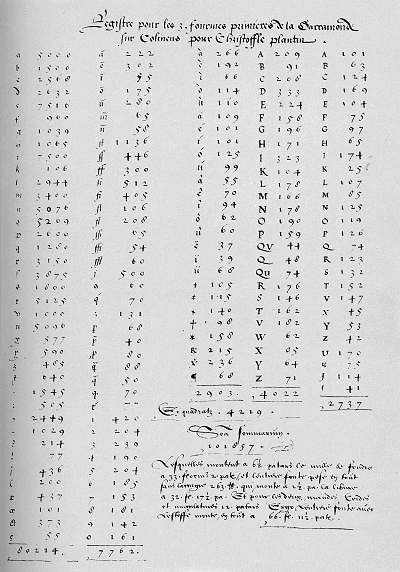 (13) Opposite: Fount scheme for three formes of a roman garamond on colineus (8.6 pica points), supplied by Hendrik van den Keere, 1571 (Arch. 153, folio 125). The type-founder used 261 lb. of type-metal and delivered a total of 101,857 letters.
| |||||||||||||||||||||||||||||||||||||||||||||||||||||||||||||||||||||||||||||||||||||||||||||||||||||||||||||||||||||||||||||||||||||||||||||||||||||||||||||||||||||
[pagina *14]
| |||||||||||||||||||||||||||||||||||||||||||||||||||||||||||||||||||||||||||||||||||||||||||||||||||||||||||||||||||||||||||||||||||||||||||||||||||||||||||||||||||||
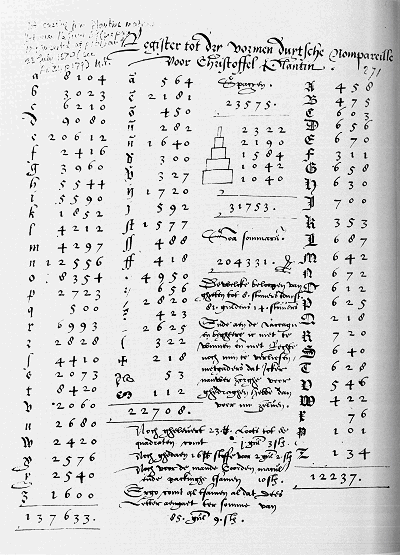 (14) Opposite: Fount scheme for three formes ofa gothic nonpareille (5.8 pica points), supplied by Hendrik van den Keere in 1569 or 1570 (Arch. 153, folio 271), a total of 204,331 types. The Dutch text, below ‘Somma Sommarum’, reads: ‘which for casting at 8 stuivers per thousand comes to 81 fl. 14 st. And I do not wish to profit from the waste material nor still less to lose from it, seeing that I have taken more care over the work than over my own. Also supplied 23 lb. of lead for the quadrats, coming to 1 fl. 3 st. Also 16 lb. of type-metal for 2 fl. 2 st. And for the baskets, cords, mats, and packing 10 st. Therefore everything together concerning this type comes to the sum of 85 fl. 9 st.’
| |||||||||||||||||||||||||||||||||||||||||||||||||||||||||||||||||||||||||||||||||||||||||||||||||||||||||||||||||||||||||||||||||||||||||||||||||||||||||||||||||||||
[pagina 81]
| |||||||||||||||||||||||||||||||||||||||||||||||||||||||||||||||||||||||||||||||||||||||||||||||||||||||||||||||||||||||||||||||||||||||||||||||||||||||||||||||||||||
whom the first impulse for the project came; the American expert Mike Parker; and Dr. H.D.L. Vervliet, then Assistant Curator of the Plantin-Moretus Museum. They were assisted by Matthew Carter, Harry Carter's son, and by K. Melis of the Museum staff.Ga naar voetnoot1. The result made all their efforts worth while and it has considerably advanced present knowledge of Renaissance typography.
The Plantinian archives afford few details of the technical aspects of cutting punches and striking matrices,Ga naar voetnoot2. except for a little information about the speed - theoretical or actual - at which the work was carried out. In a letter of 16th January 1576, Van den Keere dealt at length with a number of orders which he was then executing for Plantin and discussed the time that they would take.Ga naar voetnoot3. In connexion with a very large music type he stated that he would not be able to deliver one punch per dayGa naar voetnoot4. - which implies that this would have been the tempo with more normal sizes. Justifying the matrices of a jolie roman alphabet would require three weeks as he could not complete more than five or six matrices a day, and even to maintain this rate he would need to have help.Ga naar voetnoot5. For another fount he specified three months for cutting, two weeks for justifying matrices and two weeks for the moulds and the preparation of the steel and copper. This added up to four months, but Van den Keere pointed out that, allowing for other work that was likely to arise, the printer must reckon on half a year. Ga naar voetnoot6. In a letter of 13th February 1579, he estimates | |||||||||||||||||||||||||||||||||||||||||||||||||||||||||||||||||||||||||||||||||||||||||||||||||||||||||||||||||||||||||||||||||||||||||||||||||||||||||||||||||||||
[pagina 82]
| |||||||||||||||||||||||||||||||||||||||||||||||||||||||||||||||||||||||||||||||||||||||||||||||||||||||||||||||||||||||||||||||||||||||||||||||||||||||||||||||||||||
the time needed for justifying the matrices of a philosophie roman at three weeks.Ga naar voetnoot1. The speed at which Granjon cut punches can be gauged from some interesting data. On 3rd February 1565 he contracted to supply Plantin with a parangon Greek. On 9th February he delivered the first fifteen punches, and the whole set was ready on 29th June. Granjon had thus completed 200 punches in a period of 156 days, making, including Sundays and holy days, an average of 1½ punches per day.Ga naar voetnoot2. Naturally there is more information about the financial aspects of all this in the Plantinian archives. It appears that Granjon reckoned his prices on the basis of the punch plus one matrix struck with it. This probably meant that the cost of the copper for the matrices was included in the price. For example, on 3rd July 1565 he agreed to supply Plantin with a garamond italic and a mediane italic at 2 fl. for each punch with one justified matrix.Ga naar voetnoot3. On 21st November 1569 the 108 punches of a Syriac aphabet were entered at a rate of 2 fl. 5 st. per punch with matrix.Ga naar voetnoot4. Granjon was also expected to deliver the matrices for the parangon Greek ordered on 3rd February 1565, but the provisional price entered in the accounts was for the punches only, at 1 fl. each.Ga naar voetnoot5. In the case of the italic sur la grosse ascendonica it was agreed, however, on 18th April 1570 that Plantin should pay 1 fl. 5 st. per punch and should receive four matrices to every punch ‘dont ie luy payeray le cuivre’. There were 43 Flemish pounds of this copper according to an entry of 22nd April. At 4 st. per pound it came to 8 fl. 12 st. altogether.Ga naar voetnoot6. | |||||||||||||||||||||||||||||||||||||||||||||||||||||||||||||||||||||||||||||||||||||||||||||||||||||||||||||||||||||||||||||||||||||||||||||||||||||||||||||||||||||
[pagina 83]
| |||||||||||||||||||||||||||||||||||||||||||||||||||||||||||||||||||||||||||||||||||||||||||||||||||||||||||||||||||||||||||||||||||||||||||||||||||||||||||||||||||||
Transactions between Plantin and Granjon usually involved detailed and elaborate contracts. A number of them have been preserved.Ga naar voetnoot1. They all contained clauses which gave Plantin a virtual monopoly of the types. In the contract of 3rd July 1565, for the supply of two italic alphabets, Granjon agreed not to cut any identical type for himself or any other party, except on payment to Plantin of the prohibitive sum of 200 escus d'or as compensation. The type-cutter was allowed to keep the matrices ‘pour mon seul et particulier usage et proffict’, although again there were certain conditions: any type that he cast from these matrices must be solely for his own use and he was to keep Plantin informed as to which works he intended printing with them (Granjon was also a printer and bookseller). The contract of 7th December 1566, in which Granjon undertook to cut a garamond civilité for 200 fl., also reserved a strike for the maker ‘laquelle frappe il sobligera de nalliener, vendre, prester ne faire fondre dessus pour personne du monde que pour sen servir soymesmes en sa maison ou demeure et non ailleurs ne par autre qui que ce soit’. The agreement of 3rd February 1565 for the paragon Greek also permitted Granjon to reserve a set of matrices for himself, but the conditions under which he could use them were so restricted that in practice he could do little except store them away. The only way he could make money from them was to sell them to Plantin at the price laid down in the contract.Ga naar voetnoot2. Plantin was probably able to dictate these stringent terms because in this case he had advanced Granjon money against delivery.Ga naar voetnoot3. Hendrik van den Keere's letters, and above all his accounts, afford | |||||||||||||||||||||||||||||||||||||||||||||||||||||||||||||||||||||||||||||||||||||||||||||||||||||||||||||||||||||||||||||||||||||||||||||||||||||||||||||||||||||
[pagina 84]
| |||||||||||||||||||||||||||||||||||||||||||||||||||||||||||||||||||||||||||||||||||||||||||||||||||||||||||||||||||||||||||||||||||||||||||||||||||||||||||||||||||||
interesting particulars of the financial side of his dealings with Plantin. In his letter of 16th January 1576Ga naar voetnoot1. he stated his terms for a set of matrices and punches for music type: 2 fl. 10 st. per punch, 6 st. for each justified matrix; Plantin was to pay for the copper needed. Van den Keere's estimate was 8 to 10 pounds of copper at 10 st. per pound. If Plantin was agreeable to these proposals, then he must buy a 50-pound lump of copper as soon as possible. In the same letter Van den Keere warned Plantin that he would have to pay as much as 3 fl. per punch for another set, in this case for a large music type.Ga naar voetnoot2. Van den Keere calculated his prices on a somewhat different basis from Granjon. Punches and matrices (more precisely: the justifying of the matrices) were priced separately, while the printer had to supply the copper or else pay for it separately. The prices quoted above would suggest that the Ghent master charged more for his products than Granjon. However, they refer to two fairly difficult, or at least extensive commissions and included the cutting of one of Plantin's largest music types. Van den Keere's prices for ordinary alphabets were roughly the same as Granjon's, and in general even slightly lower. For example, in October 1570 he sent in the following bill for a parangon black letter:Ga naar voetnoot3.
The account for a canon flamande on 23rd July 1570 was as follows:Ga naar voetnoot4. | |||||||||||||||||||||||||||||||||||||||||||||||||||||||||||||||||||||||||||||||||||||||||||||||||||||||||||||||||||||||||||||||||||||||||||||||||||||||||||||||||||||
[pagina 85]
| |||||||||||||||||||||||||||||||||||||||||||||||||||||||||||||||||||||||||||||||||||||||||||||||||||||||||||||||||||||||||||||||||||||||||||||||||||||||||||||||||||||
In the case of the lettre castillane, a type which was later known in the Plantin press as the Spaanse canon (Spanish canon), Van den Keere charged 2 fl. 10 st. per punch and 5 st. for each justified matrix.Ga naar voetnoot1. This came to 167 fl. 10 st. for 53 punches and 15 fl. 10 st. for 62 matrices. It had been intended to print the great choir books for Spain in this large, rounded black letter type, but as a result of the events of 1576 the project was abandoned before any printing was put in hand. Matrices were not always justified by the craftsman who had cut the punches. Jacques Sab on in 1565 received 17 fl. ½ st. for perfecting the 227 matrices of a Granjon paragon Greek, a rate of 1½ st. per matrix.Ga naar voetnoot2. In 1569 (?) Herman Gruter sent a bill for 3 fl. 11 st. for justifying 41 matrices of a Hebrew alphabet- 1¾ st. each.Ga naar voetnoot3. Something that does not emerge so clearly from the various prices charged is the relationship between justified matrices and sets of strikes. When Granjon and Van den Keere submitted their accounts they were in fact charging for their actual work on justifying the matrices; for the strike itself they asked virtually no more than the value of the copper block. Taken by themselves, however, strikes were in reality worth a great deal more than the copper they were made of. For those who did not have the corresponding punches at their disposal, a set of strikes was the starting point for type-founding. When strikes were sold separately by a punch-cutter he normally priced them so as to receive a reasonable return for the skill he had exercised in making the original punches; if a third party sold them, the aim was usually to recover part of the purchase price of the punches. Strikes were | |||||||||||||||||||||||||||||||||||||||||||||||||||||||||||||||||||||||||||||||||||||||||||||||||||||||||||||||||||||||||||||||||||||||||||||||||||||||||||||||||||||
[pagina 86]
| |||||||||||||||||||||||||||||||||||||||||||||||||||||||||||||||||||||||||||||||||||||||||||||||||||||||||||||||||||||||||||||||||||||||||||||||||||||||||||||||||||||
therefore sold at much higher prices than were asked for equal amounts of unworked copper. On the other hand it was usual for sets of strikes to depreciate in value in the course of time, either because the novelty or exclusiveness of the typeface had gone, or because punches or matrices had been lost or damaged. The punch-cutters' and type-founders' accounts do not give so clear a picture of these matters as some of the Plantinian inventories. Unfortunately only three of them record prices and estimates: those of 1561, 1563, and 1566. It is not always possible to extract figures for each individual series: punches and matrices, or different sets of matrices, were often grouped together. The 1563 inventory is also peculiar in that the sums of money quoted there are frequently lower than their equivalents in the 1561 and 1566 lists.Ga naar voetnoot1. Apart from this anomaly,Ga naar voetnoot2. prices or estimates correspond more or less with the bills submitted by Granjon and Van den Keere. It may be assumed that the 1561 and 1566 figures are a reasonably accurate record of what Plantin actually paid for his punches and matrices, whereas depreciation should possibly be taken into account when interpreting those for 1563. Another interesting point about these inventories is the fact that they enable the prices of strikes and justified matrices to be compared: the former generally figure at only half the price of the justified ones.Ga naar voetnoot3. The 1563 and 1566 inventories record a number of abnormally low prices paid by Plantin, but there is an explanation for these. | |||||||||||||||||||||||||||||||||||||||||||||||||||||||||||||||||||||||||||||||||||||||||||||||||||||||||||||||||||||||||||||||||||||||||||||||||||||||||||||||||||||
[pagina 87]
| |||||||||||||||||||||||||||||||||||||||||||||||||||||||||||||||||||||||||||||||||||||||||||||||||||||||||||||||||||||||||||||||||||||||||||||||||||||||||||||||||||||
They refer to acquisitions which he made in Paris: Guillaume Le Bé stated that in 1562 he had sold some sets of punches and matrices to the printer for no more than a nominal sum; and the material which Plantin bought at the auction of Garamond's estate was probably knocked down to him at less than its full value.Ga naar voetnoot1. These inventories of 1561, 1563, and 1566 enable the growth of Plantin's typographical collection to be expressed in money terms. The 17 sets of justified matrices and the five sets of strikes which were in the printer's possession before his flight to Paris in 1561 were valued at 900 fl. The 1563 inventory gives the position when the printer went into partnership with the Van Bomberghen family. We have, however, already seen that in general the noted prices were much lower than in 1561 and 1566. The sums quoted here add up to 817 fl. 10 st. Prices for some items were not entered - comparison with the 1561 and 1566 inventories suggests that these would have totalled 250 fl. - and no particulars are available for three sets of matrices. The total value must have been in the region of 1,200 fl. - and this is the amount quoted in the deed of October 1563 as the contribution Plantin made to the partnership by bringing in his punches and matrices.Ga naar voetnoot2. The inventory of 1566 puts the total value of Plantin's acquisitions ‘depuis la compagnie faicte’ at 1,358 fl. In fact this amount also included the purchases made in Paris in 1562, before the setting up of the partnership - they had already figured in the 1563 inventory. If these are deducted, Plantin's purchases between 1563 and 1566 work out at around 700 fl. This would make his collection in 1566 worth about 2,258 fl.Ga naar voetnoot3. After 1566 no further totals are available until 1589, when Plantin's estate was divided among his heirs.Ga naar voetnoot4. To make the calculations easier | |||||||||||||||||||||||||||||||||||||||||||||||||||||||||||||||||||||||||||||||||||||||||||||||||||||||||||||||||||||||||||||||||||||||||||||||||||||||||||||||||||||
[pagina 88]
| |||||||||||||||||||||||||||||||||||||||||||||||||||||||||||||||||||||||||||||||||||||||||||||||||||||||||||||||||||||||||||||||||||||||||||||||||||||||||||||||||||||
average figures were used in the assessment. Punches were valued at 15 st. each, sets of justified matrices at 30 fl., and sets of strikes at 15 fl. Thus the 3,574 punches were taken to be worth 2,680 fl. 10 st., the 72 sets of matrices 2,160 fl. and the 51 sets of strikes 765 fl., making a total value of 5,605 fl. 10 st.Ga naar voetnoot1. This was a considerable sum, but Plantin had in fact paid much more than this for his collection: a reasonable estimate would be 10,000 to 15,000 fl. The assessment at 5,605 fl. 10 st. took depreciation fully into account, but it did not allow for the marked devaluation of the currency which had taken place. This had reduced the purchasing power of the guilder in 1589 to half of what it had been in 1561-66. If the purchases made between 1561 and 1576 are expressed in terms of 1589 values, the cost to Plantin of building up his typographical collection could be put as high as 20,000 fl. Plantin's punches and matrices represented a large investment of capital, but as this was spread over the thirty-four years of his printing operations it did not bear down too heavily on the business. In 1566, for example, he spent 103 fl. 12 st. on these items, compared with a total expenditure of 13,041 fl.:Ga naar voetnoot2. barely 0.8 per cent and less than he had paid for ink in that year.Ga naar voetnoot3. In some years the percentage might be much higher; on the other hand there were years in which Plantin made no additions to his collection. Although punches and matrices were by no means cheap, the amount of money spent on them was small in comparison with what Plantin had to pay to have his type cast. What should be stressed is the fact that this investment in equipment was not strictly necessary, at all events not on this scale. Plantin could have obtained all the cast type he needed from a typefounder, or from a punch-cutter who practised both branches of the craft. It might have been slightly more expensive to buy type in this | |||||||||||||||||||||||||||||||||||||||||||||||||||||||||||||||||||||||||||||||||||||||||||||||||||||||||||||||||||||||||||||||||||||||||||||||||||||||||||||||||||||
[pagina 89]
| |||||||||||||||||||||||||||||||||||||||||||||||||||||||||||||||||||||||||||||||||||||||||||||||||||||||||||||||||||||||||||||||||||||||||||||||||||||||||||||||||||||
way, but the difference in cost between casting type with his own matrices and having it done with someone else's material certainly did not warrant the amount of money invested in punches and matrices. The extensive purchase of these materials was undertaken largely to secure a monopoly of certain type faces for the Plantin press. However, the collection was an asset and not just so much dead capital. It served as collateral in certain transactions. It has already been seen that when Plantin went into partnership with the Van Bomberghens in 1563, his punches and matrices gave him a share in the business worth 1,200 fl. When the printer died in 1589 he had 1,736 punches, 6 sets of matrices, and 14 sets of strikes stored in the warehouse he had rented in Frankfurt. He had offered these - or a proportion of them - as security for a loan of 6,000 fl in 1585. The money was to be paid back with 4 per cent interest before 1590.Ga naar voetnoot1. In this way he was able to obtain money that helped him keep his officina going in the catastrophic years of 1585-89. Plantin was also able to sell punches and matrices from his collection and thus recover some of the money he had invested in it - plus a little profit. At Frankfurt, in 1579, he sold strikes of Granjon's gaillarde (bourgeois) roman and granjonne italic to the successors of Dietrich Gerlach of Nuremberg.Ga naar voetnoot2. The inventory of c. 1572 begins with an enumeration of 15 frappes creues by Granjon and Garamond, followed by the brief remark ‘Tout cecy est envoyé à Francfort’.Ga naar voetnoot3. As no further trace of these has ever been found it must be assumed that they never returned from Frankfurt. The fact that Plantin sometimes sold items from his typographical collection no doubt explains why from time to time sets of punches or matrices would cease to appear in the inventories. On the whole this does not seem to have happened very often: sales were not very extensive and were largely confined to strikes, for which Plantin | |||||||||||||||||||||||||||||||||||||||||||||||||||||||||||||||||||||||||||||||||||||||||||||||||||||||||||||||||||||||||||||||||||||||||||||||||||||||||||||||||||||
[pagina 90]
| |||||||||||||||||||||||||||||||||||||||||||||||||||||||||||||||||||||||||||||||||||||||||||||||||||||||||||||||||||||||||||||||||||||||||||||||||||||||||||||||||||||
retained the punches so that he could have new matrices made if necessary. Sometimes he himself would buy a set of strikes specially for sale elsewhere. One example was the Haul tin mediane Greek which he ordered through Pierre Porret in July 1567.Ga naar voetnoot1. ‘Elsewhere’ in this case was Frankfurt once again: Plantin's sales of typographical material were largely limited to the fairs held in that city. The reason for this is not far to seek. In Paris, Plantin had little chance of selling at a worthwhile profit matrices for type faces that French printers could obtain locally. He did not want to sell them in Antwerp or elsewhere in the Netherlands as this would have lost him the exclusiveness of his types. In Germany, on the other hand, these French Renaissance alphabets were less widespread and were in some demand. Their use by German printers could do Plantin little serious harm. Plantin also sent a few sets of matrices to Spain - not on his own initiative in this case, but as part of transactions that were more or less forced on him by the Spanish authorities.Ga naar voetnoot2. Finally in this section, some attention must be given to the question of how it was that, from 1580 onwards at least, so many sets of punches and matrices came to be stored in Plantin's warehouse in Frankfurt. Did the printer consider selling a large part of his collection | |||||||||||||||||||||||||||||||||||||||||||||||||||||||||||||||||||||||||||||||||||||||||||||||||||||||||||||||||||||||||||||||||||||||||||||||||||||||||||||||||||||
[pagina 91]
| |||||||||||||||||||||||||||||||||||||||||||||||||||||||||||||||||||||||||||||||||||||||||||||||||||||||||||||||||||||||||||||||||||||||||||||||||||||||||||||||||||||
in the years of crisis after the Spanish Fury of November 1576? This idea may well have occurred to him, but Plantin was more likely to have been thinking of the safety of his collection than of its possible conversion into ready cash. But the fact that the material was in Frankfurt may have given him the idea - and the opportunity - of using it in 1585 as security against a cash loan: a course of action that did not require him to give up his valuable collection. | |||||||||||||||||||||||||||||||||||||||||||||||||||||||||||||||||||||||||||||||||||||||||||||||||||||||||||||||||||||||||||||||||||||||||||||||||||||||||||||||||||||
Cast typeGa naar voetnoot1.The result of the type-cutter's work was a matrix from which the type needed for printing could be cast. The casting was done in a mould. The chapter entitled ‘L'Imprimerie’ in the Dialogues françois et flamands of 1567 contains a description of the mould and how it was used. The exposition, however, is not as clear as it might be:
E: Into this matrix the type-metal, such as lead or tin, of which they wish to make the type, is poured, in a mould. G: I understand what you mean. However, it seems to me very difficult to make letters in that way so expertly proportioned that they all fit together exactly. E: That is done by means of the mould, which is made of several pieces fastened together, by which all the types are made alike, being as they say of the same fount. G: The mould may thus take the matrix of an A as readily as that of a B and so on, and the A and B are therefore proportioned alike? E: That is right. G: It is made of several pieces, you say? E: Yes, necessarily so, for otherwise the type would not be able to have the things necessary to it. First the mould is mounted on a block (the wood) against which there is a little bow which lifts. Then there is a plate, the long pieces (carriage) and the wire (nick) fastened to the long pieces. There are the bodies, the gauges, the jets, the registers, the gallows, and the stool, essential to the complete mould. G: This, then, is how the founts are cast inside the moulds, to which the matrices are attached... | |||||||||||||||||||||||||||||||||||||||||||||||||||||||||||||||||||||||||||||||||||||||||||||||||||||||||||||||||||||||||||||||||||||||||||||||||||||||||||||||||||||
[pagina 92]
| |||||||||||||||||||||||||||||||||||||||||||||||||||||||||||||||||||||||||||||||||||||||||||||||||||||||||||||||||||||||||||||||||||||||||||||||||||||||||||||||||||||
The mouldGa naar voetnoot1. consisted of two halves that fitted together. When pushed together a small aperture was left in the centre. The matrix was pressed against the underside of this slot by means of the ‘bow’ or clamp. Molten metal was poured in through the top of the slot with a spoon until the aperture was filled. When the mould was opened, a casting appeared with the letter on one end. This letter was not quite ready for use: the jet had to be broken off and the foot of the shank planed smooth. The castings made in a particular mould had all the same body and length, though they varied in width from i to m, as the lead had been poured in the same aperture. On the other hand, each metal type size (body) had to have its own mould. Sets of matrices were often supplied with the appropriate mould. They were carefully noted in the inventories of typographical material. That of c. 1572, for example, mentions twenty-three ‘instruments’ and specifies the bodies for which they were intended. The number of these had risen to thirty in the 1612 inventory and to thirty-three in that of 1652.Ga naar voetnoot2. Documents relating to the division of Plantin's estate in 1589-90 mention 36 moulds; as there is no further specification, it is possible that the figure is not accurate.Ga naar voetnoot3. It is clear from these figures that the increase in the number of moulds did not run parallel with the growth of Plantin's collection of punches and matrices. It was, in fact, not altogether practical to use a separate mould for each type face. Attempts at rationalization were made quite early, with the idea of producing moulds which, with small adjustments, could serve for the various kinds of type (roman, italic, black letter, etc.) on a particular body and even for | |||||||||||||||||||||||||||||||||||||||||||||||||||||||||||||||||||||||||||||||||||||||||||||||||||||||||||||||||||||||||||||||||||||||||||||||||||||||||||||||||||||
[pagina 93]
| |||||||||||||||||||||||||||||||||||||||||||||||||||||||||||||||||||||||||||||||||||||||||||||||||||||||||||||||||||||||||||||||||||||||||||||||||||||||||||||||||||||
more than one body. Plantin himself laid some stress on this in a letter to de Çayas,Ga naar voetnoot1. while certain details in Van den Keere's correspondenceGa naar voetnoot2. and in the inventoriesGa naar voetnoot3. also point to these developments. Nevertheless, the 33 moulds mentioned in the 1652 inventory had to be supplemented at a later date. The Plantin-Moretus Museum now possesses 62 old moulds which were handed over with the rest of the typographical collection in 1876.Ga naar voetnoot4. The width and depth of the shanks of cast type varied from body size to body size. All shanks, however, had to be of exactly the same height to paper in order to form a level surface for inking and printing: any piece of type projecting above the others would have gone through the paper, and any piece of type that was too short would not have printed. | |||||||||||||||||||||||||||||||||||||||||||||||||||||||||||||||||||||||||||||||||||||||||||||||||||||||||||||||||||||||||||||||||||||||||||||||||||||||||||||||||||||
[pagina 94]
| |||||||||||||||||||||||||||||||||||||||||||||||||||||||||||||||||||||||||||||||||||||||||||||||||||||||||||||||||||||||||||||||||||||||||||||||||||||||||||||||||||||
This was the state of affairs in the sixteenth century and for a large part of the seventeenth. At the end of the seventeenth century, however, there was a slight change when a new technique was evolved for printing liturgical books in black and red.Ga naar voetnoot1. Type of normal height to paper was used for the parts of the text to be printed black, taller type for the parts to be printed red. The red was printed first, then the type used for this was removed and replaced by quadrats and spaces and the sheets put back in the press for the black to be printed. Compared with the method previously used, this was quicker and more accurate, although it meant that the printer had to have letters of two different heights. The introduction of this technique into the Plantin press can be dated fairly accurately. In the accounts for 31st January 1682 of the Van Wolsschaten family, the type-founders who supplied the officina from 1660 onwards, there appeared the first specific mention of a delivery of ‘high’ type (116 pounds of a bible roman).Ga naar voetnoot2. Thereafter, deliveries of this type alternated with ordinary type, for which no special term was used, until in 1701 the latter acquired the name ‘low letter’ by which it was subsequently known in the house.Ga naar voetnoot3. It is possible, however, that the technique had been applied there even earlier than this, and that founders working in the officinaGa naar voetnoot4. had cast type of this kind some years before 1660.Ga naar voetnoot5. Moulds were valued at 5 to 6 fl. in the inventories;Ga naar voetnoot6. the thirty listed in 1612 were thus worth from 150 to 180 fl.Ga naar voetnoot7. As well as being | |||||||||||||||||||||||||||||||||||||||||||||||||||||||||||||||||||||||||||||||||||||||||||||||||||||||||||||||||||||||||||||||||||||||||||||||||||||||||||||||||||||
[pagina 95]
| |||||||||||||||||||||||||||||||||||||||||||||||||||||||||||||||||||||||||||||||||||||||||||||||||||||||||||||||||||||||||||||||||||||||||||||||||||||||||||||||||||||
not too expensive they lasted for quite a considerable time before they needed to be replaced. The same was not true of cast metal type. This had to be replaced or replenished fairly often, as it wore out, buckled, or broke. It may have been this factor which led Plantin to invest such large sums of money in comparatively unproductive punches and matrices. In this way he was at least sure of always having the type he liked when he needed it. Even if the Plantinian archives give comparatively few technical details about punches and matrices, they do contain a wealth of such information about type-founding. The composition of the estoffe,Ga naar voetnoot1. the type-metal from which the type was cast, forms a good starting point. An analysis of a Plantinian lead type of about 1581 shows it contained 82.71 per cent lead, 8.99 per cent tin, 5.81 per cent antimony, 0.53 per cent copper and traces of iron.Ga naar voetnoot2. A text dated 1565 actually states how much of each ingredient Plantin needed to produce a given quantity of type-metal.Ga naar voetnoot3. It is detailed on p. 96. The 773 pounds mentioned produced only 517 pounds of usable type-metal,Ga naar voetnoot4. which meant that about one third was lost or expelled during smelting. The basic ingredients here are the same as in the type that was | |||||||||||||||||||||||||||||||||||||||||||||||||||||||||||||||||||||||||||||||||||||||||||||||||||||||||||||||||||||||||||||||||||||||||||||||||||||||||||||||||||||
[pagina 96]
| |||||||||||||||||||||||||||||||||||||||||||||||||||||||||||||||||||||||||||||||||||||||||||||||||||||||||||||||||||||||||||||||||||||||||||||||||||||||||||||||||||||
analysed, but the proportions are different.Ga naar voetnoot3. To judge from eighteenth-century accounts - of which more below - it is mainly the antimony, with the copper and iron, that was expelled during smelting, and the proportion of lead and tin was correspondingly increased. | |||||||||||||||||||||||||||||||||||||||||||||||||||||||||||||||||||||||||||||||||||||||||||||||||||||||||||||||||||||||||||||||||||||||||||||||||||||||||||||||||||||
[pagina *15]
| |||||||||||||||||||||||||||||||||||||||||||||||||||||||||||||||||||||||||||||||||||||||||||||||||||||||||||||||||||||||||||||||||||||||||||||||||||||||||||||||||||||
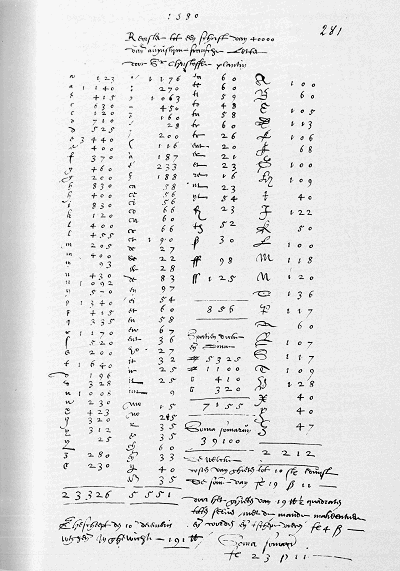 (15) Opposite: fount scheme for a ‘french type’ (civilité) augustine (13.4 pica points) supplied by Hendrik van den Keere, 1580 (arch. 153, fo 281). The founder delivered a total of 39,100 types, weighing, with quadrats and packing, 191 lb. The Dutch text below ‘Somma sommarum’ reads: ‘Which costs for casting at 10 st. per thousand the sum of 19 fl. 11 st. for casting 19½ lb. of quadrats at the same [rate] together with the basket, waste, and cords, and taking it to the ship 4 fl. Somma sommarum 23 fl. 11 st. Shipped the 10th December, weighing 191 lbs.’
| |||||||||||||||||||||||||||||||||||||||||||||||||||||||||||||||||||||||||||||||||||||||||||||||||||||||||||||||||||||||||||||||||||||||||||||||||||||||||||||||||||||
[pagina *16]
| |||||||||||||||||||||||||||||||||||||||||||||||||||||||||||||||||||||||||||||||||||||||||||||||||||||||||||||||||||||||||||||||||||||||||||||||||||||||||||||||||||||
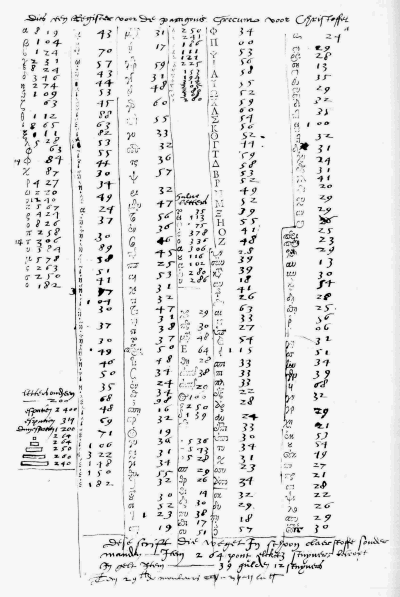 (16) Opposite: fount scheme for a Greek type, paragon (18.7 pica points), supplied by Van Everbroeck, 1565 (arch. 153, fo 47). The Dutch text below reads: ‘This type, metal only, without baskets, weighs 264 lb. Each pound costs 3 st. coming to 39 fl. 12 st.’ In a different handwriting, probably Jan Moretus's, is added in french: ‘Item 29 lb. de mouleurs [i.e., quadrats] à 3 st. la lb.’
| |||||||||||||||||||||||||||||||||||||||||||||||||||||||||||||||||||||||||||||||||||||||||||||||||||||||||||||||||||||||||||||||||||||||||||||||||||||||||||||||||||||
[pagina 97]
| |||||||||||||||||||||||||||||||||||||||||||||||||||||||||||||||||||||||||||||||||||||||||||||||||||||||||||||||||||||||||||||||||||||||||||||||||||||||||||||||||||||
Iron is missing in the instance detailed here, although it is clear from other accounts of the same period that Plantin regularly bought iron filings, old nails, and similar items for inclusion in his type-metal.Ga naar voetnoot1. The percentages given above provide a general idea of the composition of Plantin's type-metal, but they are by no means absolute, or hard and fast. Purely empirical methods were applied and the relative proportions could vary greatly, partly in accordance with the body size of the cast type.Ga naar voetnoot2. Lead was always the basis of metal type in Plantin's time and to this were added appreciable quantities of tin, to make the metal more fluid in the molten state, and antimony to make it harder, together with a little iron and copper. as the intensity with which Plantin's stocks of type were used increased, so did the frequency with which they wore out or became damaged. It became customary to obtain some of the metal needed for casting new type by melting down worn or damaged type: from 1565-66 onwards this was regular practice.Ga naar voetnoot3. No particulars have been found of the composition of type-metal in the seventeenth century, but there are a number of detailed accounts from the eighteenth century. In about 1760 franciscus Joannes Moretus drew up a ‘memorandum concerning the cost of making hard metal for casting type’ which gives examples taken from practice.Ga naar voetnoot4. Some are detailed on p. 98. The amount of waste material - the lycagie as it was termed - was remarkably large when iron scraps were added to the molten metal. It is clear from the subsequent notes on type-founding which F.J. | |||||||||||||||||||||||||||||||||||||||||||||||||||||||||||||||||||||||||||||||||||||||||||||||||||||||||||||||||||||||||||||||||||||||||||||||||||||||||||||||||||||
[pagina 98]
| |||||||||||||||||||||||||||||||||||||||||||||||||||||||||||||||||||||||||||||||||||||||||||||||||||||||||||||||||||||||||||||||||||||||||||||||||||||||||||||||||||||
Moretus wrote for his own edification and instruction that those engaged in the process were aware that most of this iron, and a considerable proportion of the antimony was lost during smelting.Ga naar voetnoot1. Notable too is the emphasis which was placed on the use of old type: ‘Observe that for good results old type should comprise half the mixture.’Ga naar voetnoot2. This remark follows the ‘memorandum given by Jan Michiel Smit’ on ‘the proportions that should be adhered to in preparing metal for casting type’, which also prescribes a goodly percentage of melted down old type. Smit's proportions were:
This emphasis on the use of old type must be seen in the light of | |||||||||||||||||||||||||||||||||||||||||||||||||||||||||||||||||||||||||||||||||||||||||||||||||||||||||||||||||||||||||||||||||||||||||||||||||||||||||||||||||||||
[pagina 99]
| |||||||||||||||||||||||||||||||||||||||||||||||||||||||||||||||||||||||||||||||||||||||||||||||||||||||||||||||||||||||||||||||||||||||||||||||||||||||||||||||||||||
another factor: the absence of tin and copper as compared with 1566. It is certainly no coincidence that the missing metals were the two most costly ingredients. In 1565 Plantin was paying 5 fl. 10 st. per 100 lb. of antimony, and 3 fl. 18 st. for the same amount of lead, whereas the prices for these quantities of tin and copper were 15 fl. 10 st. and 17 fl. 10 st. respectively. This very likely would have been the main reason for the disappearance of tin and copper from type-metal. However, to obtain good metal, a certain percentage of tin was still needed - and this could be got from old type prepared to the standards applied in Plantin's time. as this process was repeated over and over again, the percentage fell until even the ‘old’ type going into the crucibles contained hardly any tin. Given the empirical methods of the time, however, it may be assumed that the type-founders went on regarding old type as essential for the improvement of their type-metal - which to some extent at least it was. It was not only in the Plantin press or among antwerp type-founders that copper and tin ceased to be used. The tendency was general to Western Europe, as appears from an analysis of a number of old cast types.Ga naar voetnoot1. Whereas Plantinian type of around 1580 contained 8.99 per cent tin and 0.53 per cent copper, the percentages had dropped in 1647 (in London) to 2.9 and 0.15 per cent. The other examples for the seventeenth and eighteenth centuries contain hardly any traces of copper and only negligible amounts of tin (with a few exceptions, probably due to the presence of old type in the metal).Ga naar voetnoot2. The percentage of antimony rose proportionately. It was only 5.81 per cent in the Plantinian type, fluctuated around 7 to 8 per cent until 1700 and exceeded 14 per cent in subsequent years. Tin did not | |||||||||||||||||||||||||||||||||||||||||||||||||||||||||||||||||||||||||||||||||||||||||||||||||||||||||||||||||||||||||||||||||||||||||||||||||||||||||||||||||||||
[pagina 100]
| |||||||||||||||||||||||||||||||||||||||||||||||||||||||||||||||||||||||||||||||||||||||||||||||||||||||||||||||||||||||||||||||||||||||||||||||||||||||||||||||||||||
figure again in appreciable quantities until the end of the eighteenth century. The proportion of antimony was maintained, which meant that again the percentage of lead in type-metal was considerably reduced.Ga naar voetnoot1. Mention has already been made of the amount of lycagie (dross), the loss of material during the preparation of this type-metal. But not all metal produced could be turned into cast type: during this process too quite a lot was lost through oxidization, spilling, and from shavings. In 1575 Plantin must have expressed his surprise to Hendrik van den Keere at receiving so little type in comparison with the amount of material he had supplied, for in connexion with a delivery the type-founder noted tartly that ‘tout le laccage monte à 10 % sur toutes les sortes communes. Et à advenant de 20 % sur la petite nonpareille, 16% sur la jolye et coronelle, 12% sur la Byble’. This meant that only 2,713½ pounds of cast type had been made from 3,027¼ pounds of metal, a wastage of 313¾ pounds.Ga naar voetnoot2. Plantin must in fact have known this: figures that he recorded in 1563-64 give roughly the same proportions.Ga naar voetnoot3. F.J. Moretus's memorandum gives a few interesting details of the technique of preparing type-metal.Ga naar voetnoot4. When the ingredients had been sufficiently mixed and smelted in the pot or crucible, a hole was bored in the vessel to allow the metal to run out. F.J. Moretus compares this with the method then in vogue in Holland, but without coming to any conclusion about the relative merits of the two techniques. | |||||||||||||||||||||||||||||||||||||||||||||||||||||||||||||||||||||||||||||||||||||||||||||||||||||||||||||||||||||||||||||||||||||||||||||||||||||||||||||||||||||
[pagina 101]
| |||||||||||||||||||||||||||||||||||||||||||||||||||||||||||||||||||||||||||||||||||||||||||||||||||||||||||||||||||||||||||||||||||||||||||||||||||||||||||||||||||||
In the north the crucibles were after the manner of the silversmiths, who allowed the molten metal to become cool and then broke the vessels in order to get the metal out. In both methods the melting pots were destroyed. This must have happened in Plantin's time too; a note of 18th May 1565 gives the additional expenses incurred in the preparation of a quantity of type-metal, including ‘creusets, pièces: 10’, valued at 3 fl. 2 st.Ga naar voetnoot1. Even a small text presupposes a large amount of cast type, and there had to be a sufficient quantity of each typeface and body available to meet the needs of the moment. The type was cleaned and distributed (‘dissed’) again after use and thus became available once more - but while the text was being printed, a quantity of type was obviously immobilized. The only way to feed an increasing number of presses with type was to add to the stock. In a letter of 1st august 1572 Plantin explained that, in order to speed up the printing of a work by Luis of Granada he had increased the number of presses engaged from two to four and had started to cast new stocks of type.Ga naar voetnoot2. However, storage space and above all the cost of manufacture set a limit to increases of typographical stocks. In some instances, rather than immobilize quantities of type, or increase his stock of it, Plantin found it more expedient to print a limited number of copies. In this way the type was quickly available again. He would then have the text re-set later and make up the number of copies. He even resorted to this policy for the great Polyglot Bible.Ga naar voetnoot3. The compositors worked by formes.Ga naar voetnoot4. The quantities of type to be | |||||||||||||||||||||||||||||||||||||||||||||||||||||||||||||||||||||||||||||||||||||||||||||||||||||||||||||||||||||||||||||||||||||||||||||||||||||||||||||||||||||
[pagina 102]
| |||||||||||||||||||||||||||||||||||||||||||||||||||||||||||||||||||||||||||||||||||||||||||||||||||||||||||||||||||||||||||||||||||||||||||||||||||||||||||||||||||||
supplied were therefore calculated and expressed in this measure. The type-founders delivered the amounts of type needed to set as many formes as were required.Ga naar voetnoot1. But in these formes certain letters occurred more frequently than others: a text required a far larger quantity of letter ‘e’ than of ‘x’ or ‘z’. Nowadays type is supplied with a fixed prescribed proportion of each letter: this is known as the fount-scheme (french: police; Dutch: polis; German: Giesszettel).Ga naar voetnoot2. The principle was already known and applied in Plantin's time. The archives of the firm contain quite a number of fount-schemes as calculated in the sixteenth, seventeenth, and eighteenth centuries.Ga naar voetnoot3. It sometimes happened that a complete fount-scheme was not needed, only certain sorts; in the Plantinian accounts these deliveries were entered as defects or imperfections.Ga naar voetnoot4. The number of letters that could be cast with a particular quantity of type-metal naturally varied according to typeface and body. These ratios are also specified many times in the archives. The entries given opposite date from 1563-65.Ga naar voetnoot5. F.J. Moretus, in his memorandum of about 1760, expressed the relationships differently, giving the weight of type-metal per 1,000 pieces of type, as shown in the table on p. 104.Ga naar voetnoot6. There is some information available about the time that the type-founders took to complete particular orders. In a letter of 13th february 1579, Hendrik van den Keere stated that Plantin could have | |||||||||||||||||||||||||||||||||||||||||||||||||||||||||||||||||||||||||||||||||||||||||||||||||||||||||||||||||||||||||||||||||||||||||||||||||||||||||||||||||||||
[pagina 103]
| |||||||||||||||||||||||||||||||||||||||||||||||||||||||||||||||||||||||||||||||||||||||||||||||||||||||||||||||||||||||||||||||||||||||||||||||||||||||||||||||||||||
three formes of a philosophie roman within three to four weeks.Ga naar voetnoot1. This involved 340 pounds of type-metal, representing a little over 100,000 letters. It is not known, however, how many men the Ghent type-founder had working for him at that time. In his memorandum, | |||||||||||||||||||||||||||||||||||||||||||||||||||||||||||||||||||||||||||||||||||||||||||||||||||||||||||||||||||||||||||||||||||||||||||||||||||||||||||||||||||||
[pagina 104]
| |||||||||||||||||||||||||||||||||||||||||||||||||||||||||||||||||||||||||||||||||||||||||||||||||||||||||||||||||||||||||||||||||||||||||||||||||||||||||||||||||||||
F.J. Moretus gave more precise information, and these 1760 figures would probably have been right for Plantin's time too: ‘Note that a master with two journeymen and one or two apprentices has to cast and prepare 100 pounds of median [31,000 letters] or other letters of the same dimensions and weight each week. A journeyman here casts 3,000 letters per day.’Ga naar voetnoot1. Who supplied all these schemes and ‘deffects’ and ‘imperfections’ down through the years? In contrast with punches and matrices, lead type was bulky, heavy, and difficult to transport. Its production did not demand artistry so much as sound workmanship. Whereas the masters of the Golden Compasses preferred French craftsmen for their punches and matrices, they had their type cast nearer home - and when the need arose, they set up a foundry in their own house. The type-founders who worked for Plantin and the Moretuses all lived in Antwerp - except in the period 1570-82, when Ghent craftsmen supplied the officina. Ghent is linked with Antwerp by the River Scheldt. If this convenient and comparatively cheap means of transport had not been available, Plantin would probably have thought twice before doing business with Van den Keere and Thomas de Vechter, however highly he regarded their skill. At the beginning of his career, from 1555 to 1561, Plantin appears to have obtained his stocks from the two leading type-foundersGa naar voetnoot2. at | |||||||||||||||||||||||||||||||||||||||||||||||||||||||||||||||||||||||||||||||||||||||||||||||||||||||||||||||||||||||||||||||||||||||||||||||||||||||||||||||||||||
[pagina 105]
| |||||||||||||||||||||||||||||||||||||||||||||||||||||||||||||||||||||||||||||||||||||||||||||||||||||||||||||||||||||||||||||||||||||||||||||||||||||||||||||||||||||
Antwerp, François Guyot and Anieet Tavernier, who have already been discussed as type-cutters. From 1563 onwards Plantin's dealings with his type-founders were recorded in more detail. In October 1563Ga naar voetnoot1. the printer bought 351 pounds of knoppen ou neuds de vieilles verrières [the leading of old window-panes] à faire estoffe pour fondre lectres, 125 pounds antimony pour faire l'estoffe dure à fondre, 47 pounds estain d'Oostland [tin from Germany] pour faire matière à lectres, 30 pounds of iron filings, 25 pounds of copper filings, 3 pots de fer pour fondre la matière dedens, pesants ensemble 78½ livres à 1 st. la livre et 1 st. pour en avoir faict aporter à la maison, scales,Ga naar voetnoot2. weights,Ga naar voetnoot3. and a number of other requisites.Ga naar voetnoot4. In November he provided himself with a further 300 pounds of plomb vieil de conduite, 11 pounds of limaille d'espingle, 10 pounds of limaille de fer, a quantity of charcoal and peat, and two creusets pour fondre la matière.Ga naar voetnoot5. At the end of the month Plantin had the brass-founder Van Diest convert the fireplace in the big loft into a forneau à faire la matière dure,Ga naar voetnoot6. but the following month the furnace was moved to what had formerly been the printing shop. During November and December, Plantin bought further odds and ends for his foundry.Ga naar voetnoot7. More purchases of metals and other ingredients followed, but the type itself continued to be supplied by specialist firms. Ameet Tavernier ceased to appear in the account-books; but the name of another Antwerp type-founder, Laurent van | |||||||||||||||||||||||||||||||||||||||||||||||||||||||||||||||||||||||||||||||||||||||||||||||||||||||||||||||||||||||||||||||||||||||||||||||||||||||||||||||||||||
[pagina 106]
| |||||||||||||||||||||||||||||||||||||||||||||||||||||||||||||||||||||||||||||||||||||||||||||||||||||||||||||||||||||||||||||||||||||||||||||||||||||||||||||||||||||
Everbroeck or Everborgh (Plantin used both spellings), appeared alongside that of François Guyot.Ga naar voetnoot1. Plantin's ‘type-foundry’ was confined in fact to smelting type-metal.Ga naar voetnoot2. After all his possessions had been sold in the Vrijdagmarkt in April 1562 (including his stocks of type), Plantin had to face the difficult task of completely re-equipping his officina. He was able to buy back some of the type from the purchasers,Ga naar voetnoot3. and bought other ready-cast type as well,Ga naar voetnoot4. but this was not enough. He started to make his own metal, either because it was quicker, or cheaper,Ga naar voetnoot5. or possibly for both reasons. But this type-metal was sent out to François Guyot and Laurent van Everbroeck. Who smelted Plantin's type-metal in the period 1563-64 is not recorded. It may have been done by unskilled labour; there is evidence to suggest that the work was sometimes so badly executed that the metal was below standard.Ga naar voetnoot6. In April 1565 Plantin engaged the services of Jacques Sabon, the craftsman who has already been mentioned in connexion with punches and matrices.Ga naar voetnoot7. Plantin spent a modest 17 fl. 5½ st. on new tools to | |||||||||||||||||||||||||||||||||||||||||||||||||||||||||||||||||||||||||||||||||||||||||||||||||||||||||||||||||||||||||||||||||||||||||||||||||||||||||||||||||||||
[pagina 107]
| |||||||||||||||||||||||||||||||||||||||||||||||||||||||||||||||||||||||||||||||||||||||||||||||||||||||||||||||||||||||||||||||||||||||||||||||||||||||||||||||||||||
ensure that his man was adequately equipped.Ga naar voetnoot1. In the Plantinian foundry Sabon cut a few punches, justified a number of matrices, and cast some type. His total output was not large: 4,100 pièces fleurons de diverses sortes, 2,000 quadrats, 800 pièces moulures, and other small commissions, also consisting mostly of ornaments.Ga naar voetnoot2. By June 1565 the printer and the type-founder had settled accounts and Sabon left the Officina Plantiniana to start a new career in Frankfurt. Plantin's foundry seems to have survived the departure of Sabon for a time. Until the summer of 1567 at least he had type-metal made there,Ga naar voetnoot3. although it was also supplied by Guyot and Van Everbroeck or produced by them from the lead, tin, antimony, and other materials which Plantin provided. One of the reasons for the eventual closing down of the foundry was probably the swift growth of the officina into a large business: Plantin could no longer apply the operating methods of his early years, when he had the time and the opportunity to look after every detail himself. Another important reason was probably the fact that once he had built up his | |||||||||||||||||||||||||||||||||||||||||||||||||||||||||||||||||||||||||||||||||||||||||||||||||||||||||||||||||||||||||||||||||||||||||||||||||||||||||||||||||||||
[pagina 108]
| |||||||||||||||||||||||||||||||||||||||||||||||||||||||||||||||||||||||||||||||||||||||||||||||||||||||||||||||||||||||||||||||||||||||||||||||||||||||||||||||||||||
initial typographical stocks, he had access to quite big quantities of old type which could always be melted down again.Ga naar voetnoot1. Guyot died in 1570. Van Everbroeck no longer figured in Plantin's account-books after 1570-71. For a short time the printer turned to Herman Gruter (or de Gruyter), another Antwerp type-founder,Ga naar voetnoot2. but he soon discovered that Hendrik van den Keere, the Ghent craftsman who then supplied him with most of his punches and matrices, was a better proposition. From 1570 until his death in 1580, Van den Keere supplied Plantin with all the type he needed. After Van den Keere's untimely death his foreman Thomas de Vechter continued the business for a while at Ghent, and then, at the end of 1581, moved to Antwerp, where he continued to supply Plantin.Ga naar voetnoot3. When Antwerp was besieged he left for the North. On 29th October 1584 he was in Leiden, near Plantin once more.Ga naar voetnoot4. He was to work in the Dutch university town until his death. When the Officina Plantiniana in Leiden closed down in 1619-20, Balthasar i Moretus obtained some of the type that had been cast there for his relations, although his acquisition amounted only to two exotic alphabets: a double median Hebrew and an Arabic.Ga naar voetnoot5. De Vechter's place at Antwerp was taken by Herman and Ameet de | |||||||||||||||||||||||||||||||||||||||||||||||||||||||||||||||||||||||||||||||||||||||||||||||||||||||||||||||||||||||||||||||||||||||||||||||||||||||||||||||||||||
[pagina 109]
| |||||||||||||||||||||||||||||||||||||||||||||||||||||||||||||||||||||||||||||||||||||||||||||||||||||||||||||||||||||||||||||||||||||||||||||||||||||||||||||||||||||
GruyterGa naar voetnoot1. some of whose accounts - for 1588-90 and 1592 - are preserved.Ga naar voetnoot2. On 11th March 1594 a Guillaume vander Mont, silversmith and type-founder, submitted a bill.Ga naar voetnoot3. In the early years of the seventeenth century a new figure appeared. This was the Irishman Thomas Strong, who supplied the Plantinian press with cast type until October 1624.Ga naar voetnoot4. From 26th October 1624 until 22nd August 1626, his son James took over the responsibility, but on the latter date the terse entry ‘il est parti sans liquider compte restant’ was made in the accounts. The money owed amounted to 256 fl. 9 st.Ga naar voetnoot5. The Moretuses had to look for another type-founder. They found one in Leonard Milcam (31st October 1626 - 1st April 1656, when his affairs were settled by his widow).Ga naar voetnoot6. He was followed by Hans Pen (19th August 1656 - April 1659).Ga naar voetnoot7. After that the Van Wolsschaten family were practically the sole suppliers of type from 1660 until about 1730.Ga naar voetnoot8. Max Rooses states, ‘In the beginning of the seventeenth century the Moretuses set up a foundry in their printing office, where their type was fashioned by their own workmen; it is still there today. It was in use from 1614 until 1660, and from 1730 until the end of the eighteenth century.’Ga naar voetnoot9. The present author does not know on what evidence Rooses dated the establishment of the foundry, which cannot have been set up in its present form until a few years later in the extension to the house built by Balthasar i Moretus in 1620-22.Ga naar voetnoot10. It is possible, however, that a foundry had been installed before this date somewhere else in the Golden Compasses in the Vrijdagmarkt, or in | |||||||||||||||||||||||||||||||||||||||||||||||||||||||||||||||||||||||||||||||||||||||||||||||||||||||||||||||||||||||||||||||||||||||||||||||||||||||||||||||||||||
[pagina 110]
| |||||||||||||||||||||||||||||||||||||||||||||||||||||||||||||||||||||||||||||||||||||||||||||||||||||||||||||||||||||||||||||||||||||||||||||||||||||||||||||||||||||
the Gulden Valk in the Kammenstraat. Compared with a printing shop, a foundry did not require a great deal of equipment; a reasonably large room and a good furnace were sufficient. This would mean that from 1620-22, and possibly earlier, Strong, and then Milcam and Pen, worked in the Plantin House itself. Clear evidence is lacking, however. Strong and his successors appeared in the wages sheets from 1614Ga naar voetnoot1. together with the compositors and pressmen. All that this proves is that Strong and his successors worked sufficiently regularly for the Gulden Passer to receive what amounted to weekly pay, although this was based strictly on the actual quantity of cast type, or its equivalent in other work, that they completed. But they could just as easily have done this work on their own premises as in the Golden Compasses. ‘Thomas de lettergieter’, as Strong is described, seems to have had two apprentices and a journeyman, ‘Adrian Clerck compere in de gieterije’ working for him in 1605.Ga naar voetnoot2. They do not appear on Jan Moretus's list of workmen and so they were probably Strong's own employees. However, Balthasar i Moretus found it necessary to equip one room as a foundry in his extensions of 1620-22 - and he enlarged it slightly in 1637-39; this suggests that founders worked in the house at least from the former date. Uncertainty also surrounds the closing down of the type-foundry in 1660: none of the sources mentions it explicitly. Max Rooses presumably gave this date because the Van Wolsschatens would have preferred to work in their own foundry, which would have undoubtedly been better fitted than the fairly primitive foundry rooms at the Golden Compasses. The author agrees with this view, for which other supporting arguments can be advanced.Ga naar voetnoot3. | |||||||||||||||||||||||||||||||||||||||||||||||||||||||||||||||||||||||||||||||||||||||||||||||||||||||||||||||||||||||||||||||||||||||||||||||||||||||||||||||||||||
[pagina 111]
| |||||||||||||||||||||||||||||||||||||||||||||||||||||||||||||||||||||||||||||||||||||||||||||||||||||||||||||||||||||||||||||||||||||||||||||||||||||||||||||||||||||
The Moretuses do not always seem to have been fully satisfied with the work supplied by the Van Wolsschatens, or they preferred to have the services of a type-founder who would always be available to replenish their founts of type as required. In 1696 Anna Maria de Neuf, Balthasar iii Moretus's widow, approached her friend and business associate Ysbrand Vincent, the Amsterdam paper merchant, to see if he could send her a good type-founder from Amsterdam.Ga naar voetnoot1. Vincent replied that there were only three type-foundries in Amsterdam, employing seventeen or eighteen men. This small labour force was always busy and, by way of warning, Vincent pointed out that all of them were Lutherans or Calvinists. After a long search Vincent found a journeyman type-founder who was ready to go to Antwerp, provided his rather demanding conditions were met.Ga naar voetnoot2. When it came to the point, however, the man decided to stay in Amsterdam. The Moretuses then considered having their type cast in Holland. Once more Vincent acted as intermediary. He sent samples and details of prices from the leading firms in Amsterdam.Ga naar voetnoot3. His personal preference was for the firm of Dirk Voskens's widow.Ga naar voetnoot4. An order was duly placed with this foundry and on 9th July 1706 a quantity of garamond roman was delivered worth 304 fl.Ga naar voetnoot5. This first consignment from the North was also to be the last one. The Van Wolsschatens continued to supply the Plantinian press until 1736, when Joannes Jacobus Moretus was finally able to realize his mother's plan and succeeded in obtaining the services of the French founder Perreault. With his help the officina's own type-foundry was brought into operation again.Ga naar voetnoot6. It continued under Perreault's direc- | |||||||||||||||||||||||||||||||||||||||||||||||||||||||||||||||||||||||||||||||||||||||||||||||||||||||||||||||||||||||||||||||||||||||||||||||||||||||||||||||||||||
[pagina 112]
| |||||||||||||||||||||||||||||||||||||||||||||||||||||||||||||||||||||||||||||||||||||||||||||||||||||||||||||||||||||||||||||||||||||||||||||||||||||||||||||||||||||
tion until about 1760. Why it was then closed down again by J.J. Moretus's successor is not clear. Probably Perreault either died or left, and F.J. Moretus was unable to find a suitable manager to replace him. The Van Wolsschatens were called in once more, and from June 1761 until 1776 J.B. van Wolsschaten sent in a series of bills for type supplied.Ga naar voetnoot1. That was the end of the firm's connexion with the Plantinian press. J.B. van Wolsschaten must either have died or given up the business in that year. By this time the Officina Plantiniana had passed its zenith and had begun to stagnate. Nevertheless it still had to maintain its stocks of type. There were no longer any type-founders in Antwerp and they had to be sought elsewhere. Before J.B. van Wolsschaten had submitted his last account, the widow of F.J. Moretus had been in contact with Pierre-Simon Fournier (Fournier le Jeune). This great French type-founder dispatched quite large quantities of his work to Antwerp in the years 1775 to 1777.Ga naar voetnoot2. Thorough examination of the firm's correspondence and accounts will perhaps illumine the further troubles of the Moretuses with their type-founders. For the moment a few brief notes must suffice. In 1792, 1796-99, and 1807, Mathieu Rosart of Brussels cast small quantities of type for the Moretuses, using their matrices.Ga naar voetnoot3. The Plantinian press was almost completely idle from 1810 to 1828. The slight revival of that year was accompanied by a small order for type, this time supplied by the Antwerp firm of J.H. Hartung.Ga naar voetnoot4. As far as can be made out, this firm provided ‘new-fashioned’ type from its own matrices. The last delivery that can be traced is one from M. Gando of Brussels; this firm had supplied leads in 1831 and then in 1834-35 a considerable quantity of various types, similarly cast from its own matrices.Ga naar voetnoot5. | |||||||||||||||||||||||||||||||||||||||||||||||||||||||||||||||||||||||||||||||||||||||||||||||||||||||||||||||||||||||||||||||||||||||||||||||||||||||||||||||||||||
[pagina 113]
| |||||||||||||||||||||||||||||||||||||||||||||||||||||||||||||||||||||||||||||||||||||||||||||||||||||||||||||||||||||||||||||||||||||||||||||||||||||||||||||||||||||
It would be possible, drawing on the house archives, to give details of practically all the deliveries of cast type made to the Officina Plantiniana in the course of more than three centuries. This would be going beyond the scope and purpose of the present work and the resulting compilation would be of very limited value. It has already been pointed out that cast type wore out quite quickly and replacement was regular and routine.Ga naar voetnoot1. In the years 1563-65 and the period of expansion from 1567 to 1576 large stocks of new typographical material were built up. For the rest of the time it was mainly a question of replacement and maintenance. A true idea of the extent and value of the officina's cast type can more readily be obtained by looking at the stocks in the house at a particular moment. One of those moments is afforded by the inventory drawn up for the auction of Plantin's possessions in 1562. It lists the stocks of a medium-sized printing office with four presses in operation (see p. 114).Ga naar voetnoot2. In the years 1567-76 Plantin reached the height of his career. The type inventory of May 1575 itemized the stock of a large printing business then unequalled in Europe (see pp. 115-117). Stocks of type were included in the inventory drawn up on Plantin's death, but the total was given only: 50,460 pounds, less 5,855 pounds for the cases and trays in which the type was stored,Ga naar voetnoot3. giving a net weight of 44,605 pounds. This was an increase of about 6,000 pounds compared with 1575, but most of it was ordered and delivered in the second half of 1575 and in 1576, while the great expansion was still proceeding. | |||||||||||||||||||||||||||||||||||||||||||||||||||||||||||||||||||||||||||||||||||||||||||||||||||||||||||||||||||||||||||||||||||||||||||||||||||||||||||||||||||||
[pagina 114]
| |||||||||||||||||||||||||||||||||||||||||||||||||||||||||||||||||||||||||||||||||||||||||||||||||||||||||||||||||||||||||||||||||||||||||||||||||||||||||||||||||||||
In 1652 Balthasar ii Moretus entered a net weight of 43,465 pounds in his list of typographical material.Ga naar voetnoot1. In spite of all the deliveries of cast type between 1589 and 1652 the total quantity had changed very little. The use of worn type in the making of type-metal had roughly balanced the new consignments. | |||||||||||||||||||||||||||||||||||||||||||||||||||||||||||||||||||||||||||||||||||||||||||||||||||||||||||||||||||||||||||||||||||||||||||||||||||||||||||||||||||||
[pagina 115]
| |||||||||||||||||||||||||||||||||||||||||||||||||||||||||||||||||||||||||||||||||||||||||||||||||||||||||||||||||||||||||||||||||||||||||||||||||||||||||||||||||||||
| |||||||||||||||||||||||||||||||||||||||||||||||||||||||||||||||||||||||||||||||||||||||||||||||||||||||||||||||||||||||||||||||||||||||||||||||||||||||||||||||||||||
[pagina 116]
| |||||||||||||||||||||||||||||||||||||||||||||||||||||||||||||||||||||||||||||||||||||||||||||||||||||||||||||||||||||||||||||||||||||||||||||||||||||||||||||||||||||
| |||||||||||||||||||||||||||||||||||||||||||||||||||||||||||||||||||||||||||||||||||||||||||||||||||||||||||||||||||||||||||||||||||||||||||||||||||||||||||||||||||||
[pagina 117]
| |||||||||||||||||||||||||||||||||||||||||||||||||||||||||||||||||||||||||||||||||||||||||||||||||||||||||||||||||||||||||||||||||||||||||||||||||||||||||||||||||||||
| |||||||||||||||||||||||||||||||||||||||||||||||||||||||||||||||||||||||||||||||||||||||||||||||||||||||||||||||||||||||||||||||||||||||||||||||||||||||||||||||||||||
[pagina 118]
| |||||||||||||||||||||||||||||||||||||||||||||||||||||||||||||||||||||||||||||||||||||||||||||||||||||||||||||||||||||||||||||||||||||||||||||||||||||||||||||||||||||
A century and a half later, on 18th November 1810, when the Moretuses were ordered by the French administration to submit an inventory of their printing press, they estimated their stock of cast type at 19,121 pounds ‘ancien poids de Brabant’.Ga naar voetnoot1. As in many such enforced inventories, those concerned cannot have had too great a regard for statistical accuracy and greatly understated the amount. The 1818 inventory, in fact, records 35,804 pounds:Ga naar voetnoot2. compared with 1652 this meant a reduction of about 8,000 pounds. The later Moretuses got rid of more old type than they had ordered of new. This must have happened mainly at the end of the eighteenth and the beginning of the nineteenth century and the chief, and perhaps the only beneficiary seems to have been the Brussels type-founder Matthieu Rosart. At all events the relatively small quantity of type that he supplied was far outweighed by the old type he received. In March 1792, for example, he got 1,005 pounds of old type melted down already into bars (‘in diverse lingotte’), and of this only a very small amount was cast for the officina.Ga naar voetnoot3. Such consignments were the subject of many letters and much negotiation in subsequent years. The correspondence with Rosart ended in 1808. Rosart's last letter, dated 13th September of that year, contained a new request for type-metal and referred to a conversation the type-founder had had with the Moretuses in which the latter had expressed their intention of getting rid of a further quantity of old type.Ga naar voetnoot4. It is possible that several thousands of pounds of cast type also left the Plantinian press in this way after the inventory of 1818 had been made. Only 10,000 to 12,000 kg were handed over to the city of Antwerp in 1876 to form part of the Plantin-Moretus Museum collection. The unceasing replenishment of stocks explains why, in contrast with | |||||||||||||||||||||||||||||||||||||||||||||||||||||||||||||||||||||||||||||||||||||||||||||||||||||||||||||||||||||||||||||||||||||||||||||||||||||||||||||||||||||
[pagina 119]
| |||||||||||||||||||||||||||||||||||||||||||||||||||||||||||||||||||||||||||||||||||||||||||||||||||||||||||||||||||||||||||||||||||||||||||||||||||||||||||||||||||||
punches and matrices, wood-blocks, copperplates, and similar material, the cast type made over in 1876 was of relatively recent date.Ga naar voetnoot1. Not much type from Plantin's time survived the crucibles, but quite a lot of boxes of type with the names of Hartung and Gando, the last type-founders to have worked for the Plantin house, have been found, and also a considerable amount delivered by Pierre-Simon Fournier around 1775. As none of this great French type-founder's matrices have been preserved, his type in the Museum collection forms another unique treasure. Like everything else all this cast type had to be paid for. The two elements in the price were generally carefully distinguished, and sometimes listed separately. These were the cost of type-metal and the charge of casting. In May 1565 Plantin noted down all the ingredients required for the smelting of 517 pounds of type-metal, and their prices, arriving at a total of 59 fl. 4½ st., that is, slightly over 2¼ st. per pound.Ga naar voetnoot2. In the same month Plantin bought a further 39 pounds of metal from Cornelis Meesters, working in Plantin's foundry but acting here on his own behalf, at 2 st. per pound, a little less than he had to pay for his own produce. Plantin also paid his type-founders 2 st. per pound on several occasions,Ga naar voetnoot3. but Guyot, Van Everbroeck, and Van den Keere usually charged 2½ st. per pound when they themselves provided the metal; occasionally they asked for 3 st., and once a rate of 2⅛ st. was quoted.Ga naar voetnoot4. Prices thus varied considerably in the years 1563-67, presumably in relation to the cost of the ingredients (more tin and copper made the metal dearer), but the average was slightly over 2 st. per pound. The saving for the printer who made the type-metal himself was minimal: a fraction of a stuiver per pound in the most | |||||||||||||||||||||||||||||||||||||||||||||||||||||||||||||||||||||||||||||||||||||||||||||||||||||||||||||||||||||||||||||||||||||||||||||||||||||||||||||||||||||
[pagina 120]
| |||||||||||||||||||||||||||||||||||||||||||||||||||||||||||||||||||||||||||||||||||||||||||||||||||||||||||||||||||||||||||||||||||||||||||||||||||||||||||||||||||||
favourable instances. It was not worth going to a lot of trouble for economies of this order and when Plantin set up his own foundry in 1563 this was probably done more to speed up deliveries of cast type than to keep down the cost of type-metal.Ga naar voetnoot1. The price did not rise much in the eighteenth century, mainly because the two ingredients - tin and copper - that had been the most expensive in Plantin's day had practically disappeared from type-metal. However, it had become slightly more profitable to produce the metal on the premises. This is shown by the calculations made by F.J. Moretus in his memorandum of about 1760 to which reference has already been made.Ga naar voetnoot2.
| |||||||||||||||||||||||||||||||||||||||||||||||||||||||||||||||||||||||||||||||||||||||||||||||||||||||||||||||||||||||||||||||||||||||||||||||||||||||||||||||||||||
[pagina *17]
| |||||||||||||||||||||||||||||||||||||||||||||||||||||||||||||||||||||||||||||||||||||||||||||||||||||||||||||||||||||||||||||||||||||||||||||||||||||||||||||||||||||
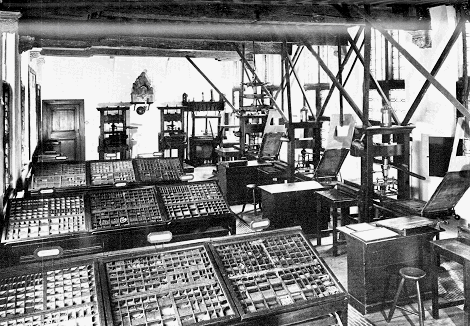 (17) Opposite: General view of the workshop, with on the left the type-cases, and on the right the presses (three of the five are visible). In the background are the two oldest presses and on the extreme right, just visible, is the intaglio press.
| |||||||||||||||||||||||||||||||||||||||||||||||||||||||||||||||||||||||||||||||||||||||||||||||||||||||||||||||||||||||||||||||||||||||||||||||||||||||||||||||||||||
[pagina *18]
| |||||||||||||||||||||||||||||||||||||||||||||||||||||||||||||||||||||||||||||||||||||||||||||||||||||||||||||||||||||||||||||||||||||||||||||||||||||||||||||||||||||
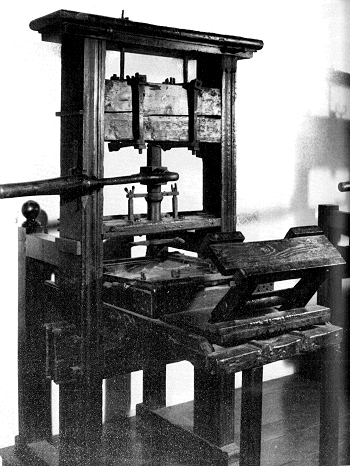 (18) One of the two oldest presses. The wooden frame is still in good condition, but the platen has disappeared.
| |||||||||||||||||||||||||||||||||||||||||||||||||||||||||||||||||||||||||||||||||||||||||||||||||||||||||||||||||||||||||||||||||||||||||||||||||||||||||||||||||||||
[pagina *19]
| |||||||||||||||||||||||||||||||||||||||||||||||||||||||||||||||||||||||||||||||||||||||||||||||||||||||||||||||||||||||||||||||||||||||||||||||||||||||||||||||||||||
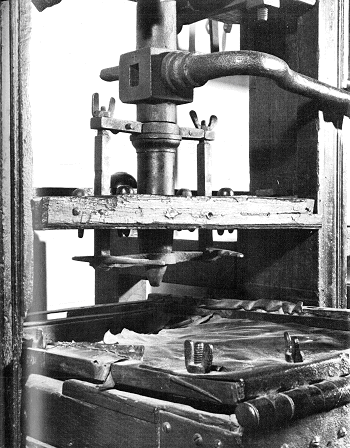 (19) Detailed view of the old press of plate 18 showing the ‘yoke’ from which the platen was suspended. Parchment is stretched over the closed-up frisket.
| |||||||||||||||||||||||||||||||||||||||||||||||||||||||||||||||||||||||||||||||||||||||||||||||||||||||||||||||||||||||||||||||||||||||||||||||||||||||||||||||||||||
[pagina *20]
| |||||||||||||||||||||||||||||||||||||||||||||||||||||||||||||||||||||||||||||||||||||||||||||||||||||||||||||||||||||||||||||||||||||||||||||||||||||||||||||||||||||
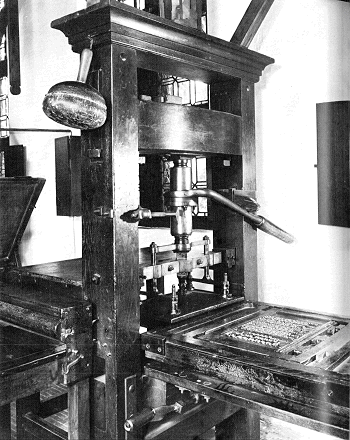 (20) Detailed view of one of the later presses. The more sophisticated system of screws fastening the platen to the yoke is clearly visible.
| |||||||||||||||||||||||||||||||||||||||||||||||||||||||||||||||||||||||||||||||||||||||||||||||||||||||||||||||||||||||||||||||||||||||||||||||||||||||||||||||||||||
[pagina *21]
| |||||||||||||||||||||||||||||||||||||||||||||||||||||||||||||||||||||||||||||||||||||||||||||||||||||||||||||||||||||||||||||||||||||||||||||||||||||||||||||||||||||
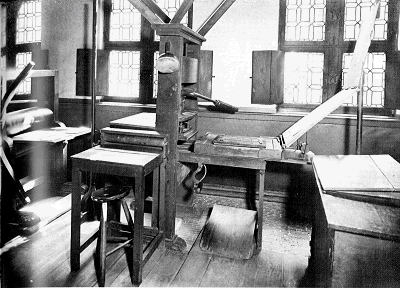 21) Top: Side view of one of the later presses showing the various appurtenances. On the left, leaning against the press, is the stand on which the ink was spread. An ink-ball hangs from the top of the frame.
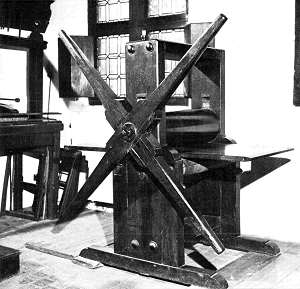 (2) Right: The intaglio press, built in Holland in 1714.
| |||||||||||||||||||||||||||||||||||||||||||||||||||||||||||||||||||||||||||||||||||||||||||||||||||||||||||||||||||||||||||||||||||||||||||||||||||||||||||||||||||||
[pagina *22]
| |||||||||||||||||||||||||||||||||||||||||||||||||||||||||||||||||||||||||||||||||||||||||||||||||||||||||||||||||||||||||||||||||||||||||||||||||||||||||||||||||||||
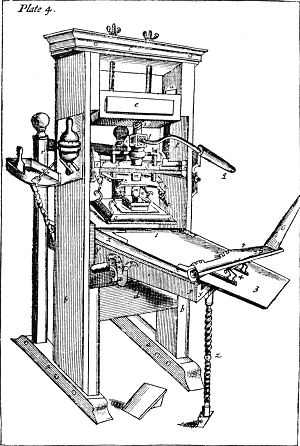 (23) The new-fashioned or Blaeu press as described in Moxon's Mechanick Exercises. Explanation of letters and figures: aa: the feet; bb: the cheeks; c: the cap; d: the winter; e: the head; f: the till; gg: the hose in the cross-iron of which, encompassing the spindle, is the garter; hhhh: the hooks on the hose the platen hangs on; iklmn: the spindle (i: part of the worm below the head, whose upper part lies in the nut of the head; kl: the eye of the spindle; m: the shank of the spindle; n: the toe of the spindle); oooo: the platen tied on the hooks of the hose; p: the bar; q: the handle of the bar; rr: the hind-posts; ss: the hind-rails; tt: the wedges of the till; uu: the mortices of the cheeks, in which the tenance of the head plays; xxxxyy: the carriage (xxxx: the outer frame of the carriage; yy: the wooden ribs on which the iron ribs are fastened); z: the stay (of the carriage).-1: the coffin; 2: the gutter; 3: the plank; 4: the gallows; 5: the tympans; 6: the frisket; 7: the points; 8: the point screws.
| |||||||||||||||||||||||||||||||||||||||||||||||||||||||||||||||||||||||||||||||||||||||||||||||||||||||||||||||||||||||||||||||||||||||||||||||||||||||||||||||||||||
[pagina *23]
| |||||||||||||||||||||||||||||||||||||||||||||||||||||||||||||||||||||||||||||||||||||||||||||||||||||||||||||||||||||||||||||||||||||||||||||||||||||||||||||||||||||
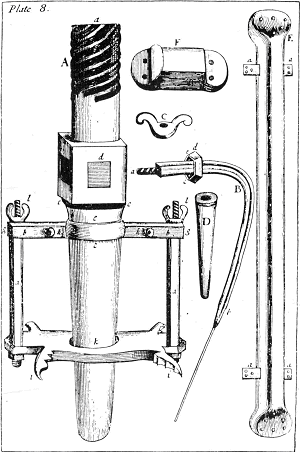 (24) The moving parts of the Blaeu press, after Moxon. A: the spindle; B: the bar; C: the female screw; D: the wooden handle; E: the ribs; F: the cramp irons. Moxon adds the following description (abridged): ‘From the top to the toe of the spindle (a-b) is 16½″. The length of the cylinder the worms are cut upon is 3¼″ and its diameter 2¼″. The distance between the bottom of the worms and the top of the cube is 1½″; the cube cccc measures 1¼″ each way. One inch under the cube at e is the neck of the spindle whose diameter is 2″. It is 1″ between the upper and lower shoulders of the neck at ee, so that the cylinder of the neck is 1″ long. The lower end of the spindle (b) is called the toe; its form is hemispherical and about 1″ in diameter. The toe should be made of well-tempered steel to avoid wear (through long or careless usage) towards one side of the toe which must remain in the axis of the spindle.’
| |||||||||||||||||||||||||||||||||||||||||||||||||||||||||||||||||||||||||||||||||||||||||||||||||||||||||||||||||||||||||||||||||||||||||||||||||||||||||||||||||||||
[pagina *24]
| |||||||||||||||||||||||||||||||||||||||||||||||||||||||||||||||||||||||||||||||||||||||||||||||||||||||||||||||||||||||||||||||||||||||||||||||||||||||||||||||||||||
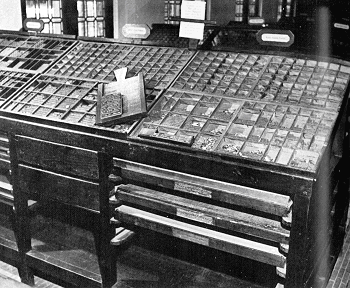 (25) Type-cases in their place on the rack. On one of the cases is a composing stick with a line of text; on the other a galley with a made-up page.
| |||||||||||||||||||||||||||||||||||||||||||||||||||||||||||||||||||||||||||||||||||||||||||||||||||||||||||||||||||||||||||||||||||||||||||||||||||||||||||||||||||||
[pagina 121]
| |||||||||||||||||||||||||||||||||||||||||||||||||||||||||||||||||||||||||||||||||||||||||||||||||||||||||||||||||||||||||||||||||||||||||||||||||||||||||||||||||||||
The casting itself was usually calculated per 1,000 pieces for the smaller sizes, by weight for the larger, and within these two categories there was further variation according to typeface and size. In 1563-64, for instance, F. Guyot charged the following rates:Ga naar voetnoot2.
Hendrik van den Keere's prices were within the same range:Ga naar voetnoot3.
| |||||||||||||||||||||||||||||||||||||||||||||||||||||||||||||||||||||||||||||||||||||||||||||||||||||||||||||||||||||||||||||||||||||||||||||||||||||||||||||||||||||
[pagina 122]
| |||||||||||||||||||||||||||||||||||||||||||||||||||||||||||||||||||||||||||||||||||||||||||||||||||||||||||||||||||||||||||||||||||||||||||||||||||||||||||||||||||||
For a lettre romaine dicte la breviaire (7.6 pt.) Plantin paid Guyot in October 1563 the sum of 70 fl. 9 st., made up as follows:Ga naar voetnoot1.
112,270 pieces of type with a total weight of 191½ pounds, for which 224 pounds of type-metal was used
This works out at about 7⅓ st. per pound of cast type, of which approximately 4¾ st. was the charge for casting. For three formes of a garamond (9.4 pt.) roman - 119,446 pieces of type with a net weight of 277 pounds - Hendrik van den Keere charged in 1578:Ga naar voetnoot2.
This represented a rate of approximately 53⅓ st. per pound of cast type, roughly 2¾ st. of this being for the actual casting. The Van Wolsschatens usually charged per pound of type, even for the smaller sizes. In most instances their prices did not include the supplying of type-metal.Ga naar voetnoot3. In the Moretuses' foundry in the eighteenth century the workmen were paid piece rates, also reckoned per 1,000 letters for the smaller types, by weight for the larger ones. Their wages are quite close to the rates once asked by Guyot and Van den Keere - but it should be remembered that the prices charged by the sixteenth-century type-founders allowed for their own profit margins and their workmen's wages. | |||||||||||||||||||||||||||||||||||||||||||||||||||||||||||||||||||||||||||||||||||||||||||||||||||||||||||||||||||||||||||||||||||||||||||||||||||||||||||||||||||||
[pagina 123]
| |||||||||||||||||||||||||||||||||||||||||||||||||||||||||||||||||||||||||||||||||||||||||||||||||||||||||||||||||||||||||||||||||||||||||||||||||||||||||||||||||||||
| |||||||||||||||||||||||||||||||||||||||||||||||||||||||||||||||||||||||||||||||||||||||||||||||||||||||||||||||||||||||||||||||||||||||||||||||||||||||||||||||||||||
[pagina 124]
| |||||||||||||||||||||||||||||||||||||||||||||||||||||||||||||||||||||||||||||||||||||||||||||||||||||||||||||||||||||||||||||||||||||||||||||||||||||||||||||||||||||
The masters of the Gulden Passer spent a good deal over the years on their stocks of type. When Plantin's possessions were auctioned in April 1562 the cast type brought in 2,745 fl. 7 st.Ga naar voetnoot1. This represented 38 per cent of a total sum of 7,200 fl. - 42.6 per cent if the value of Plantin's household effects is deducted from the total (making it 6,444 fl.). At the printer's death the cast type was valued at 4 st. per pound; there was 44,000 pounds of it, giving a total of 8,800 fl. This was nearly half of the estimated value of the entire officina.Ga naar voetnoot2. This 8,800 fl., however, represented only a fraction of what the type had actually cost, and the estimate did not take into account the fact that the stock had to be regularly renewed. Whereas punches and matrices, once bought, entailed little further expenditure, money was always being spent on the stocks of type. Between 1st October 1563 and 18th March 1566 Plantin paid 2,200 fl. 15½ st. for his cast type.Ga naar voetnoot3. Between 1570 and 1579 he paid Van den Keere 8,395 fl. 12 st. on this account;Ga naar voetnoot4. 7,777 fl. 12½ st. of this was paid between 1570 and 1576. In contrast with the less bulky and easily portable punches and matrices, this great mass of cast material was not really suitable for depositing as security for loans. All that could be done was to sell some of it when retrenchment was the order of the day - which Plantin seems in fact to have done after the Spanish Fury of 1576.Ga naar voetnoot5. | |||||||||||||||||||||||||||||||||||||||||||||||||||||||||||||||||||||||||||||||||||||||||||||||||||||||||||||||||||||||||||||||||||||||||||||||||||||||||||||||||||||
[pagina 125]
| |||||||||||||||||||||||||||||||||||||||||||||||||||||||||||||||||||||||||||||||||||||||||||||||||||||||||||||||||||||||||||||||||||||||||||||||||||||||||||||||||||||
There were other occasions too when the printer sold some of his type. His journal records the sale in 1568 of a philosophie roman for 72 fl. 12 st. (242 pounds at 6 st. per pound) to the Antwerp printer Joannes Trognesius.Ga naar voetnoot1. This was no doubt done to oblige an influential but difficult colleague,Ga naar voetnoot2. rather than because there was financial profit in it. Plantin's loan of type to the Louvain printer Masius is to be ascribed to pressure from certain people in high places.Ga naar voetnoot3. Whatever the whole truth may be, such transactions were probably few in number and limited in extent.Ga naar voetnoot4. Only at the end of the eighteenth century and the beginning of the nineteenth, when the firm was stagnating, did the Moretuses raise money by selling off fairly large quantities of old or slightly used type for rendering down into type-metal. Spread over the years, however, expenditure on casting was probably not too much of a burden. In 1566, for example, Plantin spent 104 fl. 16 st. on the purchase of type-metal or its ingredients and paid 405 fl. 6½ st. to his type-founders, making 510 fl. 2½ st. altogether. This sum represented 3.91 per cent only of a total expenditure for that year of 13,041 fl.Ga naar voetnoot5. Nevertheless, cast type came third in the | |||||||||||||||||||||||||||||||||||||||||||||||||||||||||||||||||||||||||||||||||||||||||||||||||||||||||||||||||||||||||||||||||||||||||||||||||||||||||||||||||||||
[pagina 126]
| |||||||||||||||||||||||||||||||||||||||||||||||||||||||||||||||||||||||||||||||||||||||||||||||||||||||||||||||||||||||||||||||||||||||||||||||||||||||||||||||||||||
officina's regular expenses,Ga naar voetnoot1. although it was a good way behind paper and wages. It was the most costly part of the equipment of the printing shop: compared with the stocks of cast type, even the printing presses formed only a small percentage of the working capital.Ga naar voetnoot2. |
|